How to Season Mashed Potatoes: What to Add and When
Mashed potatoes can contain plenty of butter and still taste flat. The problem is usually not a lack of richness, but seasoning added at only one moment.
Learning how to season mashed potatoes begins with three distinct layers. First, season the potatoes as they cook. Then rebalance the mash after butter, cream, olive oil, cheese or pan juices have changed its flavour. Finally, add a small finishing pinch while the mash is still warm. This creates mashed potatoes that taste rich, balanced and complete.

Maison Kojira Method
Mash Should Taste Complete Before the Gravy
You want mashed potatoes that feel generous before anything else reaches the plate. Soft, warm potatoes, with butter, cream, olive oil, cheese or pan juices folded in with purpose. Every spoonful should taste rich and properly seasoned, with a final pinch that brings the flavour into focus.
Mash should not need gravy to become interesting. It should already taste complete.
The clearest way to season mashed potatoes is through three layers: the cooking water, the richness and the final finish.
1. Season the Cooking Water
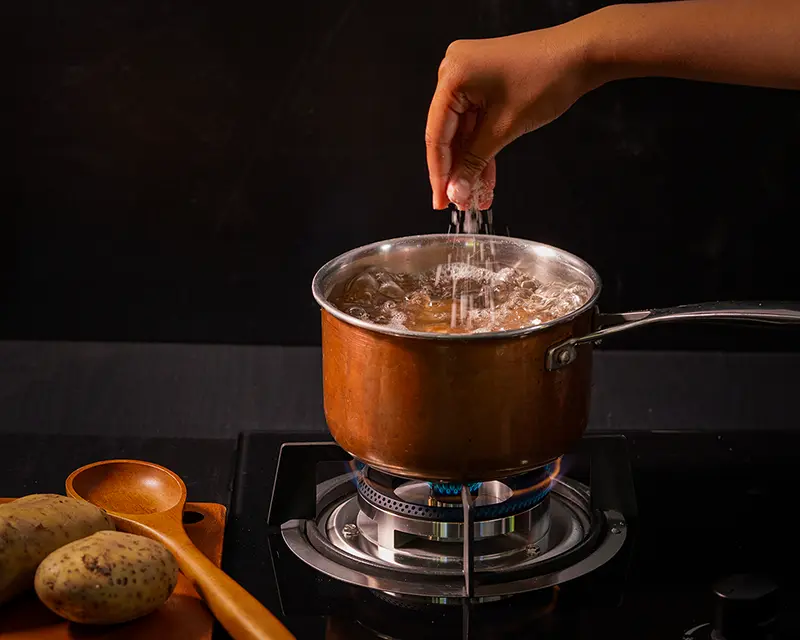
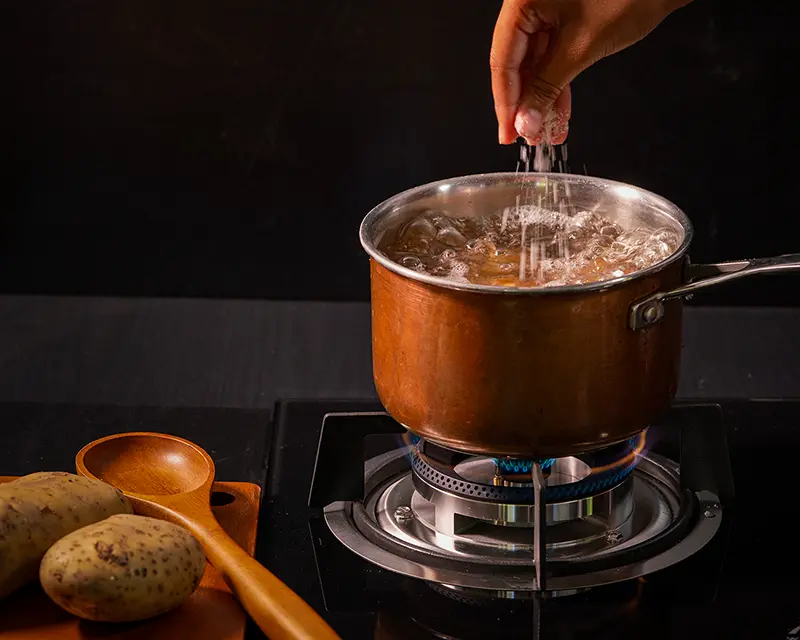
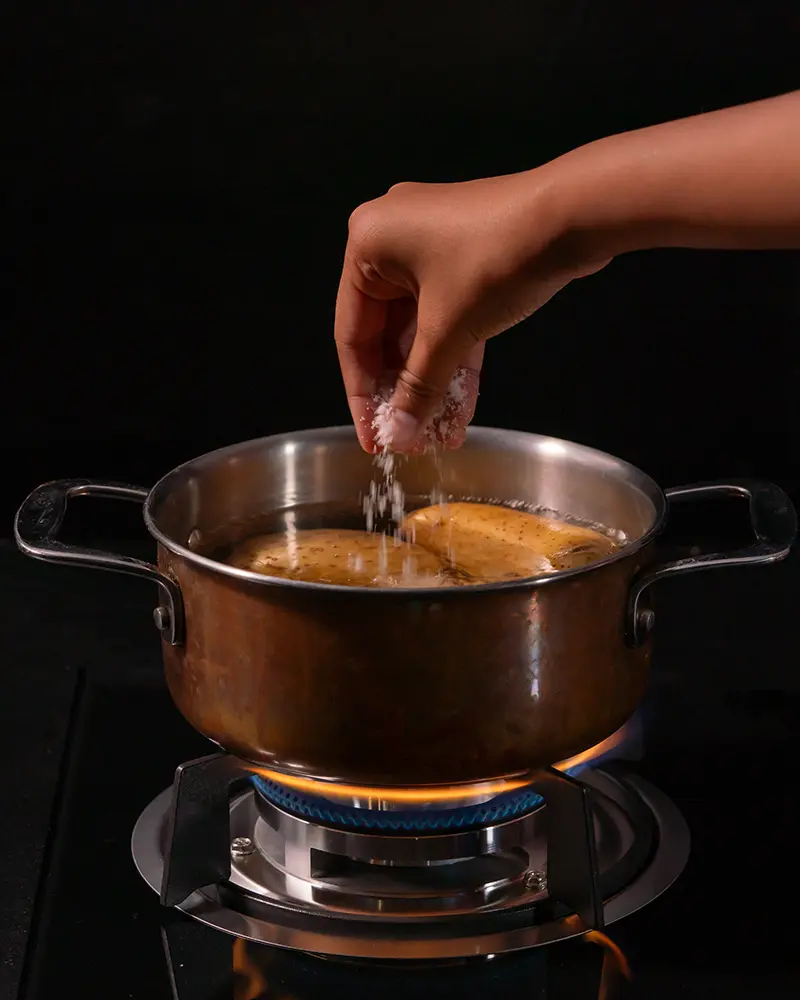
Add 10 to 12 g of salt per litre of cooking water. This gives the potatoes a properly seasoned base before butter, cream or other rich ingredients are added.
2. Rebalance After Adding Richness
Taste again after adding butter, cream, olive oil, cheese or pan juices. These ingredients change how the seasoning is perceived, so make the next adjustment only after the richness is in place.
3. Finish While Warm
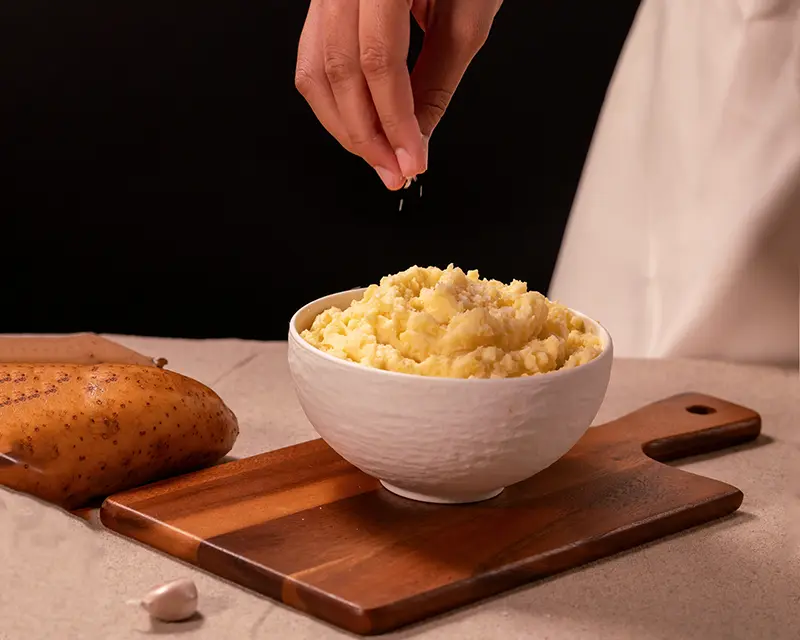
Add a small final pinch while the mash is still warm. This can bring lift, clarity or savoury depth without making the whole bowl taste salty.
The method starts in the cooking water, but it does not end there. The first layer gives the potatoes a seasoned base as they soften. The second is the moment you taste again after butter, cream, olive oil, cheese or pan juices have changed the flavour. The third is the final small pinch added while the mash is still warm.
👩🏼🍳 Layer Rule: season the cooking water first, taste again after adding richness, then finish the warm mash with a small final pinch.
When to Add Each Layer of Seasoning
When deciding how to season mashed potatoes, remember that each layer has a different job. The first belongs in the cooking water, where the potatoes soften and develop their seasoned base. The second happens after butter, cream, olive oil, cheese or pan juices have changed the mash. The final layer is added while the mash is still warm.
The first salt belongs in the water. As the potatoes cook, they soften and take in seasoning. This gives the mash a better base before butter, cream, olive oil, cheese, or pan juices are added.
The second decision comes after mashing. Fat changes how salt tastes. Butter and cream make the mash rounder and softer. Olive oil gives it a cleaner finish. Cheese adds its own salinity. Pan juices can bring meatiness, salt, and depth. Taste only after those ingredients are in, because the mash will taste different once the richness has settled.
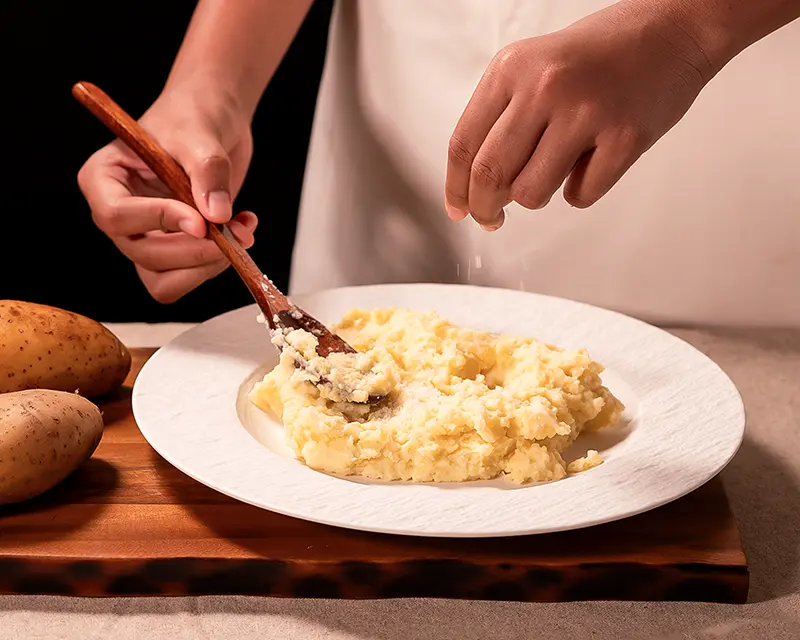
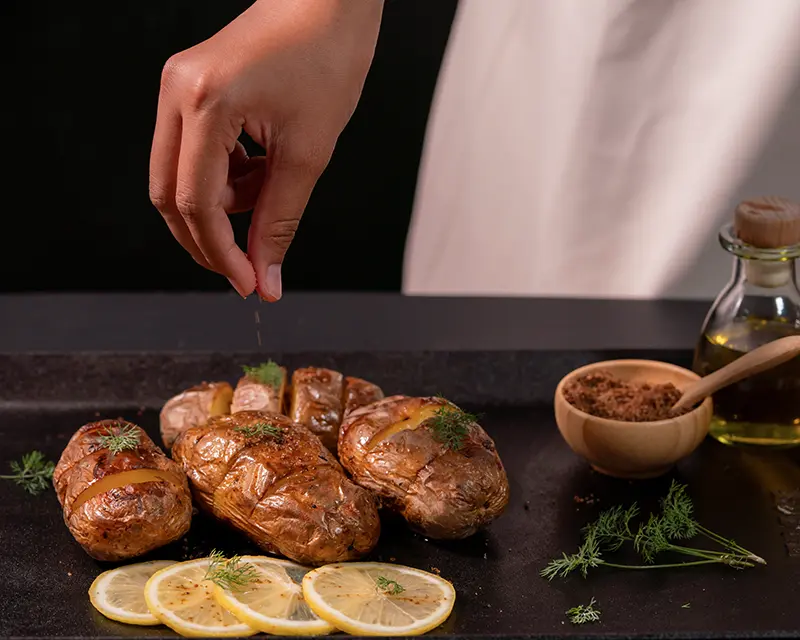
Finishing salt belongs at the end, while the mash is still warm. Use a small pinch when the mash tastes almost complete but needs more lift, clarity, or savoury depth.
Do not make the final adjustment before the fat goes in. You will be seasoning a version of the mash that no longer exists.
👨🏼🍳 Better Rule: salt the water for the base, add the fat for richness, then taste again before the final pinch.
How Much Salt to Use for Mashed Potatoes
Knowing how to season mashed potatoes also means separating the larger amount used in the cooking water from the much smaller final adjustment. Start with 10 to 12 g of salt per litre of cooking water. After draining and mashing, add butter, cream, olive oil or other rich ingredients before deciding whether more salt is needed.
Final seasoning should be much lighter than the seasoning in the water. A small pinch added to warm mash tastes immediate and can affect the whole bowl.
Reduce the final amount when using salted butter, cheese, stock, bacon, miso, gravy or seasoned pan juices. All of these contribute salt independently.
👨🏽🍳 Quick Rule: season the cooking water properly, then make the final salt decision only after the mash is finished with fat.
Why Butter and Cream Change the Seasoning Balance
Butter, cream, olive oil, cheese and pan juices all change the seasoning balance of mashed potatoes. Richness makes the mash feel rounder, but it can also make the existing seasoning seem softer. Cheese, stock and pan juices may contribute salt of their own.
That is why you should taste again only after these ingredients have been added. More butter can make mash richer, but it cannot correct an underseasoned base. Season the cooking water first, add the richness, then rebalance the mash while it is still warm.
Want to Keep Learning How to Make Foods Like Potatoes Taste Fuller?
The Maison Kojira Letter goes deeper into final pinches, crisp potatoes, rich mash and the small seasoning decisions that make daily food taste complete.
How to Fix Mashed Potatoes That Taste Too Salty
If mashed potatoes taste too salty, the best fix is dilution, not distraction. Add more unsalted cooked potato if you have it, then fold the mash together while it is still warm.
If you do not have extra potato, add unsalted fat or dairy in small amounts: unsalted butter, warm cream, milk, olive oil, or a little plain yoghurt. These do not remove salt, but they spread it through more food and soften the salty edge.
Avoid adding more cheese, salted butter, bacon, stock, gravy, miso, or heavily seasoned pan juices. They may make the mash richer, but they usually bring more salt with them.
Do not try to fix salty mash with sugar. Sweetness can make the flavour muddier without solving the salt problem. If the mash is only slightly too salty, serve it with something unsalted: plain roast meat, eggs, green vegetables, or an unsalted sauce.
👨🏽🍳 Rescue Rule: if mashed potatoes are too salty, add unsalted potato first. If that is not possible, soften the salt with unsalted fat or dairy, then stop before the mash becomes heavy.
Does Potato Variety Change How You Season Mash?
Yes. How to season mashed potatoes depends partly on their variety, because texture affects how readily the mash carries flavour and how restrained the final adjustment should be. The three-layer method remains the same, but the strength of each adjustment may change.
Floury potatoes
Russet, Maris Piper, King Edward, Agria and similar floury potatoes produce light, open mash that readily carries butter, cream and seasoning. They can generally take a fuller base seasoning and a modest final pinch.
Naturally buttery potatoes
Yukon Gold-style potatoes already taste rich and rounded. They usually benefit from clean, restrained seasoning rather than strong finishing flavours.
Waxy potatoes
Charlotte, Nicola, Fingerling and small new potatoes create denser mash and can make surface seasoning more noticeable. Use a lighter final hand and avoid overworking them.
The rule is simple: fluffy mash can carry more seasoning. Dense mash needs more restraint.
👩🏼🍳 Quick Rule: floury potatoes can carry fuller seasoning. Waxy potatoes need a lighter hand and a gentler final pinch.
Best Seasonings for Mashed Potatoes
How to season mashed potatoes at the final stage depends on the mash itself and the plate around it. Mineral salt keeps classic butter or cream mash clean. Herb salt adds freshness. Black garlic and fermented mushroom salt deepen savoury dishes, while preserved lemon salt brings lift to richer plates.
Mashed potatoes spread flavour quickly because they are warm, soft, moist and rich with fat. A seasoning that works beautifully on crisp roast potatoes can become too dominant when folded through a whole bowl of mash.
Clean and classic
Mineral salt is best for classic buttery mash, cream mash, olive oil mash, and mashed potatoes served with roast chicken, grilled fish, eggs, vegetables, or simple gravy. Use it in the cooking water, then again in a small final pinch if the mash needs clarity. This is the cleanest choice when you want the potato and fat to stay central.
Fresh and aromatic
Herb salt is for mash with parsley, chives, dill, thyme, sage, roast chicken, lamb, green vegetables, or olive oil. Herb salt works especially well when the mash needs freshness rather than more richness. Use it at the end, not in the water, so the herbs stay aromatic.
Deep and savoury
Use black garlic salt with roast meat, sausages, onion gravy, mushrooms or darker pan juices. A small amount spreads widely through soft mash.
Fermented mushroom salt is best with steak, mushroom gravy, lentils, roasted onions, brown butter and winter vegetables.
Bright and lifted
Preserved lemon salt is best for olive oil mash, grilled fish, roast chicken, herbs, yoghurt sauces, green vegetables, or Mediterranean-style plates. It is the right choice when the mash is rich but the plate needs lift. Use a light pinch at the end so the citrus stays bright.
🧑🏻🍳 Seasoning Rule: mineral salt keeps mash clean. Herb salt adds freshness. Black garlic and mushroom salts add depth. Preserved lemon salt adds lift.
More Potato Salting Guides
Different potato dishes require salt at different moments. Fries need salt immediately after cooking so the crystals grip while the surface is still hot. Roast potatoes benefit from seasoning during cooking and again while the edges are crisp. Boiled potatoes need a seasoned base before butter, olive oil, herbs or finishing salt are added.
The method changes with the texture: enrich soft mash, grip a crisp surface, season boiled potatoes throughout or sharpen roasted edges.

Frequently Asked Questions About How to Season Mashed Potatoes
What is the three-layer method for mashed potatoes?
The three-layer method explains how to season mashed potatoes at three moments: first in the cooking water, then after butter, cream, olive oil, cheese or pan juices are added, and finally with a small pinch while the mash is still warm.
Should you salt the water for mashed potatoes?
Yes. Seasoning the cooking water gives the potatoes a balanced base as they soften, before butter, cream, olive oil, cheese or pan juices are added.
Should you season mashed potatoes before or after butter?
Both stages matter. Season the cooking water first, then taste again after adding butter, cream, olive oil or cheese because these ingredients change the flavour balance.
Why do mashed potatoes taste flat even with butter?
Butter makes mash richer, but it does not replace seasoning. If the potatoes were cooked in water that was too mild, the mash can taste soft and rich but still flat underneath.
How do you make mashed potatoes less salty?
Add unsalted cooked potato if possible. If not, fold in unsalted butter, warm cream, milk, olive oil, or another unsalted ingredient to dilute the salt. Avoid cheese, salted butter, bacon, stock, or salty gravy because they usually make the problem worse.
How much salt should you use for mashed potatoes?
Start with 10 to 12 g salt per litre of cooking water. After mashing and adding fat, use only a small final pinch if the mash still needs lift.
What seasonings go well with mashed potatoes?
Mineral salt keeps classic mash clean and balanced. Herbs add freshness, black garlic and fermented mushroom salt add savoury depth, and preserved lemon salt brings lift to richer plates.

A Letter From Our Kitchen
A recipe worth trying, an ingredient that surprised us, or a little discovery we couldn’t keep to ourselves.
Once a month, we share our favourites in the Maison Kojira Letter.