How Chefs Use Finishing Salt In The Kitchen
Chefs do not use finishing salt as a decorative final sprinkle. They use it as a control tool.
Unlike salt added earlier in cooking, finishing salt is applied after the main transformation has happened. It stays close to the surface, where it interacts with heat, fat, moisture, texture, and aroma. Some crystals dissolve quickly. Some remain distinct. That unevenness is the point.
This guide breaks down the 7 better flavour techniques chefs use with finishing salt: layering, timing, pinching, height, slicing, tasting, and finishing just before serving.
For an overview of the different types of finishing salts, see the Finishing Salt Guide.
The 7 Better Flavour Techniques Chefs Use
Chefs use finishing salt with more control than most home cooks. The difference usually comes down to seven decisions: when salt is added, how it is released, how far it falls, what surface it lands on, when meat is sliced, how often the dish is tasted, and whether the final salt is added at the last possible moment.
1. Layer salt through cooking
Early, mid-cooking, and final seasoning each do different work. Chefs build flavour in stages instead of trying to fix everything at the table.
2. Pinch by feel
Chefs rarely measure finishing salt with spoons. They use their fingers to control amount, release, texture, and spread.
3. Control the height
A higher sprinkle spreads salt more widely. A lower sprinkle gives more precise placement.
4. Match the salt to the surface
Moist foods, dry foods, hot foods, oily foods, and delicate foods all hold salt differently. Chefs adjust the crystal size, pinch, and distance to match the surface.
5. Season sliced meat at the right moment
Salt after resting and just before or during slicing, so each piece catches seasoning without losing texture.
6. Taste and adjust continuously
Chefs taste the salt, taste the dish, and correct in small pinches instead of making one large adjustment.
7. Finish just before serving
Finishing salt works best at the last moment. If it sits too long, it dissolves and loses definition.
1. Layer Salt Through Cooking
If you watch chefs cook for a few minutes, you start noticing how often salt appears in their hands. A pinch over a tray of vegetables, another over a pan, another just before plating. Seasoning is rarely a single step, it happens continuously as the dish develops.
Salt is not added once. It is built in stages as the food changes. As heat and moisture shift, seasoning is adjusted to keep flavour balanced as it concentrates. The moment salt is added determines how far it spreads and how fully it integrates into the food.
Early Seasoning: Building the Base
Ingredients are lightly seasoned before cooking begins so salt can interact with moisture as heat is applied. Meat is seasoned before it hits the pan. Pasta water is salted before cooking. Vegetables are sometimes seasoned in advance depending on how they handle moisture during cooking.
🧑🏼🍳 Pro tip
Use fine or medium salt here. It spreads quickly and integrates before cooking begins.
Mid-Cooking Seasoning: Maintaining Balance
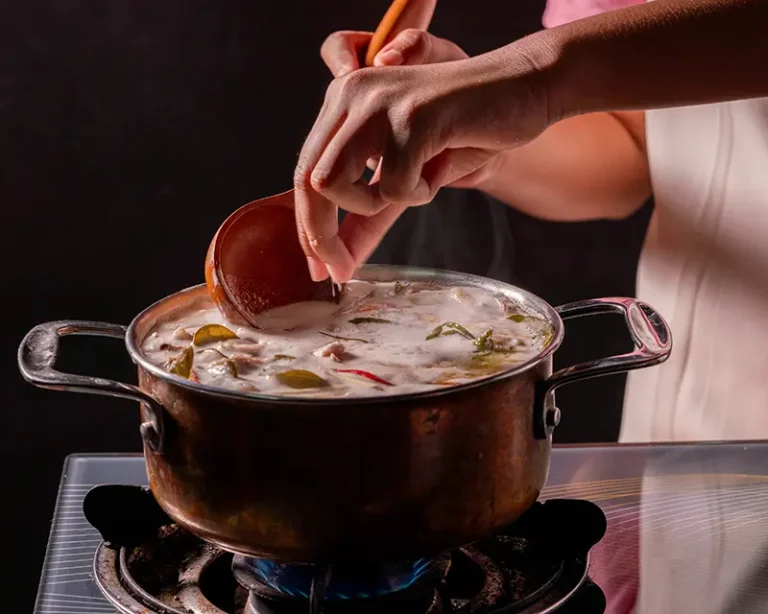
As food cooks, moisture evaporates and flavours concentrate. Chefs adjust salt in small pinches during a simmer, after a reduction, or partway through a braise.
👨🏾🍳 Pro tip
Build gradually. Large additions are harder to correct than small adjustments.
Finishing salt forms the final layer.
It is applied after cooking and placed onto the surface rather than worked into the dish. Some of it spreads into heat and moisture. Some remains separate, creating contrast across the food.
Finishing salt is applied after cooking and placed onto the surface rather than worked into the dish. Some of it spreads into heat and moisture. Some remains separate, creating contrast across the food.
This is where texture and aroma are shaped in the final seconds before serving, and where flavoured culinary salts come into play.
Examples:
- fermented mushroom salt on steak before serving
- a light pinch of preserved lemon salt over grilled fish
- coarse mineral salt on roasted vegetables out of the oven
🧑🏼🍳 Pro tip
As a general rule, add it just before serving. If it sits too long, it integrates and loses definition. We wrote specific guides for most different foods, to which we link at the bottom of this page.
2. Pinch by Feel
Professional cooks rarely measure salt with spoons. Instead, they season by feel using a pinch between their fingers.
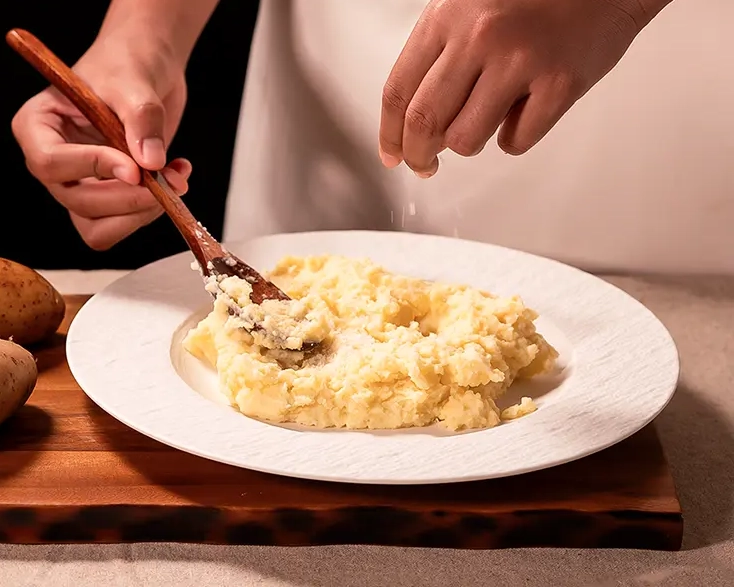
In restaurant kitchens, measuring spoons almost never appear on the line. Cooks keep a small bowl of salt nearby and season dishes with quick pinches as they work. A steak may receive a pinch before searing, vegetables are often finished the same way, and sauces are adjusted with small additions while they simmer.
Using fingers gives immediate control over how much salt is added and allows the crystals to fall gradually across the surface rather than landing in one spot. This makes it possible to build seasoning in small, controlled steps instead of adding too much at once.
The size of the pinch changes depending on the salt. Fine, dense salts require only a small pinch, while flaky salts require slightly larger ones. As cooks switch salts, they adjust instinctively to match the crystal structure and how it spreads across the food.
🧑🏾🍳 Pro tip
Use three fingers (thumb, index, middle finger) to release salt evenly and maintain control over the amount.
👩🏽🍳 Pro tip
When switching to a new salt, start with a smaller pinch and adjust. The strength of a pinch varies depending on crystal size and density.
3. Control the Height
Chefs adjust how salt falls onto food by changing the height of their hand. In professional kitchens, this motion becomes almost automatic: a cook lifts their hand slightly above the pan or plate and lets the crystals fall through their fingers.
When salt is released from higher above the food, the crystals spread slightly before landing. This distributes seasoning more evenly across the surface. When applied closer to the food, the salt lands more precisely, staying where it is placed.
This adjustment depends on the surface of the ingredient. Moist foods such as tomatoes, fish, or leafy greens are often seasoned from slightly higher above so the salt spreads before sticking. Drier foods like steak or roasted vegetables are typically seasoned closer to the surface to prevent crystals from bouncing off and to keep placement controlled.
In practice, cooks adjust height instinctively, shifting between wider distribution and precise placement depending on the dish in front of them.
👨🏽🍳 Pro tip
Use a higher sprinkle for moist foods and a lower one for dry foods to control how the salt spreads.
🧑🏼🍳 Pro tip
Move your hand slightly while sprinkling to avoid concentrating salt in one area.
4. Match the Salt to the Surface
The surface of the food changes how finishing salt behaves. Moist foods catch salt quickly. Drier foods need more precise placement. Hot foods dissolve salt faster. Oily foods hold crystals on the surface for longer.
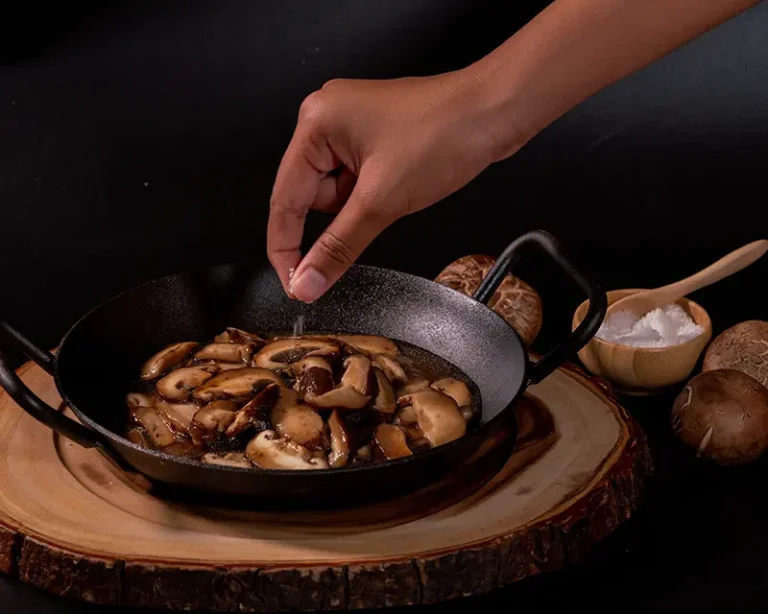
This is why chefs adjust the salt, the pinch, and the distance depending on the dish. Moist foods such as tomatoes, fish, or leafy greens are often seasoned from slightly higher above so the salt spreads before sticking. Drier foods like steak or roasted vegetables are typically seasoned closer to the surface to prevent crystals from bouncing off and to keep placement controlled.
The crystal size matters too. Fine, dense salts dissolve quickly and can disappear into moisture. Larger crystals or coarse finishing salts stay more distinct, adding texture and contrast. Flaky salts spread differently again, because they cover more surface area without landing as densely.
As cooks switch salts, they adjust instinctively to match the crystal structure and how it spreads across the food.
🧑🏼🍳 Pro tip
Use finer salt when you want quick integration. Use coarser finishing salt when you want texture, contrast, and a more noticeable final layer.
👨🏽🍳 Pro tip
On very moist foods, start lighter. The salt dissolves quickly and the effect can become stronger after a minute.
5. Season Sliced Meat at the Right Moment
In some cases, chefs season meat at the moment it is sliced rather than only before or after cooking.
One approach is to apply finishing salt directly to the meat just before slicing. This keeps the crystals on the surface of the crust so that, as the knife cuts through, each piece receives a small amount of seasoning.
Another approach is to place a light scatter of salt on the cutting surface. As the meat is sliced, each piece passes through the salt, picking up seasoning as it is cut. The juices released during slicing spread part of the salt, while some remains on the surface of each slice.
Both methods distribute salt across multiple pieces without relying on a single application point, allowing seasoning to be carried through the slicing process itself.
🧑🏼🍳 Pro tip
Apply finishing salt after the meat has rested but just before slicing to keep the crystals intact and the distribution controlled.
6. Taste and Adjust Continuously
Once salt is applied, control comes from constant adjustment. Chefs taste, feel, and recalibrate as they work, using small corrections rather than large changes.
Before seasoning, chefs often taste a crystal of salt and feel it between their fingers. This gives an immediate sense of its strength, density, and how it will behave when applied.
Different salts vary in crystal size and structure. Tasting and handling them allows cooks to adjust their pinch instinctively, matching the amount of salt to how it will spread and dissolve.
As cooking progresses, this calibration continues through tasting the food itself. A cook checks a sauce before plating, tastes vegetables just before finishing them, or tests a piece of meat after resting. These small checks guide final adjustments, keeping seasoning balanced as flavours concentrate and shift.
In professional kitchens, this often happens seconds before a dish leaves the pass, where a final pinch is added only if needed.
🧑🏼🍳 Pro tip
Taste a single crystal to understand its strength, then taste the dish and adjust in small pinches.
👨🏽🍳 Pro tip
Take a bite from the centre of the dish rather than the edge to judge the overall seasoning accurately.
7. Finish Just Before Serving
Just before serving, chefs taste the dish and make a final adjustment if needed.
This often happens at the pass: a sauce is checked before plating, vegetables are tasted as they come out of the oven, or a piece of meat is tested after resting. These last seconds determine whether the seasoning is complete or needs a small correction.
If adjustment is needed, finishing salt is applied immediately before serving. Because it is added at the end, it remains on the surface rather than dissolving into the dish. This allows seasoning to be refreshed without changing the structure built during cooking.
At this stage, small changes have a visible effect. A light pinch can sharpen flavour, add texture, and bring the dish into balance just before it leaves the kitchen.
👨🏼🍳 Pro tip
Add finishing salt at the last moment. If it sits too long, it integrates and loses definition. Spread it evenly. Finishing salt should highlight flavour and texture rather than dominate the dish.
Seeing Finishing Salt in Practice
In professional kitchens, these small techniques – pinching, layering seasoning, adjusting height, and finishing at the last moment – allow cooks to control flavour with surprising precision. The techniques in this guide reflect how chefs use finishing salt to shape flavour structure. Many of these principles also guide the culinary salts developed at Maison Kojira.
If you want to see how these techniques apply to specific foods, continue with our guides to using finishing salt on different ingredients.
Vegetables and Fresh Produce
→ How to Use Finishing Salt on Vegetables
→ How to Salt Tomatoes
→ How to Salt Asparagus
→ Do You Need to Salt Aubergine or Eggplant?
→ How to Salt Zucchini or Courgette
→ When to Salt Mushrooms
→ How to Salt Beetroot or Beets
Bread, Pasta and Grains
→ Best Salts for Olive Oil Bread Dip
→ How to Salt Pasta
→ How to Salt Rice
→ How to Salt Risotto
→ How to Salt Grain Salads
→ When to Salt Potatoes
Fruits and Desserts
→ Salt on Fruit
→ Salt on Desserts
Dairy
→ How to Salt Yoghurt
→ How to Salt Burrata, Ricotta & Feta
Proteins
→ When to Salt Meat
→ When to Salt Seafood
→ When to Salt Eggs
Frequently Asked Questions About How Chefs Use Finishing Salt
Can you add finishing salt too early?
If finishing salt is added too early, it begins to dissolve into the surface of the food. This reduces texture and spreads the salt more evenly, removing the contrast created by distinct crystals. For most dishes, finishing salt is applied just before serving to preserve this effect.
Why does finishing salt taste stronger in some bites than others?
Finishing salt is not fully mixed into the dish. It remains on the surface in small, unevenly distributed crystals. Some bites contain more salt, others less. This variation creates contrast and makes flavour feel more dynamic across the dish.
How much finishing salt should you use?
Finishing salt is used in small amounts. A light pinch is usually enough to affect flavour and texture without overpowering the dish. Because it sits on the surface, even a small amount can have a noticeable impact. The goal is to highlight flavour, not dominate it.
What is the difference between seasoning during cooking and finishing with salt?
Seasoning during cooking allows salt to dissolve into the food as heat and moisture change its structure. This builds a base level of flavour that spreads evenly throughout the dish. Finishing salt is applied at the end and remains on the surface, creating contrast in texture and intensity. One integrates into the dish, the other defines how it is experienced at the moment of eating.