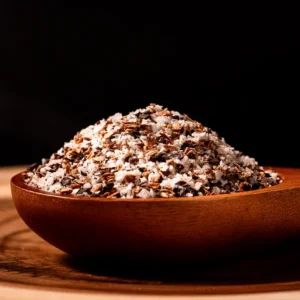
 Kojira Fermented Mushroom Salt
 How Salt Affects Texture: Crispness, Tenderness and Moisture
Salt doesn’t just change flavour. How salt affects texture depends on structure: how food holds water, how proteins bind, and how plant cells respond before and during cooking.
The same ingredient can make meat firmer, eggs smoother, dough stronger, or vegetables softer. That shift comes from how salt interacts with proteins and plant cells, changing how water is held, how molecules bind, and how food responds to heat.
Most of these changes are invisible while you’re cooking. But they determine whether food stays juicy or dries out, whether it holds together or breaks apart, and whether it feels tight, tender, or clean on the bite.
This page breaks down how salt reshapes texture at a structural level, from proteins to plant cells, and how that translates into the food you cook.
How Salt Affects Texture: 3 Structural Changes
Salt changes texture by changing structure. It affects how food holds water, how proteins bind, and how plant cells soften, firm, or collapse during cooking.
Crispness
Dry surface, better browning
Salt changes surface moisture. If that moisture evaporates before cooking finishes, food can dry, brown, and crisp. If the moisture sits too long, the surface softens instead.
Tenderness
Finer protein structure
Salt changes how proteins bind. At controlled levels, it can help meat, fish, eggs, and dough hold water and form a finer, more tender structure.
Moisture
Juicier or softer
Salt changes where water is held. It can help proteins stay juicier, but it can also pull water out of plant cells, making vegetables soften and release liquid.
👨🏼🍳 Texture Rule: salt improves texture when it controls structure; it hurts texture when it pulls water to the wrong place at the wrong time.
How Salt Changes Structure in Food
To understand how salt affects texture, start with structure. Salt changes how food firms, softens, gels, dries, or releases moisture during cooking. Salt alters protein structure, changing how food firms, softens, or gels during cooking.
When salt dissolves, sodium and chloride ions interact with proteins and plant cells inside ingredients. These interactions change how tightly molecules bind together, how water is held within the food, and how the ingredient responds to heat during cooking.
In practical cooking, this is why salt can make meat firmer, help fish and poultry retain moisture, strengthen dough, and alter the texture of vegetables.
Although the ingredient may look unchanged at first, salt is often reshaping the microscopic structure of the food. As these structural changes develop, they influence tenderness, juiciness, firmness, and the final bite of the dish.
How Salt Interacts with Proteins
Proteins form much of the internal structure of foods such as meat, fish, eggs, and dough. The way these proteins connect determines how firm, elastic, or moist a food becomes during cooking.
When salt dissolves in the natural moisture of food, it separates into sodium and chloride ions. These ions begin interacting with the surface of protein molecules, which contain many electrically charged regions.
The effect of salt depends strongly on how much salt is present.
At low to moderate salt levels, the dissolved ions weaken some of the attractive forces between protein molecules. This allows certain proteins to dissolve more easily into the surrounding liquid and spread through the food. During cooking, these dispersed proteins can form a finer network that often holds water more effectively and produces a softer texture.
At higher salt concentrations, the situation changes. Salt begins competing with proteins for available water and encourages protein molecules to bind more tightly to each other. This can cause proteins to aggregate and form firmer structures.
Because of this shift, salt can either loosen protein structures or tighten them depending on the amount present. Many cooking techniques rely on this behaviour to control texture and moisture.
How Salt Helps Form Protein Gels
Many foods develop their final texture when proteins form a gel network during cooking. This happens when proteins unfold and link together, creating a structure that traps water inside the food.
The soft firmness of cooked eggs, fish cakes, meat mixtures, and some dairy products comes from this type of protein gel.
Salt helps this structure form more effectively. When salt dissolves in the moisture of the food, it allows certain proteins to spread more evenly through the surrounding liquid.
During cooking, heat unfolds these proteins and allows them to connect. Because the proteins are already well distributed, they form a more continuous network that traps water and stabilises the structure of the food.
The result is a smoother, more cohesive texture that holds moisture more effectively during cooking.
How Salt Affects Plant Cells and Pectin
Vegetables and fruits have a different internal structure than foods such as meat or eggs. Their firmness comes from plant cells held together by strong cell walls and supported by internal water pressure.
Inside each plant cell is a large amount of water. This water creates pressure against the cell walls, keeping the vegetable firm and crisp.
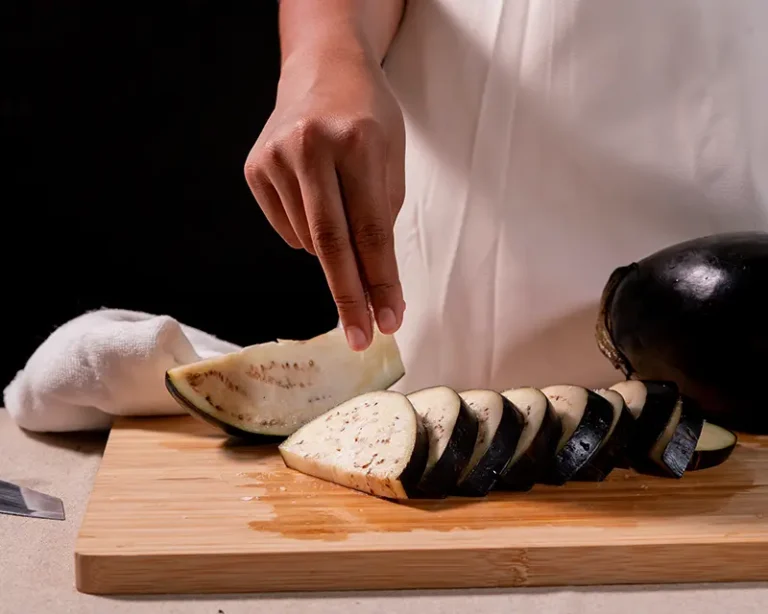
When salt is sprinkled on the surface, it dissolves and forms a concentrated layer outside the cells.
Water inside the cells begins to move toward this saltier environment. As water leaves the cells, internal pressure decreases and the vegetable tissue softens. This is why salted vegetables release liquid and lose crispness.
Plant cells are also connected by a structural substance called pectin. Pectin helps neighbouring cells stick together and contributes to firmness. When salt changes the water balance around cells, it also influences how these pectin connections behave, further affecting texture.
Because plant tissues depend on both internal water pressure and pectin connections, salt can begin changing texture even before heat is applied.
Texture in Practice
Once you understand how salt affects texture, timing becomes easier. The same pinch can help one food stay juicy, make another food soften, or help a surface dry enough to crisp.
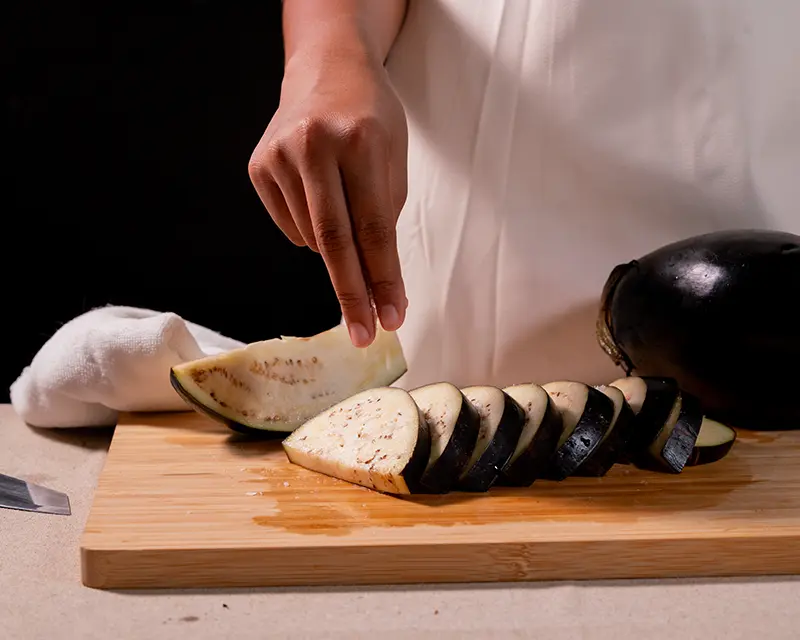
Aubergine shows the plant-cell side of texture. Salt pulls moisture from the flesh, lowers internal pressure, and helps the cooked texture become softer, richer, and less watery.
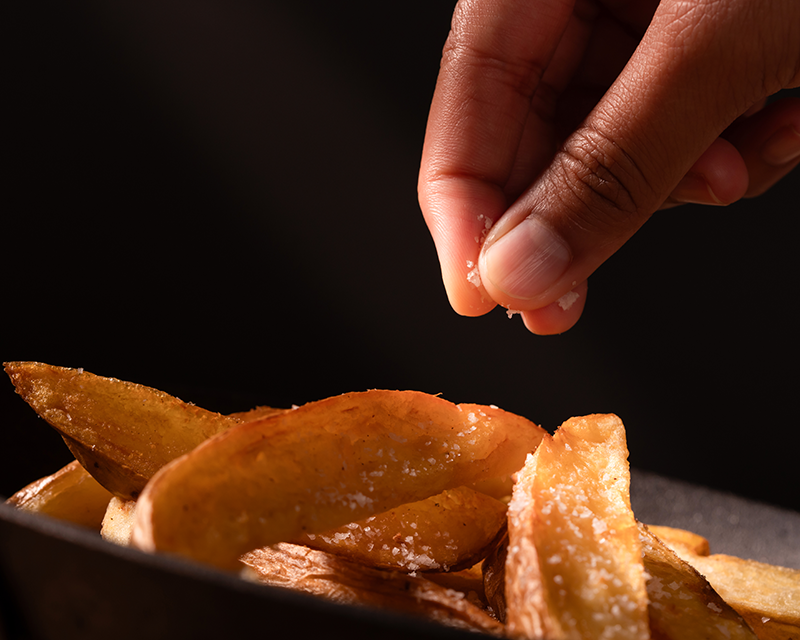
Fries show the surface-moisture side of texture. A dry surface can crisp. A wet surface steams. Salt timing changes which one happens.
Frequently Asked Questions About How Salt Affects Texture
Does salt make food softer or firmer?
Both. At lower levels, salt can loosen protein structures and help food retain water, leading to a softer texture. At higher concentrations, it tightens proteins and creates firmer structures. The outcome depends on how much salt is used and when it is added.
How does salt change the texture of food?
Salt changes how water is distributed and how proteins and plant cells hold together. This affects firmness, tenderness, and moisture during cooking.
Does salt affect texture before cooking?
Yes. Salt begins interacting with proteins and plant cells as soon as it dissolves, changing structure and moisture distribution before heat is applied.
Is texture change from salt visible immediately?
Not always. Many structural changes happen at a microscopic level and only become noticeable during cooking or when the food is eaten.
How salt affects texture in food?
How salt affects texture depends on the food. In proteins, it can change tenderness and moisture retention. In vegetables, it can pull water from plant cells and soften structure. On surfaces, it can help food dry, brown, and crisp.
Read More About Salt & Flavour
This page focuses on how salt affects texture.
For the full system on how salt changes the way food tastes, see → How Salt Affects Flavour.
Related mechanisms: