How Salt Affects Mouthfeel
Salt affects mouthfeel by changing how food feels in the mouth, including crispness, smoothness, richness, and how flavour appears and fades during eating. It does this through how salt dissolves, where it sits in the food, and how it interacts with saliva, which is why the same amount of salt can feel very different depending on how it is structured and applied.
Introduction
Mouthfeel is not just about texture. It is about how flavour behaves as you eat. The same dish can feel sharp or smooth, quick or lingering, depending on how the salt is used. These differences come from structure and placement, not just quantity.
The sections below show how surface salt, crystal size, and saliva shape the way flavour is released, spread, and sustained in the mouth.
Why Salt Tastes Stronger on the Surface of Food
Salt does not taste the same depending on where it sits in the food. When salt is fully dissolved and mixed throughout a dish, the flavour is distributed evenly. Each bite contains the same small amount of salt, which creates a balanced background seasoning.
When salt remains on the surface of food, the experience is different. Individual crystals dissolve directly on the tongue as the food is eaten.
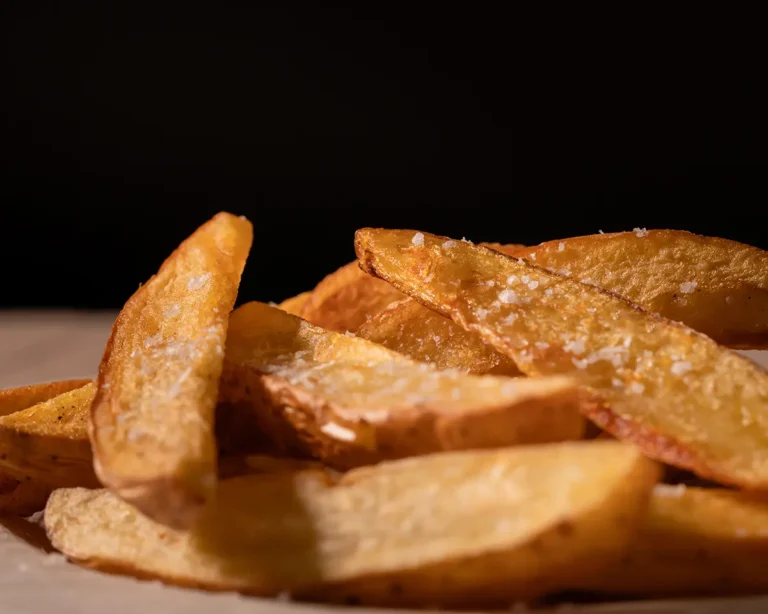
This produces short bursts of concentrated saltiness that feel stronger and more vivid than the same amount of salt spread evenly through the dish. This is why finishing salts are often sprinkled over food just before serving. A few crystals on the surface of roasted vegetables, grilled meat, chocolate, or bread can create sharp moments of saltiness that highlight the surrounding flavours.
In cooking, this difference between dissolved salt and surface salt allows chefs to control how flavour appears on the palate. Salt mixed into the food builds overall seasoning, while salt on the surface creates contrast and intensity.
👩🏽🍳 Science Deep Dive
The perceived intensity of saltiness depends on the local concentration of sodium ions (Na⁺) reaching taste receptors on the tongue.
When salt is dissolved uniformly in food, sodium ions are distributed evenly throughout the liquid phase. During eating, the saliva surrounding the food quickly mixes with this liquid, producing a relatively stable sodium concentration at the surface of the tongue. Taste receptors are therefore stimulated at a moderate but consistent level.
Surface salt behaves differently. Undissolved crystals remain intact until they contact saliva. When a salt crystal dissolves on the tongue, it releases a highly concentrated local solution of sodium and chloride ions.
This creates a temporary area of very high salinity around nearby taste buds. The sudden spike in sodium ion concentration produces a stronger activation of epithelial sodium channels (ENaC) on salt-sensitive taste receptor cells.
Because these crystals dissolve gradually during chewing, the tongue experiences short pulses of high salinity rather than a constant background signal. The brain interprets these pulses as a stronger and more vivid salty sensation.
Crystal size and structure also influence this effect. Larger or irregular crystals dissolve more slowly, producing discrete bursts of saltiness, while very fine salt dissolves almost immediately and behaves more like dissolved seasoning.
This combination of local ion concentration, dissolution speed, and neural response explains why salt placed on the surface of food often tastes more intense than the same amount mixed evenly throughout the dish.
How Crystal Size Changes Salt Perception
Salt crystals come in many shapes and sizes, and this physical structure changes how salt is experienced in the mouth.
Very fine salt dissolves almost instantly when it touches moisture on the tongue. Because it disappears so quickly, the salt spreads evenly through saliva and produces a smooth, consistent saltiness across the whole mouth.
Larger crystals behave differently. They take longer to dissolve, so the saltiness appears in small waves as the crystals slowly break down during chewing.
Flaky salts create yet another experience. Their thin, fragile layers shatter easily between the teeth, exposing new surfaces that dissolve quickly. This produces sharp bursts of saltiness that appear suddenly and then fade.
Crystal size affects how quickly salt dissolves in moisture, shaping how salinity and texture are perceived when eating.
Because of these differences, the same amount of salt can feel very different depending on crystal size. Fine salts are often used when cooks want even seasoning throughout a dish, while larger crystals are often used as finishing salts to create moments of stronger flavour on the surface of food.
👩🍳 Science Deep Dive
The sensory differences between salt crystals arise from dissolution kinetics, the rate at which sodium chloride crystals dissolve and release ions into saliva.
Dissolution occurs at the solid–liquid interface of the crystal. Water molecules from saliva interact with ions exposed at the crystal surface, separating sodium (Na⁺) and chloride (Cl⁻) ions from the ionic lattice and dispersing them into the surrounding liquid.
The rate of this process depends strongly on surface area relative to mass.
Small crystals expose a large surface area compared with their volume. This allows many ions to interact with water simultaneously, leading to rapid dissolution and a quick increase in sodium ion concentration in saliva. Taste receptors therefore experience a relatively uniform salt signal.
Large crystals expose much less surface area initially. Water molecules can only detach ions from the outer layers of the crystal, so dissolution occurs gradually. As chewing fractures the crystal, new surfaces become exposed and additional ions are released, producing transient spikes in sodium ion concentration.
Crystal morphology also plays an important role. Flaky salts consist of thin plate-like crystals formed during rapid evaporation of brine. These structures fracture easily under mechanical stress, dramatically increasing exposed surface area and accelerating ion release.
These changes in dissolution rate determine how quickly sodium ions reach epithelial sodium channels (ENaC) on salt-sensitive taste receptor cells. Faster ion release produces a rapid but even salt signal, while slower or intermittent dissolution generates pulses of high local salinity.
Through these physical mechanisms—surface area, crystal morphology, and dissolution kinetics—the geometry of salt crystals directly shapes how saltiness is perceived during eating.
Why Salt Stimulates Saliva and Extends Flavour
Salt does not only change how food tastes. It also changes how flavour spreads and lingers in the mouth while eating.
When salt touches the tongue, it stimulates the production of saliva. This extra moisture helps dissolve flavour compounds from the food and spreads them across the surface of the mouth. As a result, flavours become easier to perceive.
Saliva also helps carry flavour molecules toward the back of the mouth, where they can travel upward to the nose. This movement strengthens the aroma component of flavour while eating.
Because salt increases saliva flow, it can make flavours feel more vivid and longer-lasting. The seasoning helps dissolve and distribute flavour compounds, allowing the taste and aroma of the food to remain noticeable for a longer time after each bite.
🧑🏽🍳 Science Deep Dive
Salt stimulates gustatory–salivary reflexes, neural responses that increase salivary secretion when taste receptors on the tongue are activated.
When sodium ions (Na⁺) enter epithelial sodium channels (ENaC) on salt-sensitive taste receptor cells, electrical signals travel through gustatory nerves to the brainstem. These signals activate salivary nuclei that regulate the salivary glands, including the parotid, submandibular, and sublingual glands. As a result, saliva production increases during eating.
Saliva plays several important roles in flavour perception. It acts as a solvent, dissolving taste-active molecules such as salts, sugars, amino acids, and organic acids so they can interact with taste receptors on the tongue. Without sufficient saliva, many flavour compounds remain trapped in the food matrix and cannot be detected efficiently.
Saliva also assists in mass transfer of flavour molecules within the mouth. As food is chewed, saliva mixes with the food and distributes dissolved compounds across the oral cavity. This spreading increases the probability that flavour molecules contact taste receptors and that volatile aroma molecules evaporate into the air spaces of the mouth.
Finally, saliva contributes to retronasal aroma transport. Airflow generated during breathing and swallowing carries volatile molecules from the oral cavity through the nasopharynx to the olfactory epithelium in the nasal cavity. Increased saliva flow can enhance this process by dissolving and mobilising aroma compounds from the food.
Through these combined effects—stimulating salivary secretion, dissolving flavour molecules, and promoting their transport within the mouth—salt can increase both the intensity and the persistence of flavour perception during eating.
Read More About Salt & Flavour
This page focuses on how salt affects mouthfeel.
For the full system on how salt changes the way food tastes, see → How Salt Affects Flavour.
Related Mechanisms:
- → How Salt Changes Taste Perception
- → How Salt Affects Browning
- → How Salt Moves Through Food
- → How Salt Changes Texture
- → How Salt Enhances Aroma
Frequently Asked Questions About How Salt Changes Mouthfeel
Why does salt make the mouth water?
Salt activates taste receptors that trigger saliva production. This extra saliva helps dissolve and spread flavour across the mouth, changing how food feels while eating.
How does saliva change mouthfeel?
Saliva acts as a carrier for flavour. It dissolves compounds from food and spreads them across the tongue, making flavours feel smoother, more continuous, and longer-lasting.
Does salt change how flavour spreads in the mouth?
Yes. Salt helps flavour compounds dissolve and move with saliva, allowing them to spread more evenly across the tongue and feel more complete.
Why does salt taste stronger on the surface of food?
When salt sits on the surface, it dissolves directly on the tongue and creates short bursts of concentrated flavour. When mixed evenly, the same amount feels more subtle and constant.