When to Salt Roast Potatoes for Crisp Edges
Roast potatoes are table food. They sit beside roast chicken, lamb, beef, BBQ, grilled fish, herbs, sauces, gravy, and long meals where people go back for one more piece.
That is why when to salt roast potatoes matters. A roast potato has to do two jobs at once: the middle should taste seasoned and soft, while the edge should stay crisp, hot, and lifted by salt. If you only salt at the end, the surface may taste good for a second, but the centre can still taste flat. If you only salt the water, the potato can taste seasoned inside but miss that final crisp edge.
The best roast potatoes are salted in stages. When to salt roast potatoes is really about two moments: the cooking water and the hot roasted edge. Salt the water for the middle. Finish hot for the edge.
Many roast potatoes start with a brief boil before they go into the oven. That step is called parboiling, and it is the first chance to season the potato inside. From there, the work is simple: drain, steam-dry, roast in hot fat, then finish with salt while the edges are still hot enough for the crystals to grip.
That is the difference between roast potatoes that merely look crisp and roast potatoes people actually go back for.
👨🏽🍳 Quick Rule: salt the cooking water if you parboil, steam-dry the potatoes before roasting, then finish with salt while the edges are still hot and crisp.
The Best Time to Salt Roast Potatoes
When to salt roast potatoes comes down to two moments.
First, salt the water when you briefly boil the potatoes before roasting. This step is called parboiling, and it seasons the inside while the potato softens. If the middle is bland at this stage, surface salt at the end will not fully fix it.
Then drain the potatoes and let them steam-dry. This matters. Wet potatoes steam in the oven. Dry, rough potatoes roast better because the surface can crisp instead of staying soft.
Next, roast the potatoes in hot fat until the edges are crisp and golden. That fat might be beef tallow, duck fat, olive oil, or another good cooking fat, depending on the meal.
The second salt comes immediately after roasting, as soon as the potatoes leave the oven. The edges are still hot, rough, and lightly coated with fat, so finishing salt can grip the surface, soften slightly, and sharpen the first bite.
The same timing applies if you roast potatoes on a BBQ using indirect heat, a tray, or a cast-iron pan. Salt the water first if you parboil, roast the potatoes in hot fat until the edges crisp, then finish with salt as soon as they come off the heat. BBQ adds smoke and char, but it does not change the salt logic.
Do not wait until the potatoes are cooling on the table. By then the fat has started to set, steam has slowed, and the surface does not hold salt as well.
The order is simple: salt the water, steam-dry, roast in hot fat, finish as soon as they leave the oven.
🧑🏽🍳 Better Rule: cook the potato with salt first, then finish the roasted edge while it is still hot.
How Much Salt to Use for Roast Potatoes
For the cooking water, use 10 to 12 g of salt per litre of water. That is a good starting point for roast potatoes: enough to season the middle while the potatoes briefly boil, but not so much that the surface tastes harsh before the final salt goes on. Once you understand when to salt roast potatoes, the next question is how much salt belongs in the water and how much belongs on the edge.
The goal is not to make the potatoes salty in the water. The goal is to stop the centre tasting flat after roasting. If the water is too mild, the final salt only seasons the outside. If the water is too salty, the potato can taste heavy before it even reaches the oven.
After roasting, use much less finishing salt. The final salt sits on the crisp surface, so it tastes stronger than salt dissolved in water. Start with a light, even pinch while the potatoes are still hot, toss or turn gently, then taste.
Floury potatoes like Maris Piper, King Edward, Russet, Agria, and Desiree can take a slightly stronger final pinch because their fluffy centres balance the salted edge. Waxy potatoes like Charlotte, Nicola, Kipfler, Fingerling, and small new potatoes need a lighter hand because they stay firmer and carry surface salt more directly.
👩🏼🍳 Quick Rule: use 10 to 12 g salt per litre of cooking water, then finish the hot roasted edges with a smaller, more precise pinch.
Does the Potato Variety Change the Salt?
Yes, but mostly in amount, crystal size, and how assertive the finishing salt can be. Potato variety does not change when to salt roast potatoes, but it does change how much final salt the potato can carry.
Floury potatoes are usually best for classic roast potatoes because they break up at the edges after parboiling. Varieties like Maris Piper, King Edward, Russet, Agria, or Desiree give you rougher edges, better crisping, and a soft centre that can balance a stronger final pinch of salt. With these potatoes, you can use a slightly more generous finishing salt because the fluffy inside softens the surface hit.
Waxy potatoes behave differently. Varieties like Charlotte, Nicola, Kipfler, Fingerling, or many small new potatoes hold their shape and stay firmer. They have less fluffy middle to absorb the salt, so large crystals or strong flavoured salts can feel louder. Use a lighter hand and choose salts that lift rather than dominate: mineral salt, herb salt, or preserved lemon salt.
Small potatoes sit somewhere in between. They often have more skin, less fluffy interior, and a cleaner potato sweetness. They work well with olive oil, herbs, fish, chicken, yoghurt sauces, or lighter plates. Salt the water properly, then finish with a clean mineral salt or citrus salt rather than a heavy savoury one.
So the potato variety matters, but the rule stays simple: the fluffier the centre, the more surface salt it can carry. The firmer the potato, the more restraint you need.
👩🏻🍳 Quick Rule: floury potatoes like Maris Piper, King Edward, Russet, Agria, and Desiree can carry a stronger final salt. Waxy potatoes like Charlotte, Nicola, Kipfler, Fingerling, and new potatoes need cleaner, lighter seasoning.
Fat, Herbs and What the Potatoes Are Served With
Roast potatoes change with the fat around them. Beef tallow gives darker, meatier potatoes that make sense beside steak, roast beef, BBQ, burgers, mushrooms, onions, and gravy. Duck fat gives a richer, rounder potato that belongs with roast chicken, lamb, herbs, garlic, and long-table meals. Olive oil gives a cleaner, brighter potato for grilled fish, Mediterranean vegetables, yoghurt sauces, lemon, parsley, dill, and lighter plates. That is why when to salt roast potatoes should be paired with what they are served with, not treated as a single universal answer.
Herbs add aroma, but they do not replace seasoning. Rosemary, thyme, sage, garlic, and bay can make roast potatoes smell incredible, but they cannot fix a bland centre. Salt still has to do the structural work.
This is where culinary salts become useful. A clean mineral salt keeps classic roast potatoes clear and direct. Fermented mushroom salt deepens potatoes served with steak, mushrooms, roasted onions, or beef tallow. Black garlic salt fits BBQ, grilled meat, darker sauces, and char. Preserved lemon salt works when the plate needs lift beside fish, chicken, herbs, yoghurt, or olive oil.
👩🏻🍳 Salt Pairing Rule: choose the salt by the fat, herbs, and dish around the potatoes, not by the potato alone.
Best Salts for Roast Potatoes
The best salt for roast potatoes depends on the fat, herbs, and dish around them. A potato roasted in duck fat beside lamb does not need the same salt as potatoes roasted in olive oil beside fish. The Maison Kojira Culinary Salt collection gives you different ways to keep the potato clean, deepen the savoury edge, or add brightness at the end.
Mineral salt
When to salt roast potatoes tells you the moment. The fat, herbs, and table decide which salt makes sense. Use in the cooking water and again as a clean finishing salt when you want the potato, fat, and browned edge to stay clear. This is the classic choice for roast chicken, eggs, grilled meat, butter, olive oil, and herbs. Kojira Artisan Mineral Salt fits here because it gives clean salinity without pushing the potatoes into a flavoured direction.
Herb salt
Best for classic roast potatoes with rosemary, thyme, sage, bay, parsley, or herbes de Provence. This is especially good with roast chicken, lamb, olive oil, butter, and Mediterranean tables. Herb salt perfumes the edge without making the potatoes heavy.
Garlic salt
Garlic and roast potatoes belong together, but ordinary garlic salt can taste powdered or harsh. Use it carefully with roast chicken, BBQ, lamb, burgers, or darker sauces. Even better: use black garlic salt when you want garlic depth, sweetness, and umami without the raw garlic-powder edge.
Mushroom salt
Best for roast potatoes with steak, beef tallow, mushrooms, roasted onions, gravy, lentils, or winter vegetables. Use this when the potatoes need more savoury depth. Fermented mushroom salt makes the browned edges taste deeper and the soft centre feel more substantial, especially beside darker, richer food.
Lemon or citrus salt
Best for roast potatoes with grilled fish, roast chicken, olive oil, parsley, dill, yoghurt sauce, or lighter vegetable plates. Preserved lemon salt works when the potatoes are rich but the plate needs lift.
Smoked salt
Best for BBQ roast potatoes, beef, burgers, grilled meat, and charred vegetables. Use lightly. Smoke should support the roasted edge, not make the potatoes taste like ash.
👩🏽🍳 Salt Pairing Rule: choose the salt by the table. Herbs for roast chicken and lamb. Mushroom for beef and gravy. Black garlic for BBQ and char. Preserved lemon for fish, olive oil, and brightness. Mineral salt when the potato itself should stay in focus.
More Potato Salting Guides
Once you understand when to salt roast potatoes, the same logic becomes more specific with other potato dishes. Fries need salt immediately after cooking so the crystals grip while the surface is still hot. Boiled potatoes need salted water so the seasoning reaches the inside. Mashed potatoes need salt in the cooking water, then a final adjustment after butter or cream.
Each method changes what salt is trying to do: grip the surface, season the centre, sharpen the edge, or balance richness.
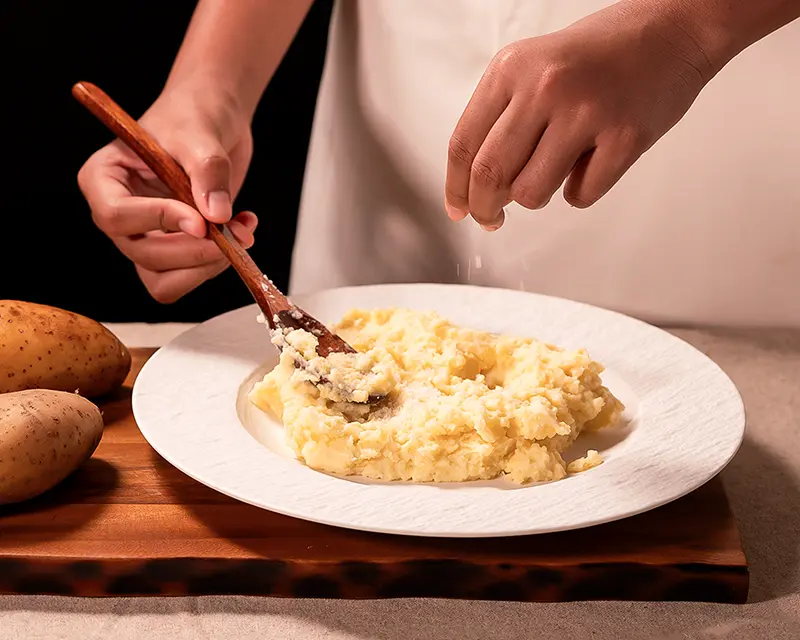
How to Salt Mashed Potatoes So They Taste Rich, Not Salty
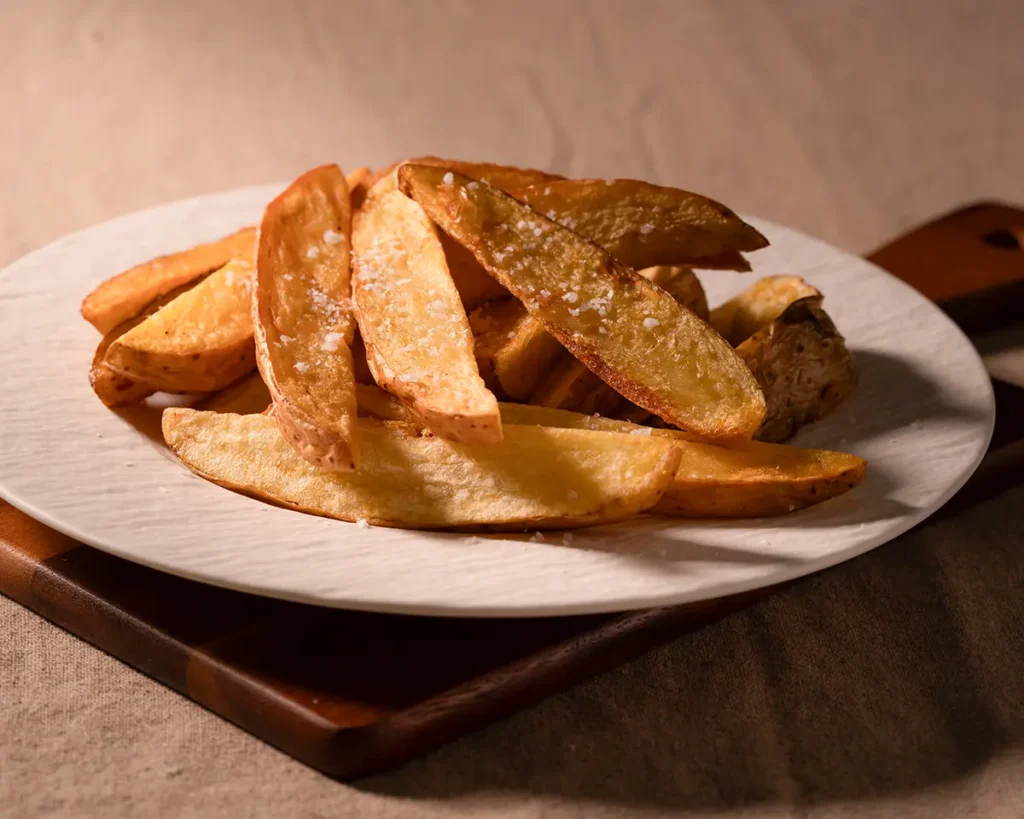
When to Salt Fries So They Stay Crisp
Frequently Asked Questions About When To Salt Roast Potatoes
When should you salt roast potatoes?
When to salt roast potatoes depends on the stage. Salt the cooking water if you parboil the potatoes, then finish with salt as soon as they leave the oven while the edges are still hot and crisp.
Should you salt roast potatoes before or after roasting?
Both, but in different ways. The answer to when to salt roast potatoes is water first, edge last: salt the cooking water to season the middle, then add finishing salt after roasting to sharpen the crisp edge.
Should you salt the water for roast potatoes?
Yes, if you briefly boil the potatoes before roasting. Salted water seasons the inside of the potato so the centre does not taste flat after roasting.
Can you roast potatoes on a BBQ?
Yes. Use indirect heat, a tray, foil tray, or cast-iron pan. The salt logic stays the same: salt the water first if you parboil, roast in hot fat, then finish with salt as soon as the potatoes come off the heat.