When to Salt Fries So They Stay Crisp
A fry gives you only a few seconds to season it properly. Straight from the fryer, oven, or air fryer, the surface is still hot, lightly coated with oil, and dry enough to hold salt. That is when to salt fries: the moment the surface is hot enough to hold seasoning. Salt grips, softens slightly, and stays where you taste it: on the crisp outer layer.
Salt before cooking and you work against the potato. Raw cut potato still holds surface moisture, and salt pulls more of it out. Salt during cooking and you mostly season the fat, tray, or basket. Wait too long after cooking and the surface cools, the oil sets, and the salt falls through the fries onto the plate.
So the rule is simple: cook first, salt immediately, toss gently, serve fast.
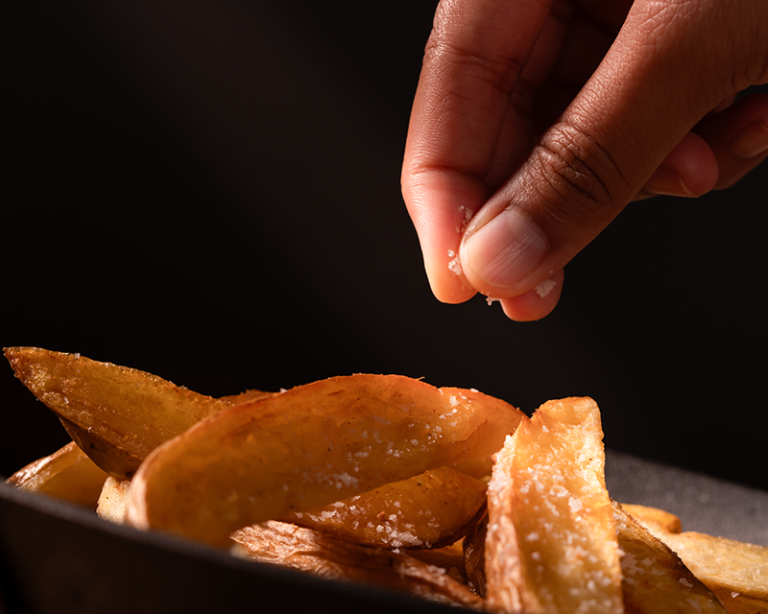
Whether you are making thin French fries, thicker Belgian-style fries, wedges, oven fries, or air-fried fries, the timing stays the same. What changes is the salt. Thin fries need a finer salt or a lighter hand. Thick fries can carry a slightly larger crystal because each bite has more soft potato inside to balance the surface hit.
👨🏼🍳 Quick Rule: salt fries immediately after cooking, while they are still hot and lightly oily.
When to Salt Fries After Frying, Baking or Air-Frying
When to salt fries does not change much by cooking method. Deep-fried fries, oven fries and air-fried fries all need salt immediately after cooking, while the surface is still hot and lightly oily.
How Much Salt to Use on Fries
Fries usually need more salt than people expect, because potato is bland, starchy, and spread across a lot of surface. The trick is not to be timid. The trick is to salt evenly. Once you understand when to salt fries, the bigger problem is coverage: salt has to move across the whole batch before the fries cool.
Start with a light, even shower while the fries are still hot. Toss, taste, then salt again if needed. Thin French fries need fast, fine seasoning because they cool quickly and expose more surface. Thick Belgian-style fries, wedges, and steak fries can carry larger crystals because the soft centre balances the surface salt.
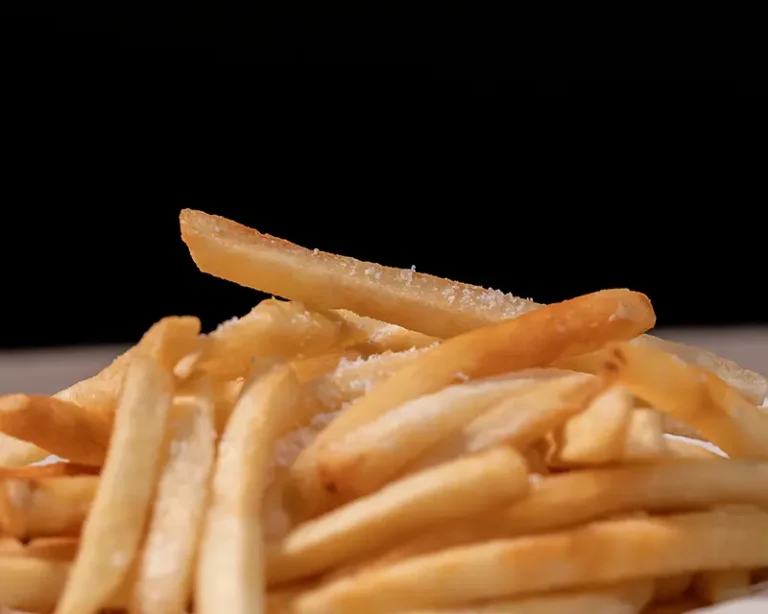
You want fries that taste seasoned all the way through the basket, not fries with a few salty pieces and a pile of salt left on the plate.
👩🏽🍳 Chef tip: salt fries in a warm bowl and toss high enough to move the whole batch. A flat plate gives you uneven fries: salty on top, bland underneath.
Thin French Fries vs Thick Belgian Fries
Thin fries and thick fries should both be salted immediately after cooking, but they do not carry salt in the same way. This is why when to salt fries is only the first question. The cut decides how fine, coarse, light or assertive the salt should be.
With thin French fries, you taste the surface almost immediately. There is less soft potato inside each fry to absorb the hit, so the salt needs to be fine, even, and quick. If the crystals are too large or scattered unevenly, one bite tastes sharp and the next tastes flat.
Thick Belgian-style fries, wedges, and steak fries give you a different experience. You get the salted crust first, then the soft potato centre underneath. That centre matters. It gives the salt something to push against, so the fry can carry a slightly larger crystal or a more aromatic salt without becoming harsh.
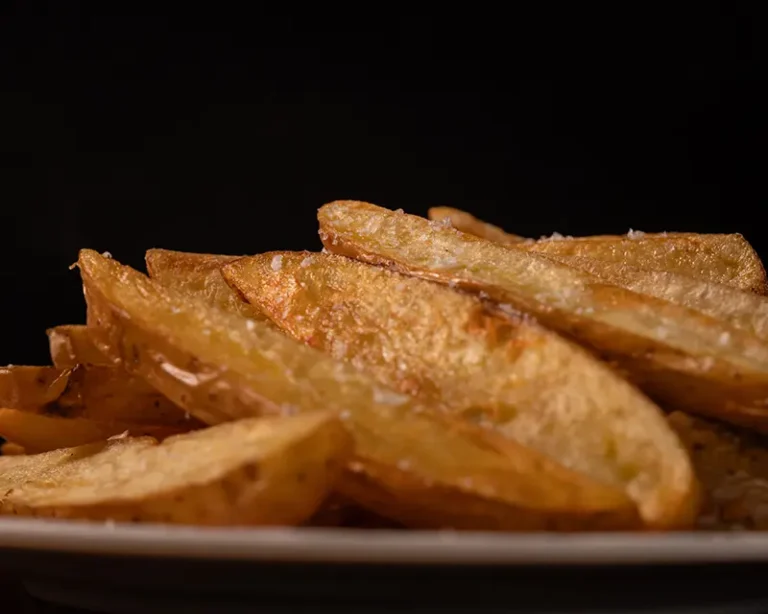
This is why the cut changes the seasoning. A thin fry wants fast, even coverage. A thick fry can give you contrast: crisp edge, warm centre, salt on the surface, potato sweetness underneath.
For thin fries, think precision. For thick fries, think balance.
🧑🏽🍳 Quick Rule: thin fries need finer, faster seasoning. Thick fries can carry bigger crystals and deeper flavours.
Why Fries Should Be Salted While Hot
Fries are easiest to season in the first moments after cooking. When they come out of the fryer, oven, or air fryer, the surface is still hot and lightly coated with fat. That fat keeps the salt in place. The heat softens the crystals slightly. The steam rising from the potato helps some of the salt dissolve into the surface without making the fry wet.
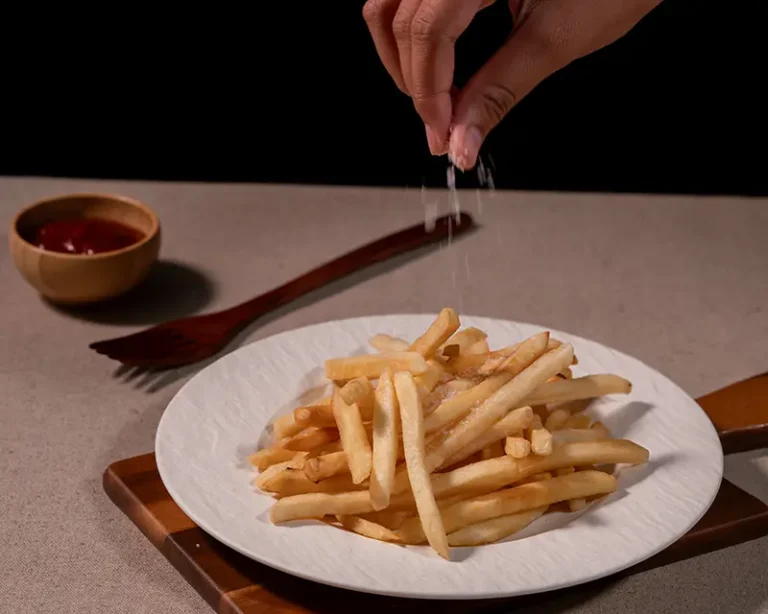
This is why when to salt fries is only the first question. The cut decides how fine, coarse, light or assertive the salt should be. You are not just adding salt. You are catching the fry at the moment when the surface can hold it. Wait too long and the surface changes. The oil cools. The crust firms. The steam slows down. Salt no longer melts into the surface; it bounces, slides, or collects underneath the fries. The result is familiar: salty plate, uneven fries, and potato that tastes less seasoned than it should.
This is also why good fries should be served quickly. Salt works best while the fries are still alive with heat.
Fries, Frites, Chips: Why the Style Changes the Salt
In Brussels, you think of frites: thicker, hot, often double-fried, served with sauce and eaten as the main event. In Paris, fries become steak frites, part of a plate where potato, beef, fat, and salt have to work together. In the United States, fries became the default companion to burgers, diners, drive-ins, BBQ, and fast food.
Same basic pleasure. Different context.
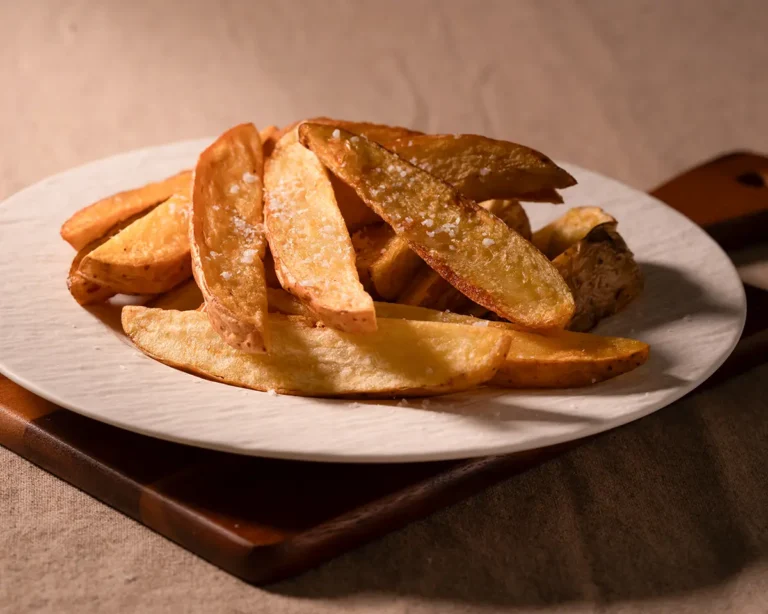
That context changes the salt. A paper cone of Belgian-style frites can handle a more assertive finish because the fries are thicker and often eaten with sauce. Steak frites need salt that supports beef fat, not just potato. Burger fries can take deeper savoury salts because they sit beside char, cheese, pickles, and sauce. Thin fast-food-style fries need speed and evenness because they cool quickly and punish uneven seasoning.
The best fries are not defined by country. They are defined by structure: crisp surface, soft centre, clean fat, and salt added at the right moment.
🧑🏻🍳 Maison Kojira rule: season fries for the way they will be eaten, not just for the potato itself.
Good Fries Are Not Junk Food by Default
Fries have a bad reputation because most people meet them at their worst: old oil, weak potatoes, poor temperature control, too much salt, too much sauce, and too much time sitting in a delivery box.
That is not the same thing as a good fry.
At home, fries can be something much simpler: potatoes cut well, cooked in clean fat, salted at the right moment, and eaten while still hot. The pleasure is not complicated. Crisp edge. Soft centre. Salt on the surface. Enough fat to carry flavour, not so much that the potato disappears.
The fat matters. Beef tallow, duck fat, olive oil for oven fries, avocado oil, or another stable cooking fat gives a different result from tired commercial frying oil. The potato matters too. A waxy potato, a starchy potato, a fresh potato, and a stored potato all behave differently once heat starts pulling water from the surface.
Fries do not become better because you add more things to them. They become better when the basics are controlled: potato, cut, fat, heat, salt, timing. That is why when to salt fries matters as much as which salt you use.
🧑🏾🍳 Better Rule: good fries are built before the sauce arrives. Salt is the final move, not the cover-up.
Best Salts for Fries
The best salt for fries depends on the cut, the fat, and what the fries are served with. Thin fries need even coverage. Thick fries can carry more contrast. Fries beside steak, burgers, fish, or BBQ each want a different finish. The Maison Kojira Culinary Salt collection gives you different ways to add clarity, umami, brightness, or heat. When to salt fries tells you the moment. The salt itself should be chosen by cut, fat and what sits beside the fries.
Classic fry salt
Best for thin French fries, fast fries, and fries served with mayonnaise, ketchup, aioli, or simple sauces. Use a fine or medium-grain salt that spreads quickly and seasons the whole batch evenly. A clean sea salt or mineral salt works best here. For Maison Kojira, this is where Kojira Artisan Mineral Salt belongs: direct, clean, and crisp without turning the fries into a flavoured snack.
Flaky salt for thick fries
Best for Belgian-style fries, wedges, and steak fries when you want visible crystals and a stronger surface hit. Use it carefully. Large flakes can feel clumsy on thin fries, but they work when there is enough soft potato inside to balance them.
Fermented mushroom salt
Fermented mushroom salt is best for steak frites, burger fries, beef-fat fries, mushroom fries, parmesan-style fries, or fries that would usually get truffle oil. This is the better direction when you want real savoury depth instead of fake truffle perfume.
Chilli salt or lime-chilli salt
Best for snack-style fries, BBQ fries, Thai-style dips, grilled meat, and casual sharing plates. Use when the fries should feel sharper, louder, and more playful.
Black garlic salt
Black garlic salt is best for fries served with BBQ, burgers, grilled meat, roast chicken, darker sauces, or anything with char and fat. It adds sweetness, depth, and umami.
Preserved lemon salt
Preserved lemon salt is best for fries with fish, seafood, grilled chicken, yoghurt sauces, herb sauces, or anything that needs brightness instead of more richness.
👨🏽🍳 Salt Pairing Rule: choose the salt by the plate, not just the potato. Classic fries need clarity. Steak frites can take umami. Seafood fries need brightness. Burger fries can handle depth.
More Potato Salting Guides
Once you understand when to salt fries, the same logic becomes more specific with other potato dishes. Roast potatoes need salt at more than one stage. Boiled potatoes need seasoning inside the potato, not just on the surface. Mashed potatoes need salt in the cooking water, then a final adjustment after butter or cream.
Each method changes how salt behaves.
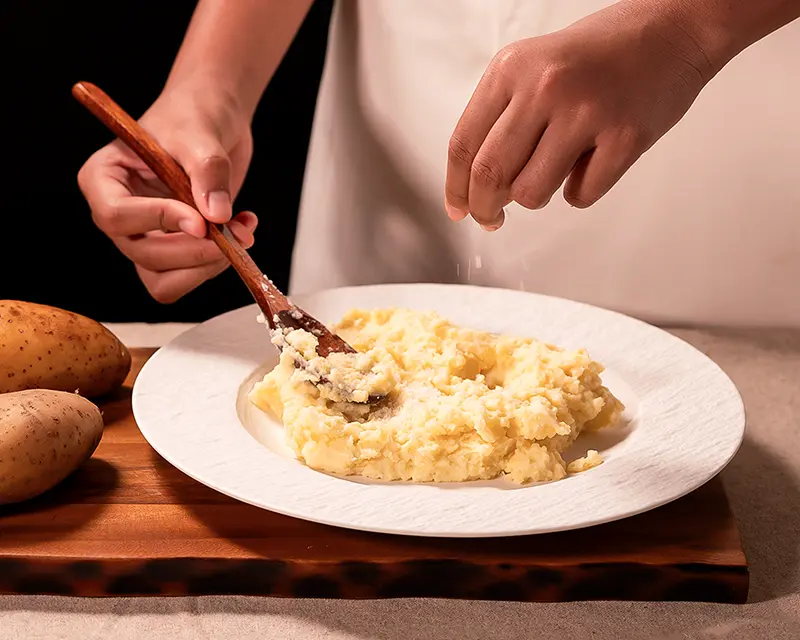
How to Salt Mashed Potatoes So They Taste Rich, Not Salty
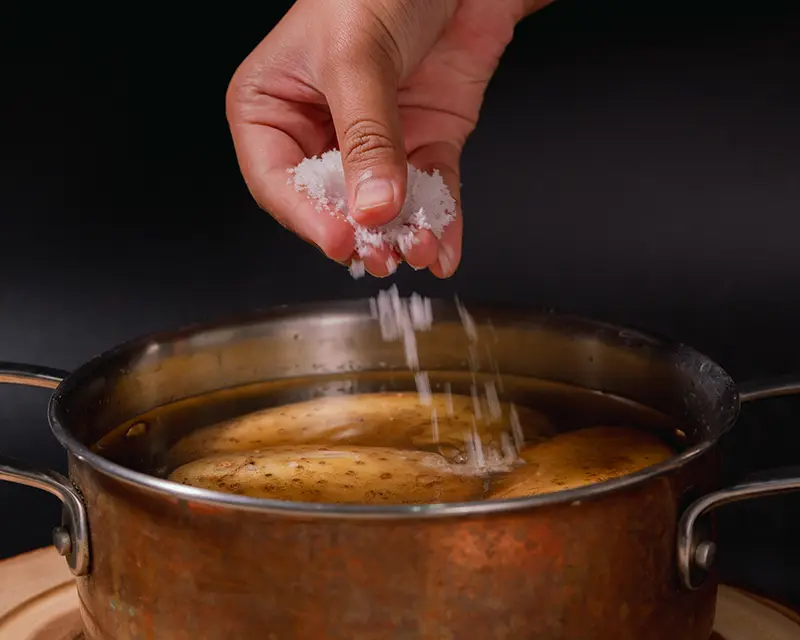
How to Salt Boiled Potatoes So They Taste Delicious
Frequently Asked Questions About When To Salt Fries
When should you salt fries?
Salt fries immediately after cooking, while they are still hot and lightly coated with oil.
Should you salt fries before or after frying?
Salt fries after frying, not before. Raw cut potatoes still hold surface moisture, and salt pulls more of it out. During frying, salt mostly seasons the oil, basket, or tray. The best moment is immediately after frying, while the fries are still hot and lightly oily.
How do you get salt to stick to fries?
Salt fries as soon as they come out of the fryer, oven, or air fryer, then toss them in a warm bowl. The heat, surface oil, and steam help the salt grip. If the fries cool first, the oil sets and the salt sticks less evenly.