How to Salt Yogurt, Greek Yogurt and Labneh Beautifully
Salt on yogurt sounds strange until you taste it. A small pinch can turn plain yogurt, Greek yogurt, or labneh from sharp and plain into something savoury, rounded, and complete, especially with olive oil, cucumber, herbs, garlic, lemon, or warm bread.

How to salt yogurt properly depends on timing. Add finishing salt just before eating, so the crystals stay on the surface and make plain yogurt, Greek yogurt, or labneh taste savoury, rounded, and complete.
Yogurt brings acidity. Greek yogurt adds body. Labneh is thicker, richer, and more concentrated. Finishing salt works differently on each one, but the principle is the same: add it at the end, use very little, and let the crystals sharpen the surface rather than disappear into the bowl.
👨🏼🍳 Quick Rule: add finishing salt to yogurt just before eating, not while mixing everything together.
Why Finishing Salt Works on Yogurt
Yogurt tastes sharp first. Salt makes it taste rounder.
Good yogurt is sharp, creamy, and lightly sweet from the milk. A small pinch of finishing salt softens the sharp edge of the yogurt and brings the milk flavour forward. It also makes savoury toppings feel more complete: olive oil, cucumber, garlic, herbs, lemon, roasted vegetables, eggs, chickpeas, lamb, or warm bread.
This is why yogurt with salt makes sense across Mediterranean, Middle Eastern, South Asian, and Central Asian food: labneh with olive oil, Greek yogurt with cucumber and herbs, savoury yogurt dips, and ayran-style yogurt drinks.
Finishing salt matters because it stays on the surface. The crystals dissolve gradually as you eat. One spoonful may taste cool and tangy, while the next becomes rounder and more savoury when a crystal reaches the tongue. That shifting balance is the point.
Yogurt also carries aromatic salts well. Citrus peel, herbs, saffron, preserved lemon, or black garlic can add complexity without overwhelming the clean flavour of the yogurt.
Sprinkle a light pinch of finishing salt over yogurt just before serving. It works especially well with thick strained yogurt, Greek yogurt, or labneh served with olive oil and warm bread.
👩🏽🍳 Flavour Insight: salt softens yogurt’s acidity, brings the milk flavour forward, and creates surface contrast when the crystals are added at the end.
When to Add Finishing Salt to Yogurt
Add finishing salt just before serving. This matters because finishing salt works on the surface. The crystals should sit on top of the yogurt, olive oil, herbs, cucumber, honey, fruit, nuts, or warm vegetables, then dissolve as you eat.
If you stir the salt in too early, it becomes regular seasoning. The yogurt may still taste better, but you lose the little bursts of texture and flavour that make finishing salt useful.
Build the bowl first. Spoon the yogurt, Greek yogurt, or labneh into a shallow dish. Add olive oil, herbs, cucumber, garlic, lemon, honey, fresh fruit, figs, roasted nuts, eggs, chickpeas, or grilled vegetables. Then finish with a small pinch of salt across the surface.

For dips and sauces, the rule changes slightly. Mix a little salt into the yogurt if the whole dip needs seasoning, then add a few crystals of finishing salt on top before serving.
👨🏻🍳 Quick Rule: mix salt in when you need seasoning; add finishing salt on top when you want contrast.
How Much Finishing Salt to Use on Yogurt
Use less salt in yogurt than you think. Yogurt is acidic, creamy, and delicate. Too much salt makes it taste harsh. Start with a tiny pinch across the surface, then taste before adding more.
The amount depends on the yogurt and what is served with it.
Use less when the bowl already contains salty ingredients such as feta, olives, anchovies, cured fish, salted nuts, pickles, preserved lemon, or salted bread.
Use a little more when the yogurt is thick, plain, full-fat, and served with olive oil, cucumber, herbs, roasted vegetables, eggs, chickpeas, or warm flatbread.
For sweet yogurt with honey, figs, dates, berries, or roasted nuts, use only a few crystals. The salt should sharpen the sweetness, not turn the bowl savoury. The goal is not salty yogurt. The goal is yogurt that tastes brighter, rounder, and more complete.
🧑🏼🍳 Salt Rule: if you can clearly taste “salt” before you taste the yogurt, you used too much.
Yogurt with Olive Oil and Salt
Yogurt with olive oil and salt is one of those dishes that looks too simple until the first spoonful.
The yogurt is cool and sharp. The olive oil sits on top, green, fruity, and soft around the edges. The salt stays visible for a moment before it dissolves, giving each bite a small flash of contrast.
This is not a complicated dish. That is why the ingredients matter.
Use thick yogurt, Greek yogurt, or labneh. Spoon it into a shallow bowl rather than a deep one, so the olive oil and salt can sit across the surface. Add good extra virgin olive oil, then finish with a small pinch of salt.
From there, the dish can move in different directions.
With cucumber, dill, mint, garlic, and lemon, it becomes bright and cooling. With roasted carrots, chickpeas, cumin, and warm flatbread, it becomes more generous. With tomatoes, herbs, olive oil, and preserved lemon salt, it becomes sharper and more summery. With honey, figs, dates, or roasted nuts, it moves toward sweet, but still needs only a few crystals.
The best version tastes immediate: cold yogurt, warm bread, olive oil on the spoon, salt appearing and disappearing as you eat.
Best salts for yogurt with olive oil: artisan mineral salt for clarity, preserved lemon salt for brightness, saffron salt for warmth, and black garlic salt when the bowl moves into deeper savoury flavours.
👩🏻🍳 Quick Rule: use a shallow bowl, good olive oil, and a small amount of salt across the surface.
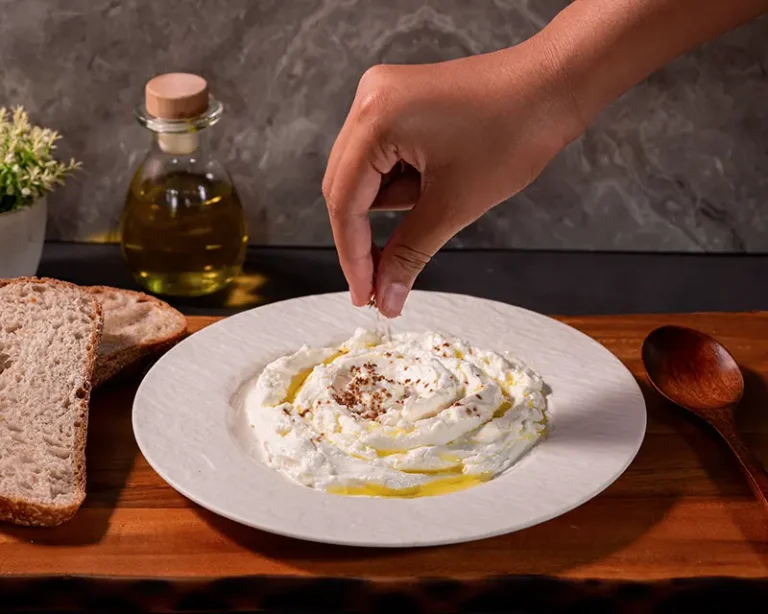
Greek Yogurt with Salt
Greek yogurt is one of the easiest places to use finishing salt because it has body.
Thin yogurt can swallow salt quickly. Greek yogurt holds it on the surface for longer, especially when it is served thick, cold, and spread across a shallow bowl. That gives the salt time to do its job: soften the acidity, sharpen the milk flavour, and create contrast against olive oil, herbs, cucumber, garlic, lemon, eggs, chickpeas, roasted vegetables, or warm bread.
For a savoury bowl, start with plain full-fat Greek yogurt. Add olive oil, then build around one clear direction.
For something cooling, use cucumber, mint, dill, lemon, and preserved lemon salt.
For something richer, use roasted carrots, chickpeas, cumin, black pepper, and artisan mineral salt.
For breakfast, keep the salt much lighter. Greek yogurt with honey, figs, dates, berries, or roasted nuts can take a few crystals, but the salt should make the sweet ingredients taste clearer. It should not make the bowl taste savoury.
Greek yogurt is forgiving, but only up to a point. Greek yogurt gives you more margin than thin yogurt, but too much salt still turns the bowl harsh.
👨🏽🍳 Quick Rule: Greek yogurt can handle finishing salt because it is thick, but the salt should still stay in the background.
Labneh with Finishing Salt
Labneh is yogurt with more patience. As yogurt strains, it loses whey and becomes thicker, richer, and more concentrated. The acidity stays, but the texture changes. It becomes something you can spread, scoop, drag through olive oil, or eat with warm flatbread.
That makes labneh one of the best places for finishing salt.
Serve it in a shallow bowl. Make a small well with the back of a spoon. Add olive oil, then finish with salt just before serving. The crystals should stay on the surface, caught in the oil and the ridges of the labneh.
From there, keep the direction clear.
- For a bright bowl, use cucumber, mint, dill, lemon, and preserved lemon salt.
- For a warmer bowl, use roasted carrots, cumin, chickpeas, olive oil, and artisan mineral salt.
- For something more aromatic, use saffron salt with olive oil, toasted almonds, honey, dates, figs, or warm flatbread.
- For a deeper savoury bowl, use black garlic salt with roasted vegetables, lamb, mushrooms, eggs, or chickpeas.
If the labneh is already salted, use only a few crystals. If it is unsalted, season lightly, taste, then finish the surface.
👩🏽🍳 Salt Rule: labneh can take finishing salt better than thin yogurt because it has body, but the salt should still finish the dish, not dominate it.
Sweet Yogurt with Finishing Salt
Finishing salt can work on sweet yogurt, but only in tiny amounts.
Use it with thick Greek yogurt, labneh, or strained yogurt when the bowl has honey, dates, figs, tropical fruit, roasted coconut, berries, roasted nuts, cacao nibs, citrus, poached fruit, or warm spices.
The salt should make the sweet ingredients taste clearer. It can make honey taste more floral, dates taste deeper, figs taste richer, mango taste brighter, passionfruit taste sharper, pineapple taste juicier, and roasted coconut taste warmer. It should never make the bowl taste salty.

This is where restraint matters most. Sweet yogurt has less room for error than savoury yogurt. A few crystals can make the bowl feel more complete. A heavy pinch makes it confused.
Best salts for sweet yogurt: artisan mineral salt for clarity, delicate flaky salt for texture, preserved lemon salt for citrus and tropical fruit, vanilla salt for honey and roasted coconut, and saffron salt for dates, figs, almonds, pistachios, mango, or passionfruit.
Avoid dark umami salts unless the bowl is deliberately savoury-sweet.
👩🏼🍳 Quick Rule: sweet yogurt needs only a few crystals of finishing salt, not a savoury seasoning.
Best Finishing Salts for Yogurt
Choose the salt by the direction of the bowl.
Yogurt changes quickly depending on what surrounds it: olive oil, herbs, cucumber, garlic, honey, fruit, roasted vegetables, chickpeas, eggs, lamb, or warm bread. The right finishing salt should make that direction clearer.
Artisan Mineral Salt
Use artisan mineral salt when the yogurt already has enough flavour and only needs clarity.
It works with Greek yogurt, labneh, olive oil, cucumber, herbs, warm bread, eggs, roasted vegetables, chickpeas, or simple savoury bowls. This is the safest choice when you want the yogurt to taste cleaner and more complete without changing the character of the dish.
Preserved Lemon Salt
Use preserved lemon salt when the bowl needs brightness.
It works especially well with cucumber, mint, dill, parsley, garlic, chickpeas, tomatoes, grilled vegetables, olive oil, and warm flatbread. It is one of the most natural salts for yogurt because citrus and dairy already work well together.
Saffron Salt
Use saffron salt when the bowl needs warmth and aroma.

It works with thick Greek yogurt, labneh, olive oil, honey, figs, dates, roasted carrots, almonds, pistachios, and warm flatbread. Use very little. Saffron should lift the yogurt, not perfume the whole bowl.
Black Garlic Salt
Use black garlic salt only when the yogurt moves into deeper savoury territory.
It works with smoky aubergine, roasted vegetables, lamb, chickpeas, eggs, tahini, or grilled meat.
Vanilla Salt
Use vanilla salt for sweet yogurt, not savoury yogurt.
It works with Greek yogurt, honey, figs, dates, berries, roasted nuts, cacao nibs, orange, or poached fruit. The vanilla should make the yogurt feel warmer and more rounded, while the salt sharpens the sweetness.
Delicate Flaky Sea Salt
Use delicate flaky sea salt when you want texture more than aroma.
It works on plain yogurt with olive oil, labneh, sweet yogurt bowls, and simple breakfast bowls where the toppings already carry the flavour.
👨🏼🍳 Salt Pairing Rule: choose the salt by what the yogurt needs: clarity, brightness, warmth, sweetness, texture, or savoury depth.
Frequently Asked Questions About Salt on Yogurt
Can you put salt on yogurt?
Yes. Salt works especially well on thick yogurt, Greek yogurt, and labneh. Use a small pinch just before serving so the crystals stay on the surface and create contrast.
What does salt do to yogurt?
Salt softens yogurt’s sharp acidity and brings the milk flavour forward. In savoury bowls, it also helps olive oil, herbs, cucumber, garlic, vegetables, eggs, chickpeas, or warm bread taste more complete.
Does salt kill probiotics in yogurt?
A small pinch of finishing salt added just before eating is unlikely to matter in any practical way. The salt sits mostly on the surface, the amount is tiny, and the yogurt is eaten immediately.
High salt levels can slow or inhibit microbes in fermentation, but that is a different situation from adding a few crystals to a bowl of yogurt at the table.
For serving, add finishing salt at the end for flavour and texture.
Related Guides
Once you understand how finishing salt works on yogurt, the same logic applies to soft cheese, bread, eggs, and vegetables: use salt where it improves the final bite, whether that means seasoning early, finishing late, or doing both.
Technique and Foundations
→ How Chefs Use Finishing Salt
→ Finishing Salt Guide
→ Why Different Salts Taste Different
Dairy
→ How to Salt Yoghurt
→ How to Salt Burrata, Ricotta & Feta
Flavour and Structure
→ How Salt Affects Flavour
→ How Salt Moves Through Food
→ How Salt Affects Aroma