How to Season Beets: What to Add and When
Beets, also called beetroot, bring sweetness, earthiness and a slightly mineral flavour. Cook them and all three become more concentrated. That is why well-seasoned beets can taste vivid, while poorly seasoned beets quickly become muddy or too sweet.
How to season beets comes down to contrast. Salt makes their sweetness clearer. Acid gives the earthiness a cleaner edge. Fat rounds the flavour. Herbs, horseradish, black pepper, smoke and savoury ingredients keep everything from becoming too soft or heavy.
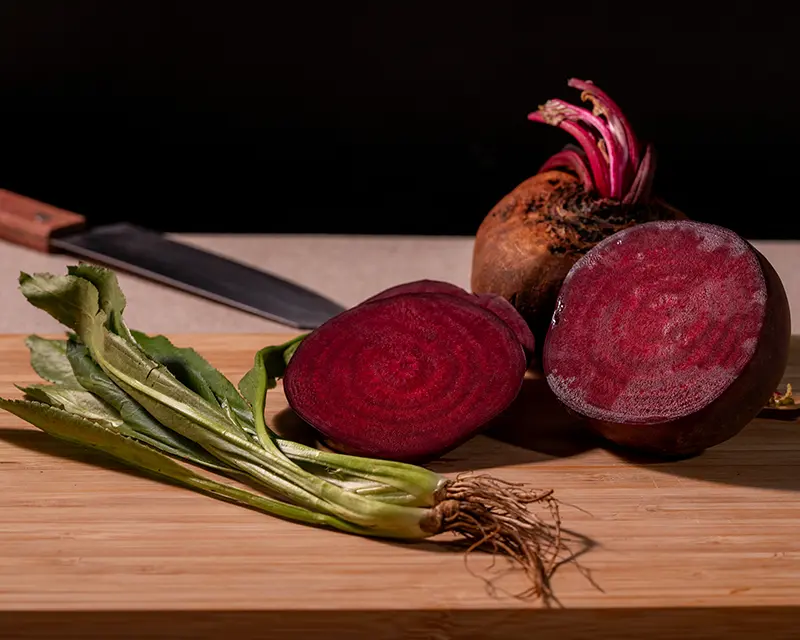
Timing matters too. If you’re roasting cut beets, you can salt them before they go into the oven so the seasoning develops as the edges brown. Boiled, steamed and whole-roasted beets are usually better seasoned after cooking, while raw beets work best when most of the seasoning goes into the dressing.
The goal is simple: keep beets tasting like beets, but make the sweetness brighter, the earthiness cleaner and the whole dish more complete.
👩🏽🍳 Beet Rule: season for contrast. Start with salt, then add acid, fat, herbs or savoury depth according to what the beets need.
When to Season Beets
The right moment depends on how you’re preparing them.
Raw
Season through the dressing
If you grate, shave or slice raw beets thin, mix the salt into a dressing with vinegar, lemon, olive oil, yoghurt or mustard. This helps the seasoning coat the beets evenly.
Before cooking
When roasting cut beets
If you’re roasting cut beets, toss them with olive oil and a little salt first. The seasoning develops with the beets as the edges brown and the sweetness concentrates.
During cooking
When boiling or salt-baking
You can lightly salt the water when boiling beets, although most seasoning still happens later. With salt-baked beets, the salt becomes part of the cooking method itself.
After cooking
When the beets need balance
Boiled, steamed and whole-roasted beets are usually best seasoned while still slightly warm. This is where you can add salt, acid, herbs, dairy or savoury depth to bring everything together.
👨🏽🍳 Seasoning Rule: season raw beets through the dressing, salt cut beets before roasting, and season boiled, steamed and whole-roasted beets mainly after cooking.
Beets Want Salt, Acid, Fat and Something Cool
Beets are naturally sweet and earthy, so they work best with ingredients that push the flavour in another direction.
Salt sharpens their sweetness. Vinegar, lemon and preserved lemon bring brightness. Yoghurt, sour cream and goat cheese add cool richness. Dill, horseradish and black pepper lift the flavour. Walnuts, smoke, mushrooms and fermented flavours add savoury depth.
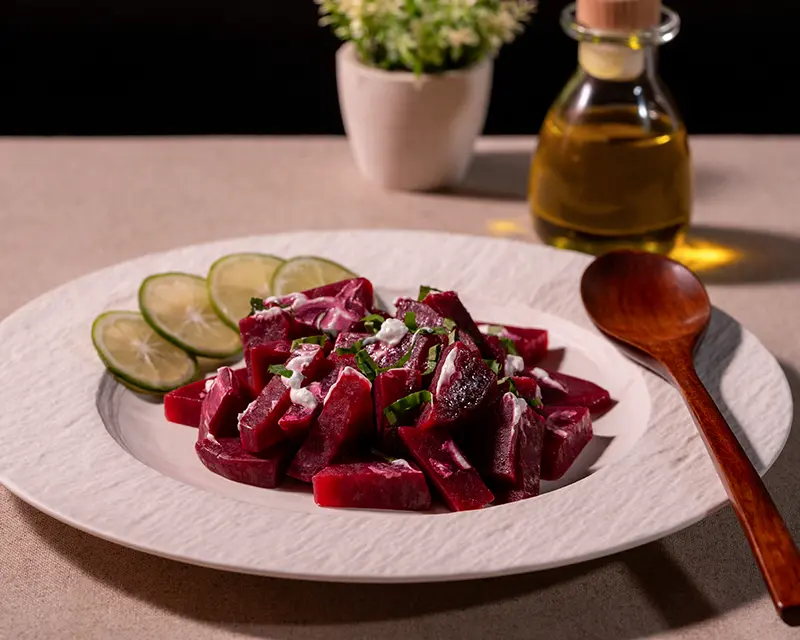
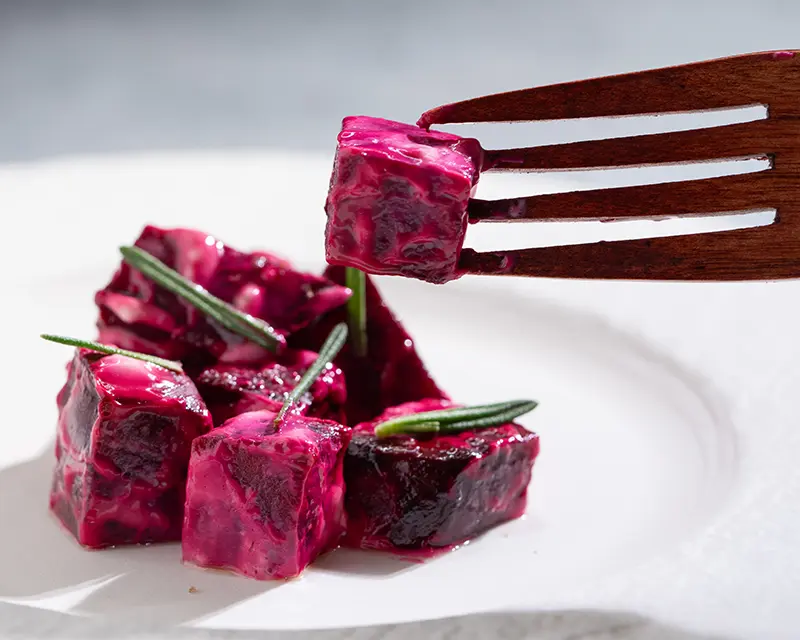
That is why roasted beets with yoghurt, dill, olive oil and finishing salt can taste complete without much else. The beets bring sweetness and earthiness. The yoghurt cools them. The dill lifts them. The salt brings everything into focus.
👩🏻🍳 Balance Rule: give beets contrast. Salt, acid, herbs, dairy, smoke, nuts or savoury flavours keep their natural sweetness and earthiness in balance.
How to Season Raw Beets
Raw beets need help carrying salt. If you add salt directly to thick raw slices, it can taste sharp and separate. The beet is too dense, and the seasoning stays mostly on the surface.
Grate it, shave it, or slice it very thin instead. Then add the salt to the dressing first: vinegar, lemon juice, olive oil, yoghurt, or a little mustard. Toss the beet through that dressing, then taste and finish with a small pinch if needed.
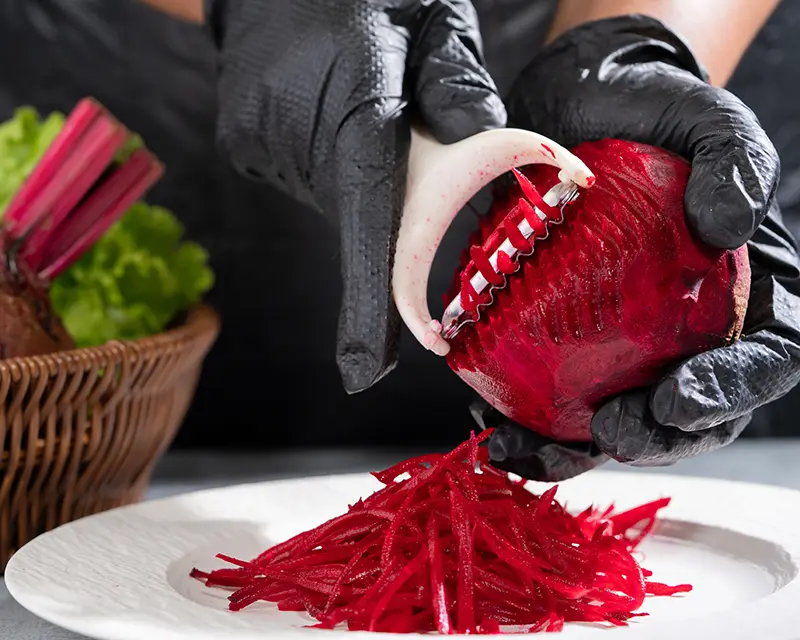
Raw beets work best when salt has acid or fat to move with. That is what keeps the earthiness clean instead of harsh.
👨🏼🍳 Raw Beet Rule: grate or shave raw beet, season through the dressing, then finish lightly if needed.
Want to Get Better at Seasoning?
The Maison Kojira Letter goes deeper into the small seasoning decisions that make everyday food taste cleaner and more complete.
How to Season Boiled or Steamed Beets
Boil or steam beets when you want them tender, clean, and easy to slice. This is the right method for beet salads, yoghurt or sour cream plates, pickled beetroot, smoked fish, goat cheese, dill, horseradish, walnuts, potatoes, or anything where you want the beets soft but not roasted or caramelised.
Boiled beets need most of their seasoning after cooking. If you cook beetroot whole, especially with the skin on, a little salt in the water is fine, but it will not season the beets all the way through. The skin protects the flesh, and the beetroot is dense. Do not expect salted water to do the same work it does for pasta or potatoes.
Cook the beets until tender, then let them cool enough to handle. Peel them, slice them, and taste them before dressing.
This is the moment where salt matters most. Add a small pinch of salt while the beets are still slightly warm, then bring in vinegar, lemon, olive oil, butter, yoghurt, sour cream, goat cheese, dill, horseradish, walnuts, smoked fish, or herbs depending on the dish.
Warm beets take seasoning better than cold beets straight from the fridge. If you are making a salad, season the beets first, then add the cooler ingredients around it.
👨🏽🍳 Boiled Beetroot Rule: boil or steam beets for clean, tender slices. Salt the water lightly if you want, but season properly after peeling and slicing.
How to Season Roasted Beets
Roast beets when you want them darker, sweeter, and more physical. Boiled beets are clean and tender. Roasted beets are heavier in the best way: deep colour, hot edges, earth, sweetness, olive oil, smoke, salt. They belong with cold-weather food, long tables, smoked fish, beef, game, lentils, walnuts, horseradish, yoghurt, dill, black pepper, and hard training days when you want food that feels like it has weight.
If you cut beets before roasting or cooking them on the barbecue, salt them before they meet the heat. Toss the pieces with olive oil and a small pinch of salt, then roast them in the oven or cook them over steady barbecue heat until the edges darken and the centre turns tender.
If you roast beets whole, season them after cooking. The skin protects the flesh, so salt on the outside will not do much unless you are salt-baking. Roast them until tender, peel them, slice them, then season them while they are still warm.
Roasted beets can handle stronger pairings than boiled beets. They work with goat cheese, thick yoghurt, walnuts, dill, horseradish, smoked fish, lentils, beef, game, balsamic vinegar, olive oil, herbs, and black pepper.
The common mistake is serving roasted beets without contrast. Once beets are cooked and sweet, especially roasted, the flavour becomes dense. Without salt, acid, fat, herbs, or smoke, it can taste one-dimensional. A final pinch keeps the sweetness from becoming soft and heavy. It sharpens the roasted edge and makes the beets taste more grounded.
👨🏽🍳 Roasted Beets Rule: salt cut beets before roasting. Salt whole roasted beets after peeling and slicing. Finish at the end when the sweetness needs a stronger edge.
Salt-Baked Beets: When Salt Becomes the Oven
Salt-baked beets are worth doing when beets are the centre of the plate, not just a side vegetable. Use it when you want beets to taste deeper, sweeter, and more concentrated without drying out. It works especially well for a winter salad, beetroot with yoghurt or goat cheese, smoked fish, horseradish, dill, walnuts, beef, game, or a dark vegetable plate where the beets need weight.
You can do it in an oven. A barbecue can work too, but only with steady indirect heat, not direct flames. The beets need time to cook through. If the heat is too aggressive, the outside suffers before the centre turns tender.
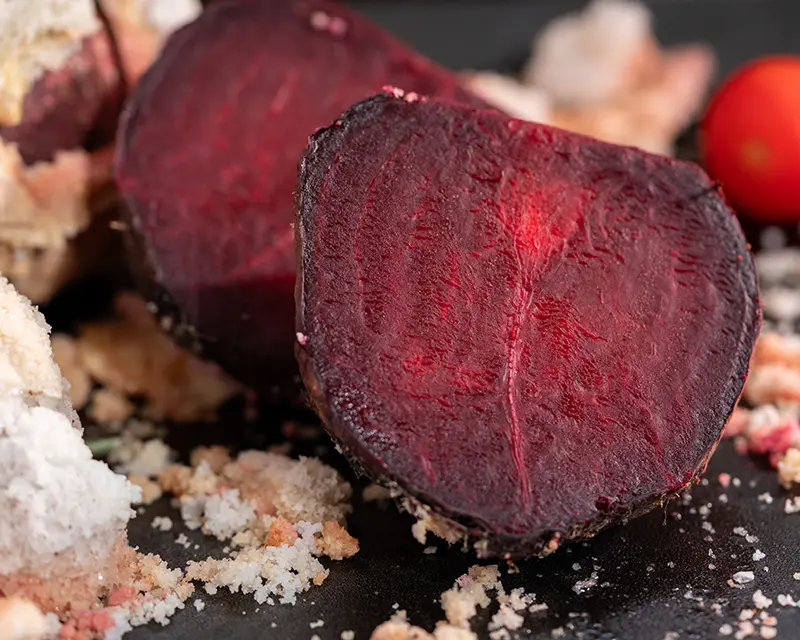
To salt-bake beets, scrub the beets and leave the skin on. Mix coarse salt with egg white or a little water until it feels like wet sand. Spread a layer of salt in a baking dish, place the beets on top, then pack more salt around and over it until covered. Bake at around 180 to 200°C until tender.

Small beets may take 45 to 60 minutes. Larger beets can take 75 to 90 minutes or more. You know they are ready when a thin knife or skewer slides into the centre with little resistance. Crack open the salt crust, remove the beets, let them cool slightly, then rub or peel off the skin.
Do not expect salt-baked beets to taste aggressively salty. The skin protects the flesh. The salt crust mostly traps heat and moisture, helping the beets cook gently and concentrate. The final seasoning still happens after slicing.
Once sliced, taste them. Add a little finishing salt if the beets taste sweet but flat, then bring in contrast: vinegar, lemon, yoghurt, sour cream, goat cheese, dill, horseradish, olive oil, walnuts, smoked fish, or black pepper.
👩🏻🍳 Salt-Baked Beets Rule: salt-bake beets when you want concentration and drama. The salt crust cooks the beets; the final pinch balances it after slicing.
How to Make Beets Taste Less Earthy
Do not try to remove beetroot’s earthiness completely. That is where much of its character lives.
The better move is to clean it up.
Salt helps, but salt alone is rarely enough. Beets taste best when their earthiness is balanced by something sharp, creamy, smoky, herbal, or roasted. Use vinegar, lemon, yoghurt, sour cream, goat cheese, horseradish, dill, walnuts, smoked fish, olive oil, black pepper, or browned edges.
For boiled or steamed beets, season after cooking while they are still slightly warm. Add salt first, then acid or dairy. This keeps the beets from tasting flat once they cool.
For roasted beets, let the edges darken, then finish with salt and something that pushes back against the sweetness: yoghurt, vinegar, horseradish, dill, walnuts, smoked fish, lentils, beef, or game.
For raw beets, grate or shave them thin and season through a dressing. Salt needs vinegar, lemon, yoghurt, or oil to move through the beets. On thick raw pieces, it stays too separate.
The mistake is making beets sweeter when they already taste too earthy. More honey, maple, or balsamic can make it heavier. Salt, acid, herbs, dairy, smoke, or bitterness usually solve the problem better.
👨🏽🍳 Earthiness Rule: keep beetroot’s earthiness, but give it contrast. Salt makes the sweetness clearer; acid, herbs, dairy, smoke, or roasted edges keep it from tasting muddy.
When Finishing Salt Belongs on Beets
Add finishing salt once the beets are cooked, cut, dressed, or almost ready to serve. This is especially important with roasted beets. Once the edges have darkened and the sweetness has concentrated, a final pinch keeps the beets from becoming too soft, sweet, or heavy. It gives the dish a cleaner edge.
For boiled or steamed beets, finish with salt after peeling and slicing. Warm beets take salt better than cold beets, so season them before adding yoghurt, sour cream, goat cheese, smoked fish, walnuts, herbs, or dressing.
For raw beets, finishing salt works best when the beets are grated, shaved, or sliced thin. Add most of the salt through the dressing first, then finish lightly at the end if the beets still taste flat.
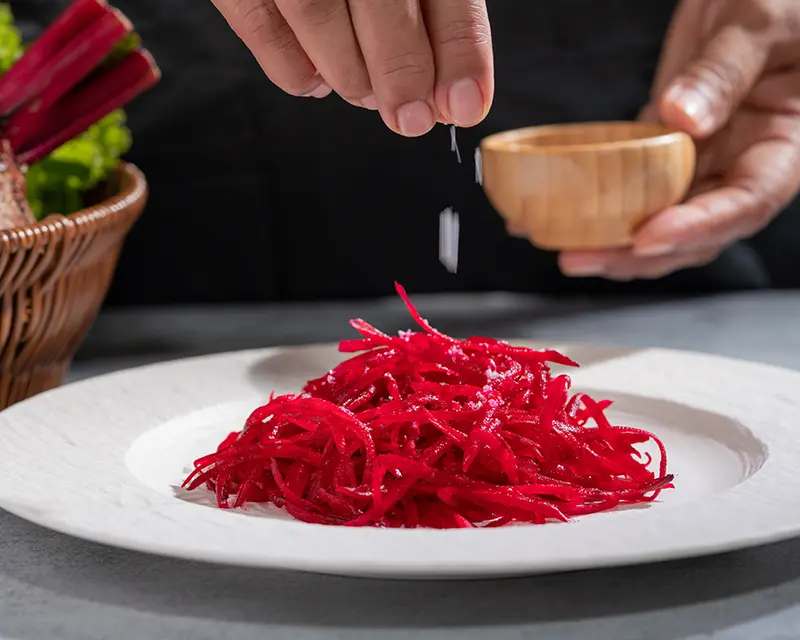
Finishing salt is not there to make beets salty. It is there to hold the whole dish together: sweetness, earthiness, vinegar, dairy, herbs, smoke, nuts, olive oil, or roasted edges.
👩🏻🍳 Finishing Rule: finish beets with salt after cooking, slicing, or dressing. The final pinch should make the beets taste clearer, not saltier.
Best Finishing Salts for Beets
Choose the finishing salt by what the beets need: clarity, brightness, savoury depth or a darker, richer edge.
Kojira Artisan Mineral Salt
The cleanest choice for beets. Use Kojira Artisan Mineral Salt when you want their natural sweetness and earthiness to stay central.
It works across roasted, boiled, steamed and raw beets, especially with olive oil, yoghurt, goat cheese, dill, vinegar or walnuts.
Kojira Preserved Lemon Salt
Use Kojira Preserved Lemon Salt when beets need brightness. The preserved lemon cuts through their sweetness and gives the earthy flavour a sharper, fresher edge.
It is especially good with beet salads, yoghurt, goat cheese, dill, herbs and olive oil.
Kojira Fermented Mushroom Salt
Kojira Fermented Mushroom Salt takes beets in a deeper, more savoury direction. It is particularly good on roasted beets, where the mushroom umami balances their concentrated sweetness without making the dish sweeter.
Use it with lentils, grains, walnuts, mushrooms, roasted vegetables or other savoury vegetable dishes.
Kojira Black Garlic Salt
Kojira Black Garlic Salt works when you want roasted beets to become darker, richer and more intense. Its savoury sweetness suits browned or charred beets particularly well.
Pair it with black pepper, lentils, mushrooms, beef, game or deeply roasted vegetables.
👨🏽🍳 Salt Pairing Rule: use Kojira Artisan Mineral Salt for clarity, Kojira Preserved Lemon Salt for brightness, Kojira Fermented Mushroom Salt for savoury depth, and Kojira Black Garlic Salt for darker, richer beet dishes.

Frequently Asked Questions About Seasoning Beets
What seasonings go well on beets?
Salt, vinegar or lemon, dill, horseradish, black pepper, yoghurt, goat cheese, walnuts and olive oil all work well. For Maison Kojira salts, use Kojira Artisan Mineral Salt for clarity, Kojira Preserved Lemon Salt for brightness, or Kojira Fermented Mushroom Salt for deeper savoury flavour.
What can you add to beets to make them taste better?
If they taste too sweet or earthy, add acid, salt or something savoury. Kojira Preserved Lemon Salt brightens them, while Kojira Fermented Mushroom Salt gives roasted beets more depth.
How do you season roasted beets?
Salt cut beets before roasting, then taste again at the end. Finish with Kojira Artisan Mineral Salt, Kojira Fermented Mushroom Salt or Kojira Black Garlic Salt, depending on how clean, savoury or dark you want the flavour.
How do you season boiled or steamed beets?
Season them after cooking, while still slightly warm. Kojira Artisan Mineral Salt keeps the flavour clean; Kojira Preserved Lemon Salt works especially well with yoghurt, goat cheese, dill or olive oil.
How do you season raw beets?
Grate, shave or slice them thin and season through a dressing with salt, vinegar or lemon and olive oil. Kojira Preserved Lemon Salt is particularly good with raw beets.
Should you season beets before or after cooking?
Salt cut beets before roasting. Season boiled, steamed and whole-roasted beets after cooking, once they are peeled and sliced.
How do you make beets taste less earthy?
Use salt plus something sharp or savoury: vinegar, lemon, horseradish, dill, yoghurt or Kojira Fermented Mushroom Salt. More sweetness usually makes the earthiness feel heavier.
Use the Same Balance Logic Elsewhere
Once you understand how to season beets, the same balance logic applies to other vegetables with strong flavour: salt before cooking when it helps the surface brown, and finish at the end when sweetness, earthiness, acid, fat or herbs need to come together.
Technique and Foundations

Join the Maison Kojira Letter
Eat sharper. Host better. Be more present. Get practical notes on flavour, ingredients and the small details that make food worth sharing.