Do You Need to Salt Aubergine or Eggplant Before Cooking?
Aubergine, also called eggplant, does not always need salting before cooking. So, do you need to salt aubergine every time? No. Salt it when texture, browning, or oil control matter. Skip it when softness is the point.
The old reason was bitterness. That is still partly true, but it needs context. Most modern supermarket aubergines are milder than the older, more bitter varieties people were cooking with when that rule became common. If you are using a small, fresh supermarket aubergine, bitterness is probably not the main problem.
But that does not mean bitterness has no place.
Older, larger, seedier, or heirloom aubergines can still carry a stronger bitter edge. From a good grower, that bitterness can be part of the vegetable’s character, not a flaw. Salt is useful when that edge feels too harsh for the dish.
For most cooking, though, the better reason to salt aubergine is texture.
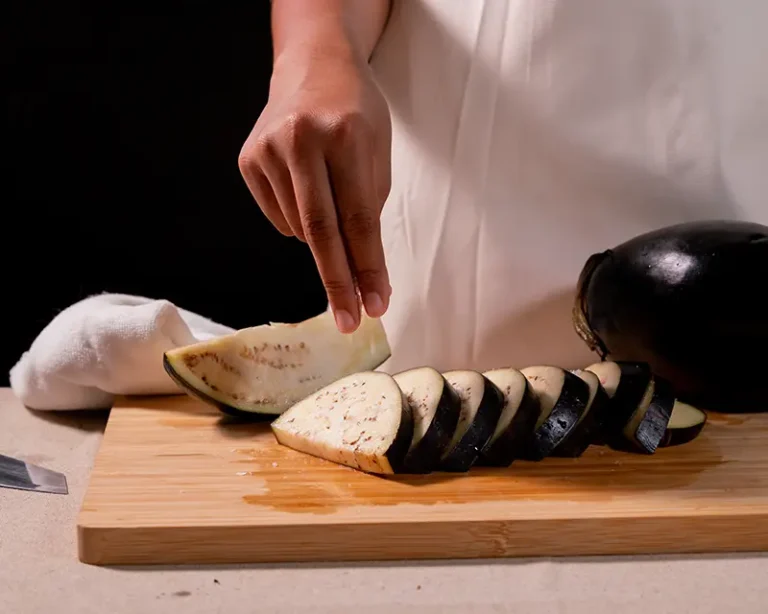
Aubergine is soft inside, full of moisture, and porous enough to drink oil. Cook it well and it becomes creamy, smoky, browned, and rich. Cook it badly and it turns wet, greasy, or flat.
Salt helps you choose the direction before the heat takes over.
Salt aubergine before cooking when you want firmer slices, better browning, less water, and less oiliness. Skip the early salting when you want soft, silky flesh for a stew, curry, dip, whole-roasted aubergine, or a dish where softness is the point.
👨🏼🍳 Salt Rule: salt aubergine before cooking when you want structure, browning, or less oiliness. Salt for bitterness only when the bitterness feels harsh. Skip early salting when you want soft, silky flesh.
When You Should Salt Aubergine Before Cooking
Salt aubergine before cooking when you want the pieces to hold themselves together.
Think thick slices on a grill, cubes going into the oven, aubergine steaks, fried slices, caponata, parmigiana, or BBQ aubergine brushed with olive oil and herbs. These are the moments where you want softness, but not collapse. You want the inside creamy and the outside browned.
Salt helps you get there.
Aubergine carries a lot of moisture and its flesh is porous. If it goes straight into heat, it can turn wet before it browns, or drink more oil than you wanted. A little salt beforehand pulls some moisture to the surface and firms the flesh slightly, so the aubergine has a better chance to brown cleanly.
This is especially useful with larger aubergines, thick slices, or pieces that feel very watery or seedy. It gives you more control before the pan, oven, or grill takes over.
Salted aubergine still becomes soft. That is the point. But it becomes soft with more shape, more browning, and less oiliness.
👩🏽🍳 Salt Rule: salt aubergine before cooking when you want it creamy inside, browned outside, and less greasy on the plate.
When You Can Skip Salting Aubergine
You can skip salting aubergine when softness is the point.
Not every aubergine dish needs firm slices or browned edges. Sometimes you want the flesh to melt into the dish: soft aubergine in a stew, smoky whole-roasted aubergine for a dip, miso aubergine that turns silky under the glaze, or cubes cooked slowly with tomato, garlic, olive oil, and herbs.
In those dishes, salting ahead can be unnecessary. The aubergine is already going to soften, absorb flavour, and become part of the sauce or dressing.
Skip the early salting when the aubergine is small, fresh, and cooked quickly at high heat. Japanese aubergine, small Italian aubergine, and young glossy aubergines often need less preparation than large, watery ones. Cut them, cook them well, and season as the dish comes together.
You should also skip salting when you are roasting aubergine whole. The skin protects the flesh, steam builds inside, and the aubergine collapses into itself. That is exactly what you want for baba ganoush, smoky aubergine purée, or any dish where the inside should become spoonable.
Salt still belongs, but later. Once the aubergine is cooked, taste it. Then add salt, olive oil, yoghurt, tahini, tomato, herbs, vinegar, miso, lemon, or finishing salt depending on where the dish is going.
👨🏻🍳 Salt Rule: skip early salting when you want aubergine soft, silky, smoky, or sauce-like. Salt later when the texture is already where you want it.
Grilled or Roasted Aubergine: Salt for Fire, Oil, and Herbs
Grilled or roasted aubergine is where salting becomes practical.
You are trying to get two things at once: soft flesh inside and browned edges outside. That is why aubergine works so well in Mediterranean grills, Provençal herb dishes, Sicilian caponata, Turkish yoghurt plates, Levantine dips, Greek roasted vegetables, and Japanese miso-glazed aubergine.
All of those dishes use the same basic tension: aubergine needs enough heat to brown, enough oil to carry flavour, and enough salt to stop the flesh from tasting wet, greasy, or flat.
For grilled or roasted aubergine, salt before cooking when you want the pieces to hold their shape and brown more cleanly. This is useful for thick slices, aubergine steaks, cubes, BBQ aubergine, parmigiana, caponata, or any dish where you want softness without wateriness.
Salt lightly, wait if the aubergine is very watery, then pat the surface dry before adding oil. This matters. If the surface is wet, the aubergine steams before it browns. If the surface is dry, the heat can work.
This is also where herbs make sense. Thyme, oregano, rosemary, basil, garlic, or herbes de Provence cling to oil-brushed aubergine and become more aromatic with heat. Add the finishing salt at the end, while the aubergine is still warm, so the browned surface, herbs, oil, and soft flesh come together.
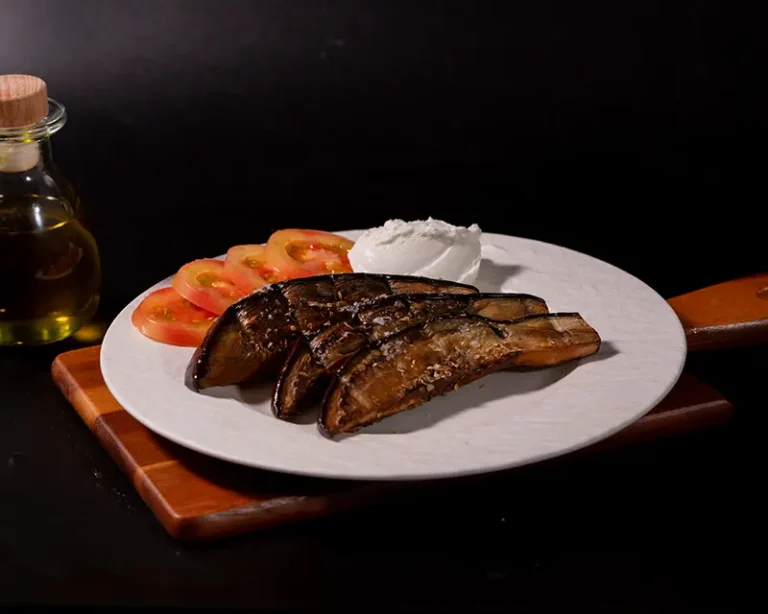
For Japanese miso-style aubergine, the logic changes slightly. The glaze already brings salt, sweetness, and umami, so do not salt heavily before cooking. Cook the aubergine until the flesh becomes soft, then let the miso, sesame, ginger, or spring onion carry the final direction.
👨🏽🍳 Salt Rule: salt before grilling or roasting when you want structure and browning. Finish after cooking when the aubergine needs contrast, herbs, or a cleaner final edge.
How To Salt Aubergine Before Cooking
Cut the aubergine before you salt it.
Slices, cubes, wedges, or steaks all work, but the rule is the same: salt the cut flesh, not the skin. The flesh is where the moisture sits, and that is where the salt needs to work.
Use a light, even amount of salt. The surface should look lightly seasoned, not buried. For one medium aubergine, start with roughly ½ teaspoon of fine salt or 1 teaspoon of coarse salt, spread across all cut surfaces. If the aubergine is very large, watery, or cut into thick pieces, you can use a little more.
Leave the aubergine on a tray, in a colander, or on a clean towel for about 20 to 30 minutes. You should see moisture forming on the surface. That is the point.
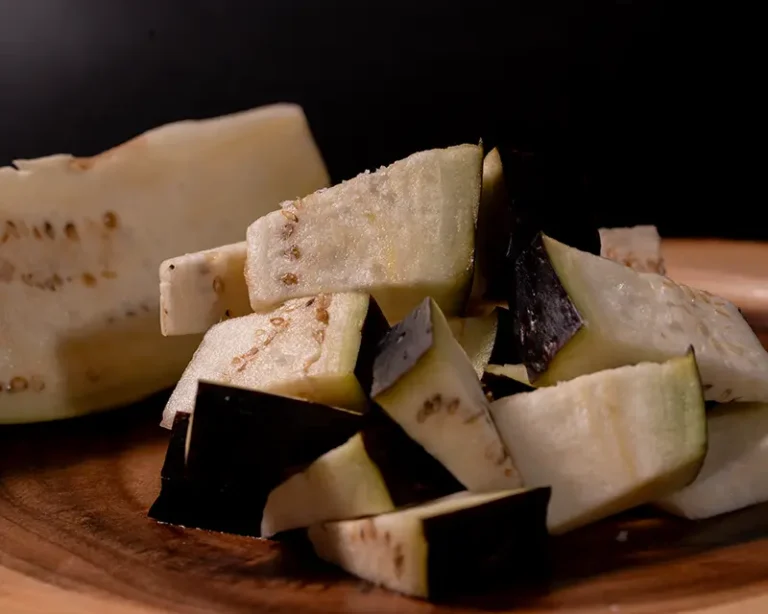
Before cooking, pat the aubergine dry. Do not skip this. If the water stays on the surface, the aubergine goes into the pan, oven, or grill wet, and wet aubergine steams before it browns.
If you salted heavily, wipe off excess salt or rinse quickly and dry very well. But for a light pre-salt, drying is usually enough.
Once the aubergine is cooked, taste before adding more salt. It may already be seasoned inside. The final salt should sharpen the surface, not make the whole dish salty.
👩🏻🍳 Method Rule: salt the cut flesh lightly, wait until moisture appears, pat dry, then cook.
When Finishing Salt Belongs on Aubergine
Finishing salt belongs after the aubergine has already become what you wanted it to be.
If the aubergine is grilled, roasted, fried, or cooked with oil, the final salt should not do the main seasoning work. That should already be handled by the pre-salt, the sauce, the glaze, or the cooking liquid. The finishing salt is there for the last bite: contrast on soft flesh, clarity against oil, and a cleaner edge on smoke, herbs, yoghurt, tomato, tahini, or miso.
This matters because aubergine can become heavy. It is rich by nature once it absorbs oil, softens, and browns. A small amount of finishing salt at the end can make that richness feel complete instead of dull.
This is where gourmet salts earn their place. Not because aubergine needs more salt, but because the final salt can change the direction of the dish: cleaner, brighter, smokier, more savoury, or more aromatic.
Use finishing salt on grilled aubergine with olive oil, roasted aubergine with herbs, aubergine with yoghurt or tahini, caponata, baba ganoush, miso aubergine, tomato-rich aubergine dishes, or aubergine served with rice, lentils, lamb, fish, or flatbread.
Add it while the aubergine is still warm, or just before serving. If the dish already contains salty ingredients such as miso, anchovy, capers, feta, soy sauce, or cured meat, use less.
🧑🏽🍳 Finishing Rule: use finishing salt when cooked aubergine needs contrast, clarity, or a final edge. Do not use it to rescue a dish that was never seasoned properly.
Best Finishing Salts for Aubergine
Choose the finishing salt by where the aubergine is going: smoky, bright, savoury, herbal, or deep.
Black Garlic Salt
Use on roasted aubergine, grilled aubergine, BBQ aubergine, miso-style aubergine, aubergine with tomato, lamb, mushrooms, lentils, rice, or darker savoury plates. Aubergine can handle depth, and black garlic works well when the flesh is soft, browned, and slightly sweet.
Preserved Lemon Salt
Use on aubergine with yoghurt, tahini, herbs, olive oil, chickpeas, tomato, flatbread, grilled fish, or Levantine and Mediterranean-style plates. It is the best choice when aubergine tastes rich and needs brightness.
Artisan Mineral Salt
Use when the aubergine already has strong flavours from olive oil, garlic, tomato, herbs, capers, anchovy, miso, or sauce. It gives the final bite clarity without changing the direction of the dish.
Fermented Mushroom Salt
Use selectively. It works on roasted or grilled aubergine with mushrooms, lentils, miso, steak, or deep savoury sauces. It is too heavy for lighter aubergine with yoghurt, lemon, herbs, or fresh tomato.
👩🏼🍳 Salt Pairing Rule: use black garlic salt for depth, preserved lemon salt for brightness, artisan mineral salt for clarity, and fermented mushroom salt only when the plate is already dark and savoury.
Frequently Asked Questions About Salting Aubergine or Eggplant
Do you need to salt aubergine before cooking?
Not always. Do you need to salt aubergine before cooking? Only when you want firmer texture, better browning, less water, or less oiliness. Skip it when you want soft, silky flesh for dips, stews, curries, or whole-roasted aubergine.
Does salting aubergine remove bitterness?
It can help when the bitterness tastes harsh, especially with older, larger, seedier, or heirloom aubergines. Most modern supermarket aubergines are milder, so texture is usually the better reason to salt them.
How long should you salt aubergine?
Usually 20 to 30 minutes is enough. You should see moisture appear on the cut surface. Pat the aubergine dry before cooking so it can brown instead of steam.
Should you rinse aubergine after salting?
Only if you used a lot of salt. For a light pre-salt, patting the aubergine dry is usually enough. If you rinse it, dry it very well before cooking.
Should you salt aubergine before frying, roasting, or grilling?
Yes, when you want structure and browning. Salt first, wait, pat dry, then cook. For whole-roasted aubergine, dips, or dishes where you want soft, silky flesh, you can usually skip the early salting.
More Guides on Vegetables, Texture and Finishing Salt
The same logic applies beyond aubergine: salt early when moisture gets in the way of browning, and salt late when the cooked vegetable needs contrast, brightness, or a cleaner final bite.
Technique and Foundations

Join the Maison Kojira Letter
Eat sharper. Host better. Be more present. Get practical notes on flavour, ingredients and the small details that make food worth sharing.