How to Season Boiled Potatoes So They Actually Taste Good
Boiled potatoes can be excellent, but they need more than a pinch of salt at the table. You want them tender and seasoned through the centre, then finished while they are still warm enough to take flavour.
The first decision is technical: season the cooking water so the potato itself does not taste flat. The second is culinary: decide what the potatoes should contribute to the meal.
With delicate fish or green vegetables, you may want them clean and bright. Beside beef, mushrooms or gravy, they can carry something deeper and more savoury. With a rich sauce, herbs, mustard or acidity can give the plate contrast instead of adding more richness.
How to season boiled potatoes therefore comes down to two things: build the base in the water, then choose the finish around the dish you are serving.
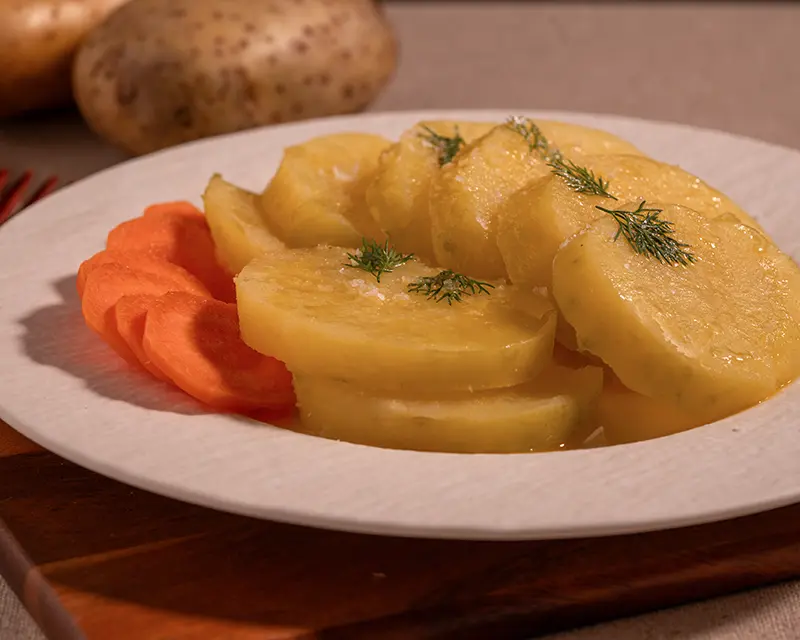
Maison Kojira Method
Water Gives the Base. The Dish Decides the Finish.
Boiled potatoes need a seasoned base and a considered finish. Salt the cooking water so they taste seasoned through the centre, then finish them while they are still warm according to the dish you are serving.
The goal is a potato that belongs with the meal: clean and buttery, bright and herby, or deeper and more savoury.
01
Season the Water
Use about 10 to 12 g salt per litre of water so the potatoes develop a seasoned base while they cook.
02
Judge the Potato
Firm, waxy and skin-on potatoes season more slowly. Peeled, cut or floury potatoes take salt faster.
03
Finish for the Dish
While the potatoes are still warm, choose the fat, herbs, acidity or finishing salt according to what you are serving them with.
🧑🏻🍳 Quick Rule for how to season boiled potatoes: season the water for the base, adjust for the potato, then choose the finish for the dish.
Should You Salt the Water for Boiled Potatoes?
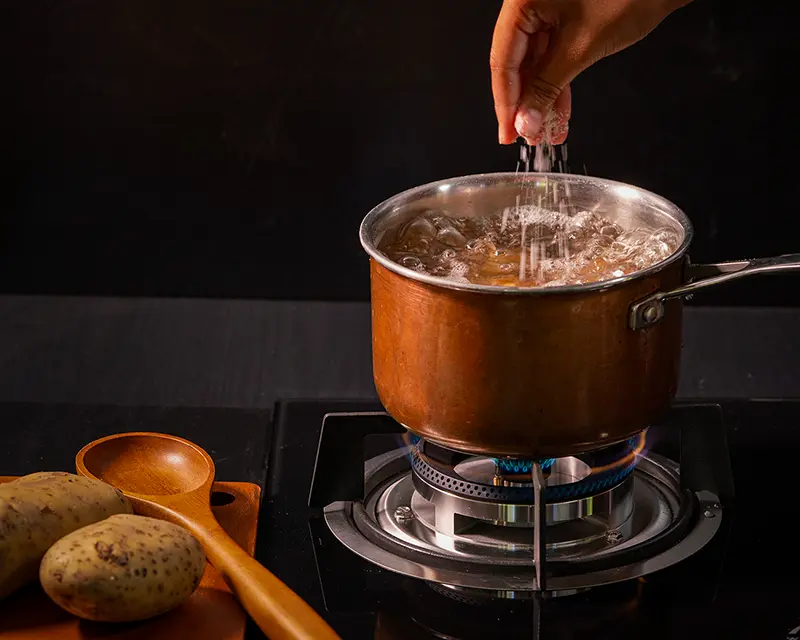
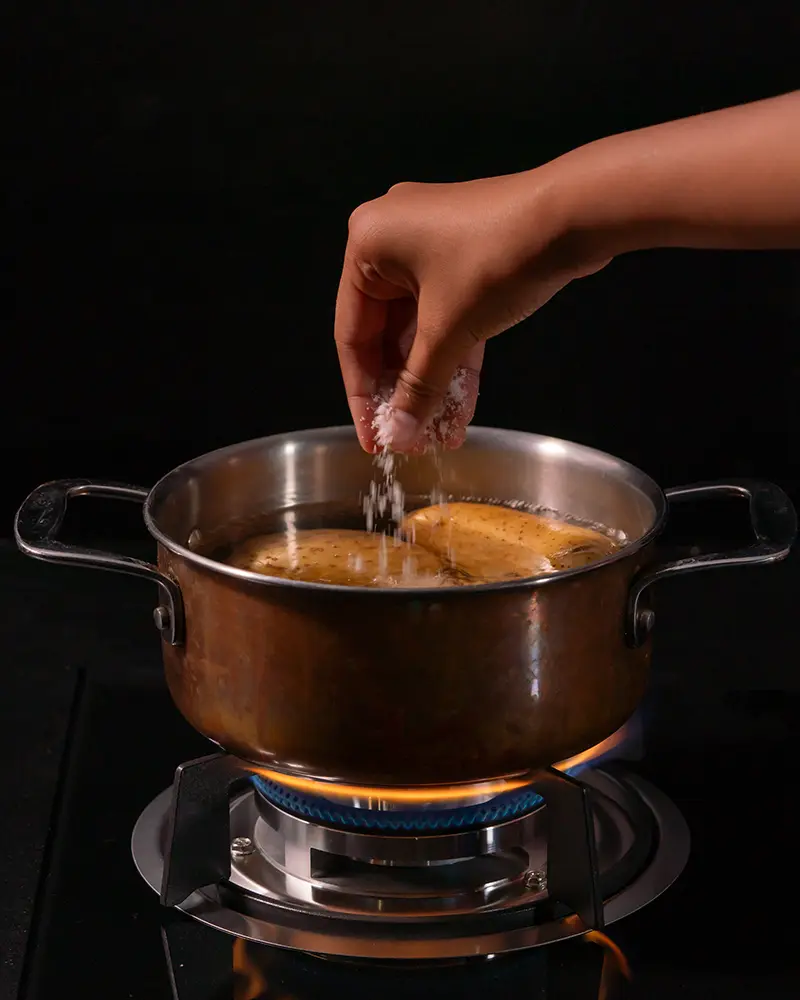
Yes. Salt the cooking water before the potatoes boil. This seasons the potato while it cooks, instead of leaving all the salt on the surface after draining.
How Much Salt to Use for Boiled Potatoes
For the cooking water, start with 10 to 12 g of salt per litre of water. That gives the potatoes a seasoned base while they cook, without making them taste aggressively salty before the final finish. Once you understand how to season boiled potatoes, the amount becomes easier: enough salt in the water to season the centre, then a smaller final pinch after draining.
The exact amount depends on the potato. Small waxy potatoes, new potatoes, and potatoes cooked with their skins on may need the higher end because the salt moves in more slowly. Peeled or cut potatoes season faster, so the lower end is usually enough.
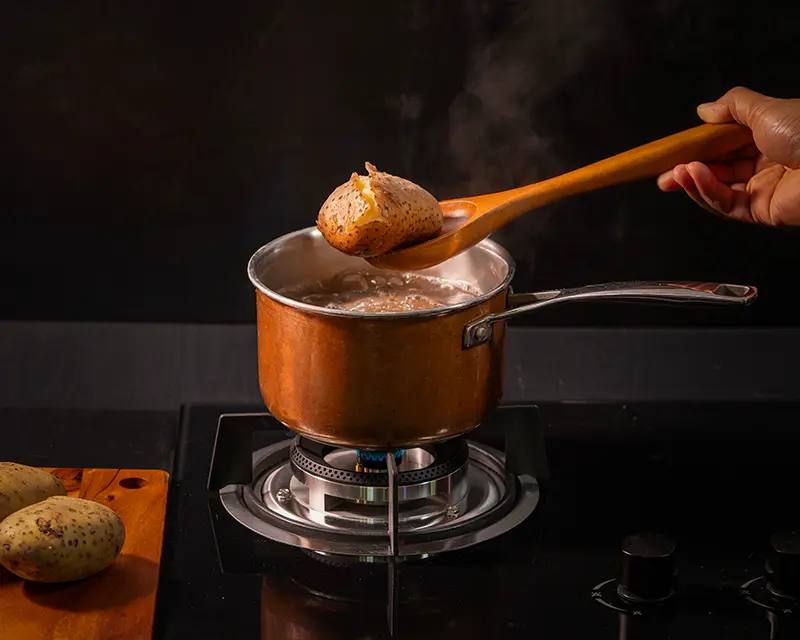
The final salt should be much smaller. After draining, taste while the potatoes are still warm. If they are going straight to the table, add a light final pinch with butter, olive oil, herbs, mustard, yoghurt sauce, pan juices, or whatever belongs with the dish.
If the potatoes are going into a salad, season while warm, then taste again once cooled. Cold potatoes can taste flatter, so the final balance may need acid, herbs, or a little more salt after chilling.
🧑🏼🍳 Quick Rule: use 10 to 12 g salt per litre of cooking water, then finish warm with a smaller pinch according to the dish.
How to Season Boiled Potatoes for the Dish You’re Serving
Boiled potatoes are usually part of a larger plate, so their seasoning should make sense beside whatever you are serving.
Sometimes that means pairing: dill and lemon beside fish, mushroom depth beside lentils or gravy. Other times contrast works better: a rich meat or creamy sauce may benefit more from mustard, herbs or acidity than from another rich flavour.
A useful question to ask yourself is: should the potatoes echo the rest of the plate, or balance it?
Fish & Seafood
Keep them clean and bright. Butter or olive oil, dill, parsley, mustard, lemon and Kojira Preserved Lemon Salt work particularly well. Richer fish can take more acidity; delicate fish usually wants the potatoes quieter.
Chicken & Pork
Butter, thyme, mustard, black pepper and Kojira Artisan Mineral Salt keep things classic. If the meat or sauce is already rich, use herbs or Preserved Lemon Salt for contrast. If the plate is simple, Black Garlic Salt can add more depth.
Beef, Sausages & Darker Meat
Brown butter, onions, mushrooms, gravy, black pepper and Kojira Black Garlic Salt can make the potatoes substantial enough to sit beside the meat. Fermented Mushroom Salt also works when the plate already leans earthy and savoury.
Vegetables, Lentils & Mushrooms
With green vegetables and herbs, go brighter with olive oil, yoghurt, mustard or Preserved Lemon Salt. With mushrooms, lentils, caramelised onions or roasted vegetables, brown butter and Kojira Fermented Mushroom Salt make more sense.
Creamy or Rich Sauces
This is often where contrast wins. Mustard, vinegar, lemon, herbs or Kojira Preserved Lemon Salt can sharpen the potato and stop the plate feeling too soft or heavy.
Eggs & Mild Dishes
Because the surrounding flavours are quieter, the potatoes can do more. Kojira Artisan Mineral Salt, herbs and butter keep them restrained; Preserved Lemon Salt adds brightness; Fermented Mushroom Salt gives eggs or mushrooms a more savoury direction.
👨🏽🍳 Pairing Rule: if the main dish already has plenty of flavour, let the potatoes support it or provide contrast. If the rest of the plate is simple, the potatoes can carry more herbs, acidity or savoury depth.
Does the Potato Type Change How You Season Boiled Potatoes?
Yes. How to season boiled potatoes changes slightly by potato type, but not equally everywhere.
The cooking water stays close to the same range: 10 to 12 g salt per litre. Firm potatoes usually sit at the higher end because they hold their shape and season more slowly. Floury potatoes can stay closer to the middle of the range, then need a lighter final pinch because broken edges catch salt quickly.
Small, smooth, thin-skinned potatoes
These are usually waxier potatoes, such as Charlotte, Nicola, Kipfler, Fingerling, or new potatoes. They hold their shape when boiled, so salt moves in more slowly and the centre can stay mild. Use the higher end of the cooking-water range, around 12 g per litre, then finish while warm with a small pinch of mineral salt, preserved lemon salt, butter, olive oil, mustard, or yoghurt sauce.
Large, rougher-skinned potatoes
These are often flourier potatoes, such as Russet, Maris Piper, King Edward, Agria, or Desiree. They soften faster and can break open if boiled too hard. Use 10 to 12 g salt per litre, but be more careful with the final pinch because broken edges catch salt quickly. Finish gently, especially if the potatoes are already splitting.
Yellow-fleshed potatoes
These often sit in the middle, especially Yukon Gold-style potatoes. They can taste naturally buttery and usually do well with 10 to 12 g salt per litre. For the final salt, keep it clean: mineral salt, or preserved lemon salt if the plate needs brightness.
Red-skinned or very firm potatoes
These usually behave waxy too. They hold shape, keep a clean bite, and work well warm or cooled into salads. Use the higher end of the cooking-water range, around 12 g salt per litre, because firm potatoes season more slowly. After draining, taste while they are still warm and add a small final pinch if needed. If they are going into potato salad, season the dressing while the potatoes are still warm, then taste again once cooled.
👩🏼🍳 Quick Rule: firm, waxy, skin-on potatoes usually need the higher end of the salt range in the water. Floury potatoes need a gentler simmer and a lighter final pinch.
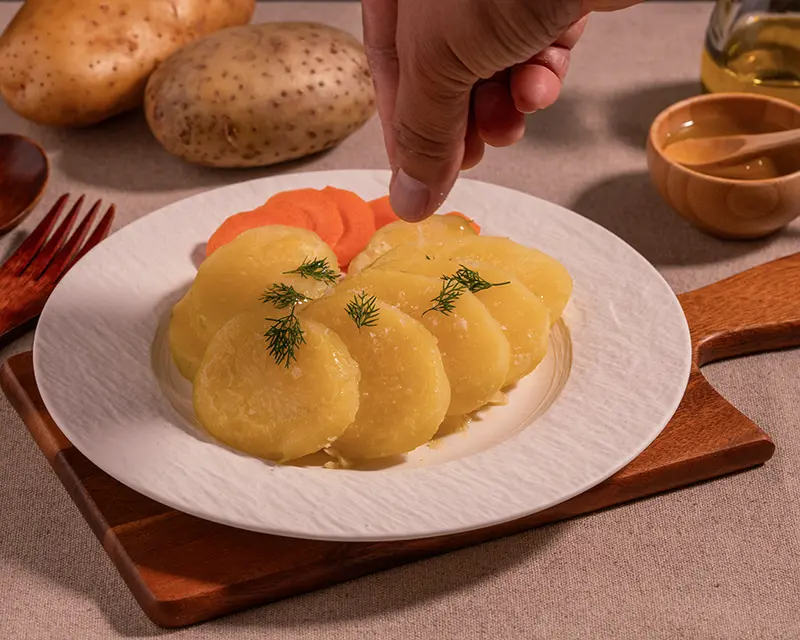
Best Finishing Salts for Boiled Potatoes
The best finishing salt depends less on the potato itself than on what you are serving it with. Add it while the potatoes are still warm, after butter, olive oil, herbs, sauce or other finishing ingredients have gone in.
Kojira Artisan Mineral Salt
The cleanest and most versatile choice. Kojira Artisan Mineral Salt keeps the potato itself central and works especially well with butter, olive oil, herbs, eggs, fish and green vegetables.
Use it when the rest of the plate already has plenty going on.
Kojira Preserved Lemon Salt
Use Kojira Preserved Lemon Salt when the potatoes need brightness or contrast.
It works particularly well with fish, yoghurt, olive oil, mustard, dill, parsley and green vegetables, and is useful beside richer dishes when the potatoes need to lighten the plate rather than add more richness.
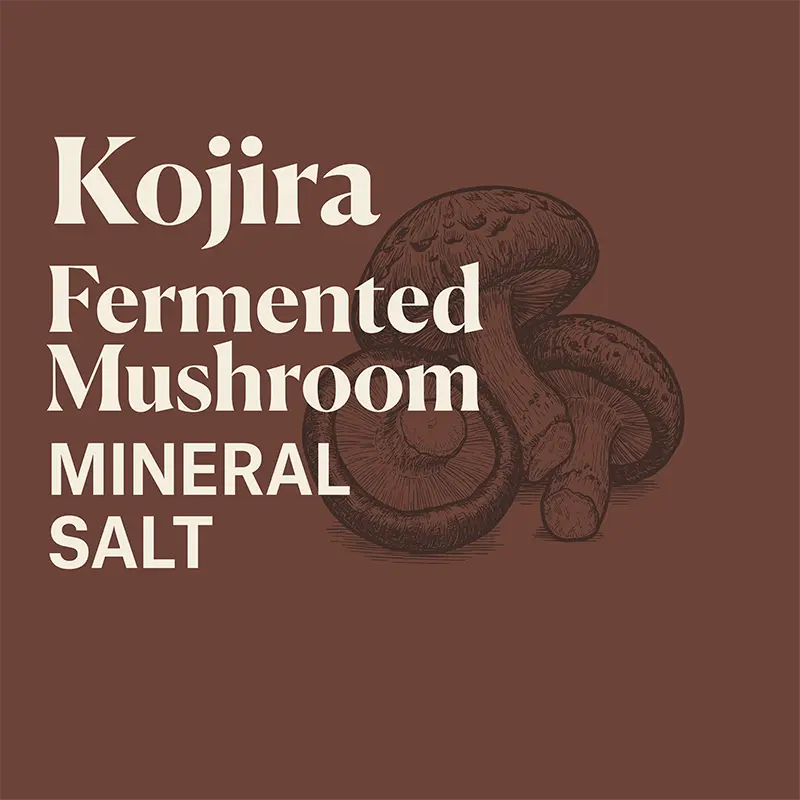
Kojira Fermented Mushroom Salt
Kojira Fermented Mushroom Salt takes boiled potatoes in a deeper, more savoury direction.
It works especially well with mushrooms, lentils, caramelised onions, brown butter, sour cream, gravy and roasted vegetables. Use it when the potatoes need enough depth to stand beside an earthy or savoury main dish.
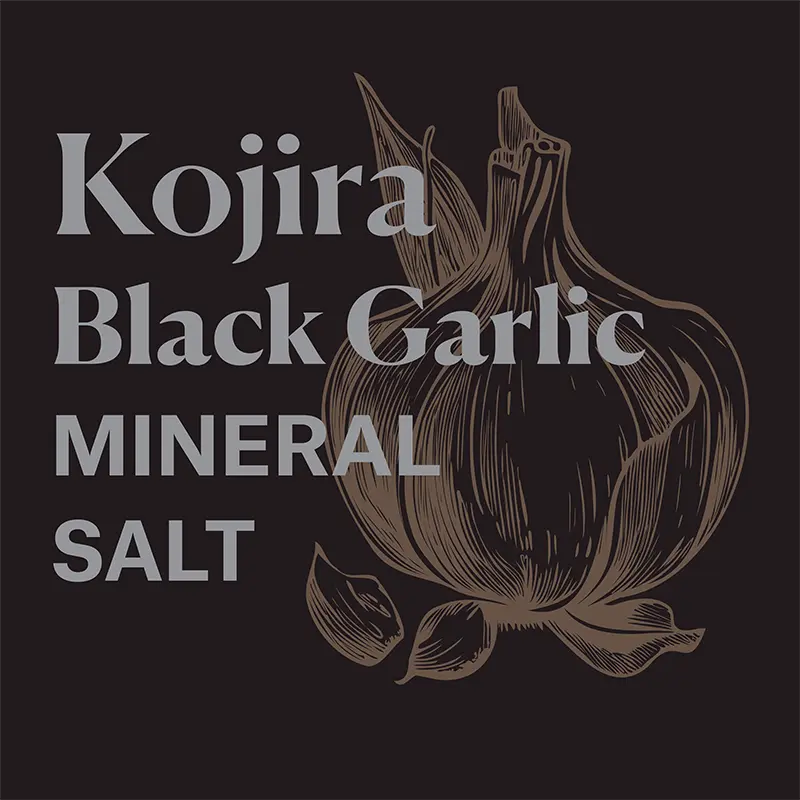
Kojira Black Garlic Salt
Use Kojira Black Garlic Salt for richer, darker plates.
It pairs particularly well with roast chicken, pork, sausages, beef, onion gravy, pan juices and grilled or roasted flavours. Because boiled potatoes carry seasoning clearly, a small finishing pinch is usually enough.


👨🏽🍳 Salt Pairing Rule: use Kojira Artisan Mineral Salt for clarity, Preserved Lemon Salt for brightness, Fermented Mushroom Salt for savoury depth, and Black Garlic Salt for richer, darker dishes.
More Potato Seasoning Guides
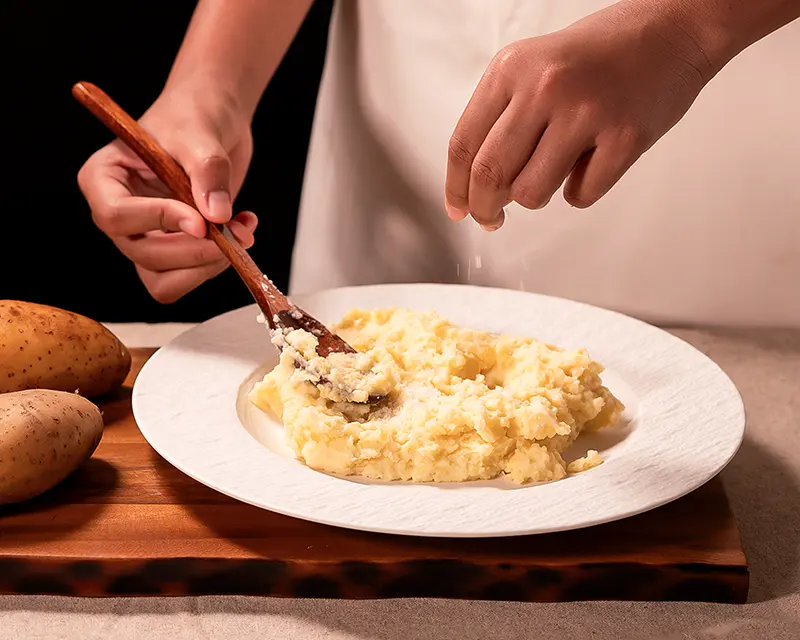
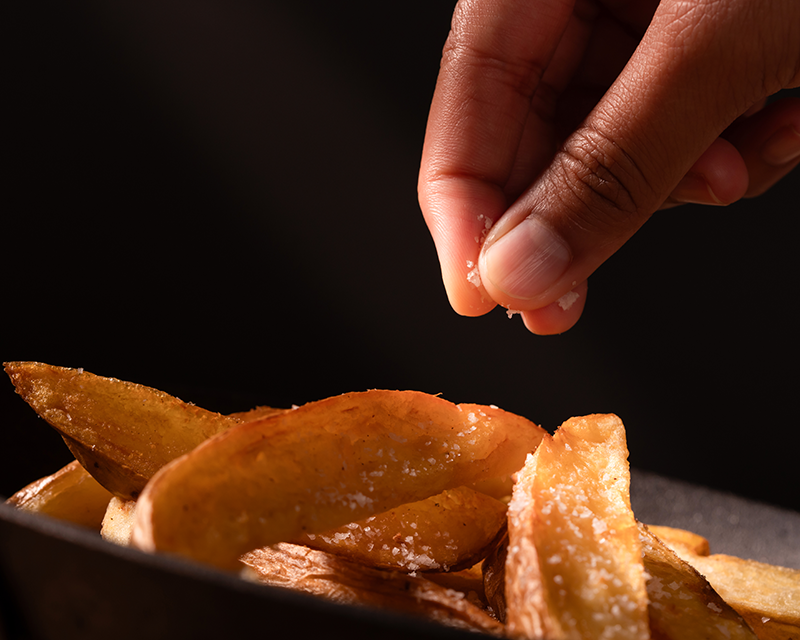
The same principle changes with other potato dishes. Fries need salt immediately after cooking so the crystals grip while the surface is still hot. Roast potatoes need seasoning in the cooking water, then a final adjustment while the edges are crisp. Mashed potatoes need a seasoned cooking base, followed by another taste once butter, cream, olive oil, cheese or pan juices have been folded in.
Each method changes what salt is trying to do: season the centre, grip the surface, sharpen the edge, enrich the mash, or balance fat.

Frequently Asked Questions About Seasoning Boiled Potatoes
What seasoning goes well with boiled potatoes?
Butter or olive oil, black pepper, dill, parsley, chives, mustard, lemon and yoghurt all work well. For finishing salt, use Kojira Artisan Mineral Salt for a clean flavour, Kojira Preserved Lemon Salt for brightness, or Kojira Fermented Mushroom Salt for more savoury depth.
How do you add flavour to boiled potatoes?
Season the cooking water first, then add flavour while the potatoes are still warm. Butter, olive oil, herbs, mustard, yoghurt, pan juices and finishing salts all cling better before the potatoes cool.
How do you make boiled potatoes taste better?
Think about what you are serving them with. Fish and green vegetables often suit herbs, lemon or Kojira Preserved Lemon Salt. Mushrooms, lentils and gravy can take Kojira Fermented Mushroom Salt, while meat and darker sauces work well with Kojira Black Garlic Salt.
Should you salt the water for boiled potatoes?
Yes. Salting the cooking water gives the potatoes a seasoned base through the centre instead of relying entirely on salt added after draining.
How much salt should you use for boiled potatoes?
Start with about 10 to 12 g of salt per litre of water. Firm, waxy or skin-on potatoes usually suit the higher end; peeled or cut potatoes season faster.
What is the best finishing salt for boiled potatoes?
It depends on the meal. Kojira Artisan Mineral Salt keeps them clean and classic, Kojira Preserved Lemon Salt adds brightness, Kojira Fermented Mushroom Salt adds savoury depth, and Kojira Black Garlic Salt suits richer meat, gravy and darker sauces.
Should you season boiled potatoes before or after cooking?
Both. Season the cooking water so the potatoes develop flavour through the centre, then finish them after draining while they are still warm. The final seasoning should depend on the dish you are serving them with.
Cook the Small Things Better
Join the Maison Kojira Letter for practical notes on salt timing, flavour, ingredients and the quiet details that make everyday food taste more finished.