How to Season Burrata So the Creamy Centre Stays the Star
Burrata needs very little seasoning. Add a few crystals of finishing salt after you cut it open, once the creamy centre has spilled into the olive oil and the rest of the plate is ready.
That timing matters. The salt should lift the cream and bring the whole bite into focus.
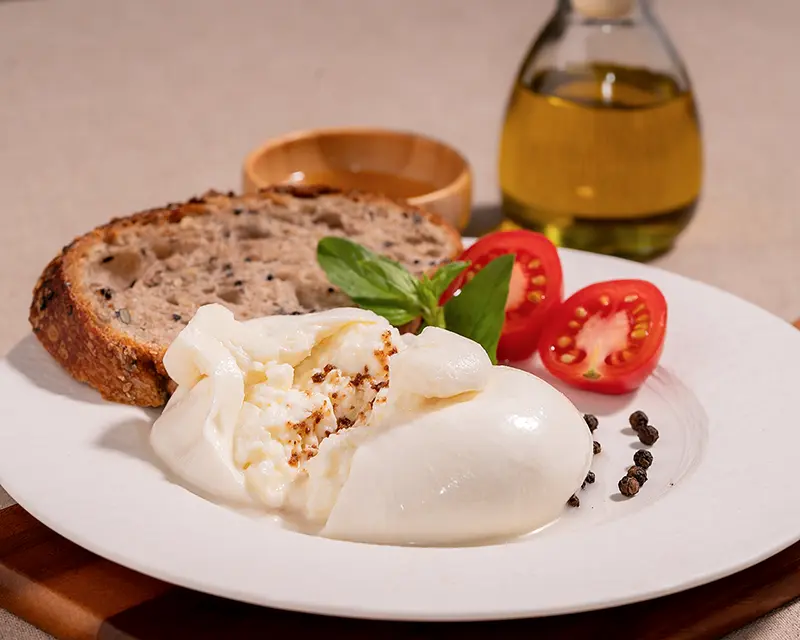
👨🏼🍳 Quick Rule: cut the burrata first, build the plate, then add a small amount of finishing salt across the cream and whatever you are eating with it.
Should You Season Burrata?
Usually, yes, but lightly. Burrata has a mozzarella-like outer shell filled with stracciatella and cream, which is why the centre is much richer and looser once cut open. A few crystals of finishing salt can sharpen the flavour without overpowering it.
How to Season Burrata at the Table
Season burrata immediately before serving, after you have opened it.
Burrata holds a lot of moisture. Salt left on the cheese for too long begins drawing moisture toward the surface. The crystals dissolve into the moisture, so you lose the clean contrast of salt against the creamy cheese.
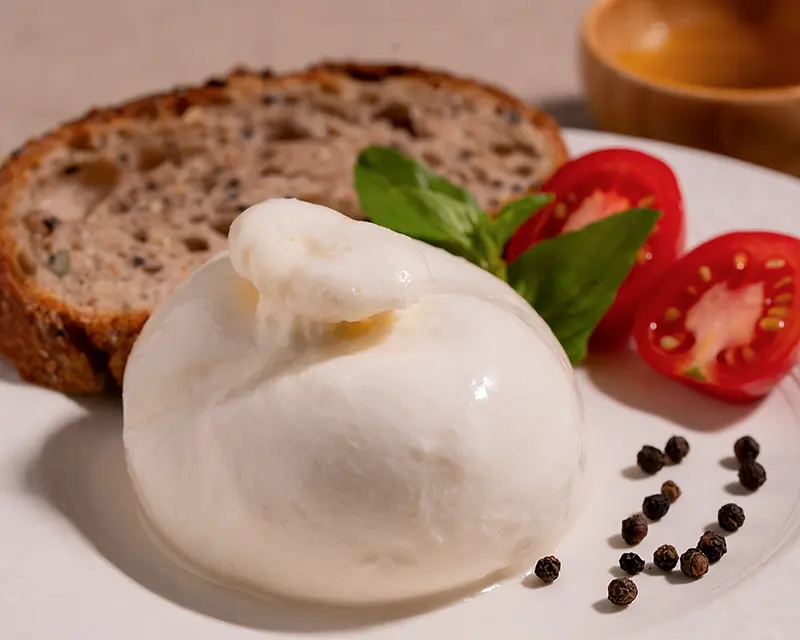
A good sequence is:
- Bring the burrata to the plate.
- Add tomato, fruit, vegetables, herbs, bread, or other pairings.
- Add olive oil or dressing.
- Cut the burrata open.
- Add a few crystals of finishing salt across the cream and the ingredients around it.
- Taste before adding more.
👩🏽🍳 Flavour Insight: burrata is easiest to season once the cream, fat, acidity, vegetables, fruit, and bread are all part of the same bite.
How Much Salt to Put on Burrata
Use less than you think.
For one ball of burrata, start with only a few crystals distributed across the opened centre and the surrounding plate. You should still taste milk, cream, olive oil, tomato, herbs, or fruit before you notice salt.
If the plate already contains salty ingredients such as olives, anchovies, capers, cured meat, preserved lemon, or heavily salted bread, use even less.
With sweeter or less salty ingredients such as peach, melon, figs, tomato, courgette, roasted peppers, or plain bread, a little finishing salt has more work to do. It sharpens both the burrata and whatever sits beside it.
🧑🏼🍳 Salt Rule: if the burrata tastes salty before it tastes creamy, you used too much.
What Goes Well with Burrata?
Burrata works well with ingredients that bring acidity, sweetness, freshness, texture, or warmth. Season the whole plate so those contrasts stay clear.
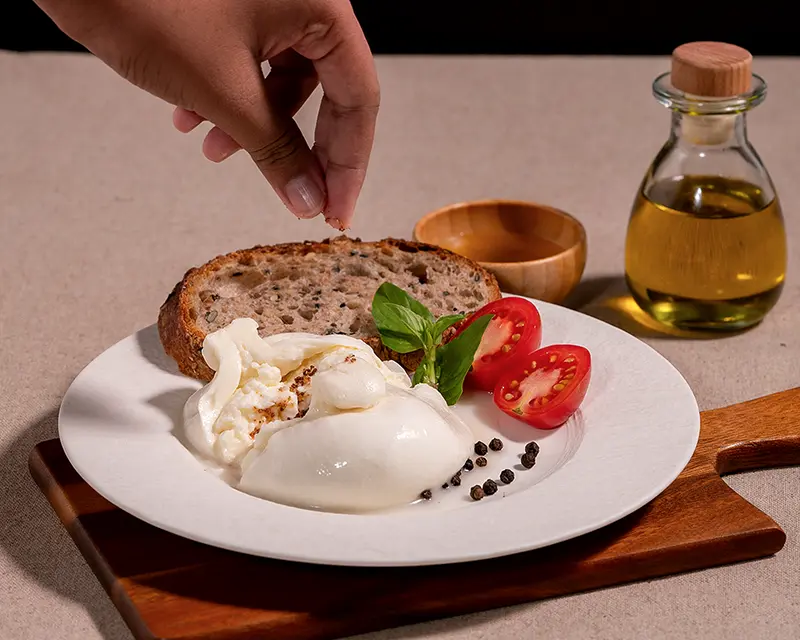
How to Season Burrata with Tomato and Basil
This is the cleanest place to start. Tomato brings acidity and sweetness, basil brings aroma, olive oil carries the flavours, and burrata supplies richness.
Season the tomato and opened burrata together rather than treating them as separate ingredients. Add black pepper if you want another aromatic edge, and serve with warm bread.
How to Season Burrata with Grilled or Roasted Vegetables
Burrata works particularly well with grilled courgette, roasted peppers, aubergine, tomatoes, asparagus, or other vegetables with browned edges. The cheese softens the roasted flavours while a little finishing salt keeps the plate from becoming too rich.
With courgette, peppers, or other sweet vegetables, a brighter salt can work especially well.
How to Season Burrata with Fruit
Peach, melon, figs, mango, berries, grapes, and citrus all work with burrata because their sweetness or acidity cuts through the cream.
Add the fruit first, open the burrata, then season across both. A few crystals can make the fruit taste sweeter while keeping the cheese from feeling heavy. The same principle explains why salt works on fruit.
👨🏻🍳 Quick Rule: season the burrata and its pairing as one dish. The best place for the salt may be the cream, the tomato, the fruit, the olive oil, or all four.
Best Finishing Salt for Burrata
The best salt depends on what you are serving with the burrata. For most plates, there are two useful directions: keep the flavour clean, or add brightness.
For Classic Burrata: Kojira Artisan Mineral Salt
Use Kojira Artisan Mineral Salt for classic burrata with olive oil, tomato, basil, pepper, and bread.
It sharpens the burrata without adding another flavour, making it the default choice for a classic plate.
For Brighter Burrata: Kojira Preserved Lemon Salt
Use Kojira Preserved Lemon Salt with grilled vegetables, herbs, citrus, or fruit.
The preserved lemon adds citrus brightness and salinity in the same pinch. Use it lightly. Burrata should still taste like burrata.
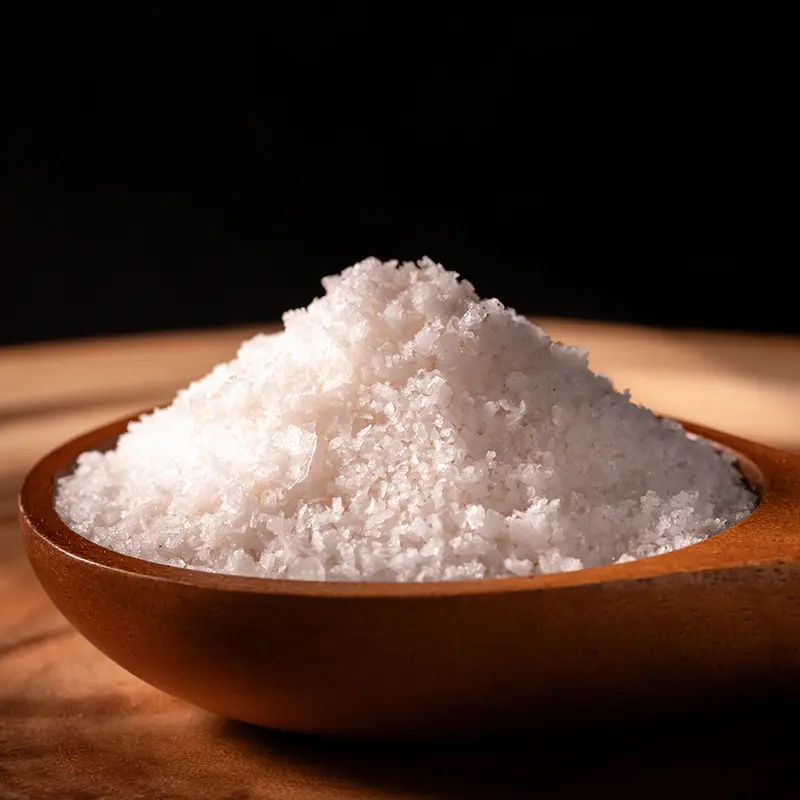
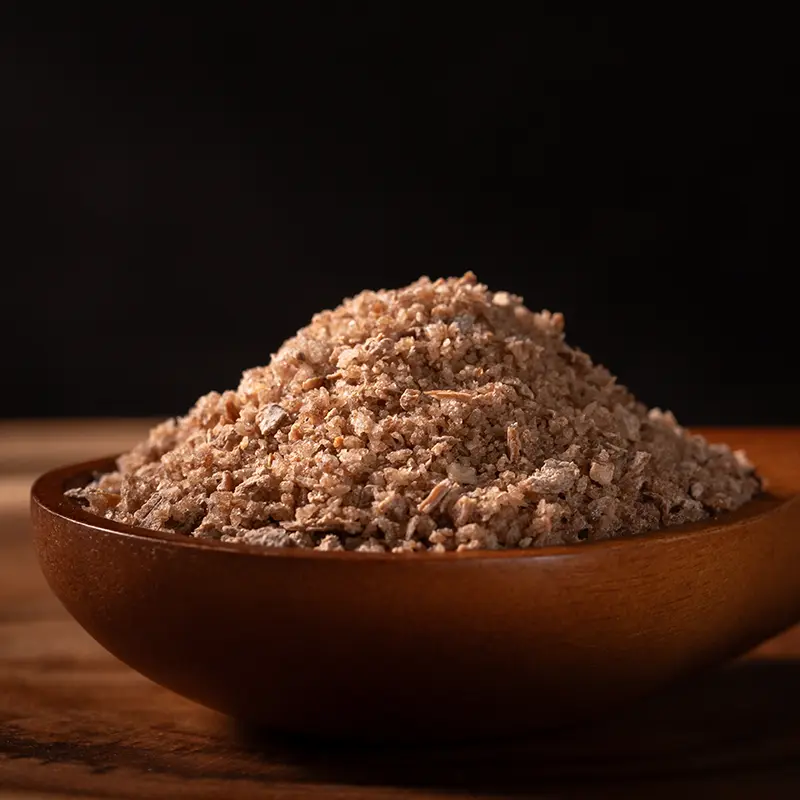
👨🏼🍳 Salt Pairing Rule: use Artisan Mineral Salt for a classic burrata plate. Use Preserved Lemon Salt for a brighter, citrus-led finish.
How to Season Burrata: Frequently Asked Questions
Should you season burrata?
Yes, lightly. Add a few crystals of finishing salt after cutting the burrata open, so the salt catches the cream and the ingredients around it.
When should you season burrata?
Immediately before serving. Cut the burrata open, add the olive oil and other ingredients, then finish with salt.
How much salt should you put on burrata?
Start with a few crystals across the creamy centre and the rest of the plate. Taste before adding more.
What seasoning goes well with burrata?
Olive oil, black pepper, basil, tomato, citrus, fruit and grilled vegetables all work well. Finishing salt helps bring those flavours together.
What finishing salt is best for burrata?
Use mineral salt for classic burrata with olive oil, tomato and basil. Preserved lemon salt works better when the plate includes herbs, grilled vegetables, citrus or fruit.
Related Guides
Burrata sits at the intersection of dairy, olive oil, vegetables, fruit, and finishing salt. These guides go deeper into the techniques behind those pairings.
Technique and Foundations

The 7 Better Flavour Techniques Chefs Use
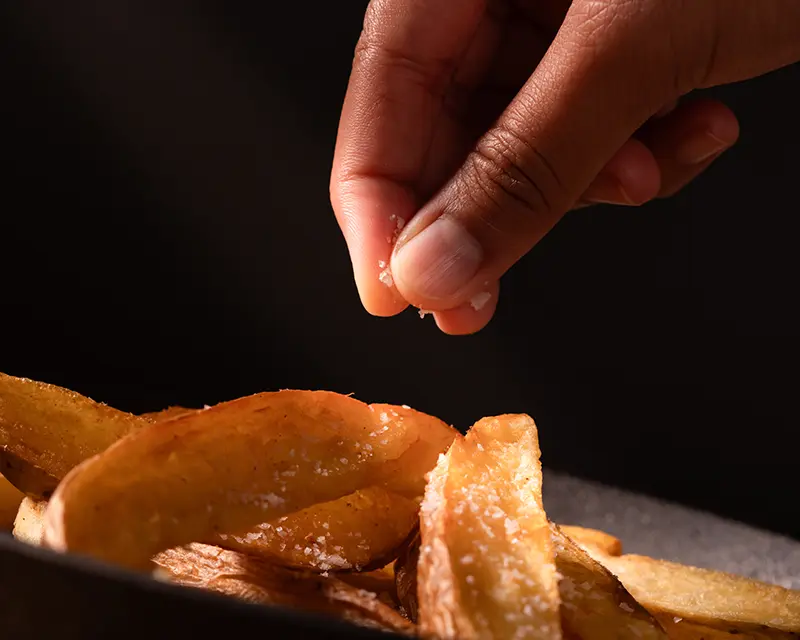
The Six Ways Salt Changes Flavour
Fresh Pairings
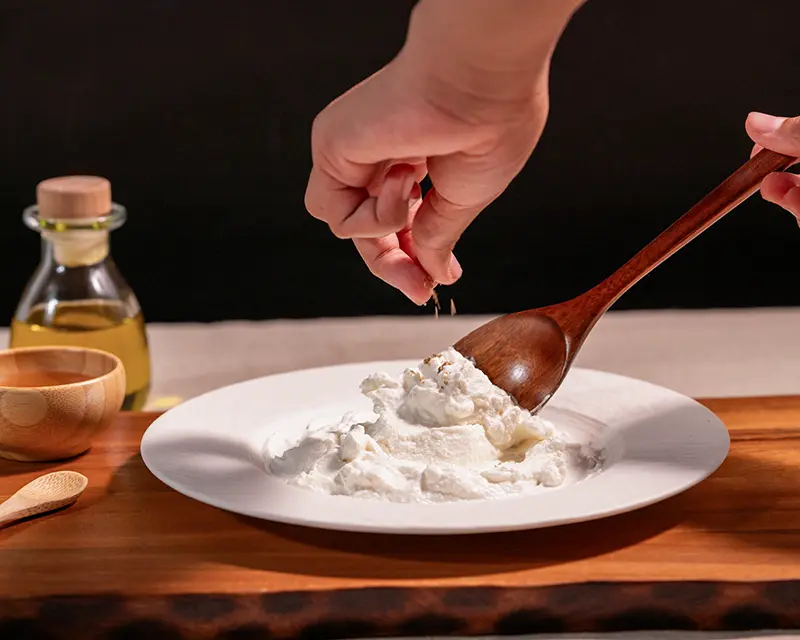
Salt works differently in acidic dairy. Use a lighter hand so yogurt tastes brighter, not salty.
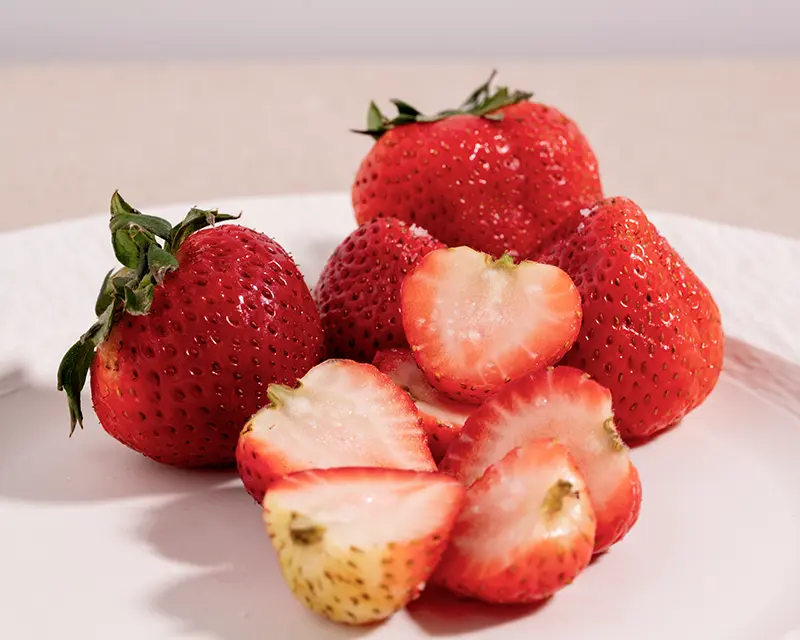
Why a tiny pinch of salt can make fruits sweeter.
Bread, Pasta and Grains
→ Olive Oil Bread Dips
→ How to Salt Pasta
→ How to Season Rice
→ How to Season Risotto
→ When to Salt Potatoes
Meat, Seafood and Eggs
→ When to Salt Meat
→ When to Salt Seafood
→ When to Salt Eggs
Join the Maison Kojira Letter
Eat sharper. Host better. Be more present. Get practical notes on flavour, ingredients and the small details that make food worth sharing.