When to Salt Meat: 6 Rules for Steak, Chicken, Pork and Burgers
When to salt meat is one of those kitchen questions that gets answered too confidently.
“Salt the steak the night before.”, “Salt it right before it hits the pan. “, “Never salt burgers early.”, “Salt chicken ahead.”, but “Finish pork after resting.”
No wonder it sounds confusing. These rules seem to contradict each other because they are usually given as absolutes. The annoying part is that most of them can be right. They are just right for different cuts, different timings, and different results.
On a thick steak, you may want salt inside the meat before it cooks. On chicken skin, you may want it to help the surface dry. On a burger, you may want to keep it out of the mix until the last moment so the texture stays loose and juicy. On pork or lamb, you may want it to melt into warm fat and resting juices, or stay clearer on the surface.
That is why timing matters. Salt early, late, or during resting, and you are not just changing the amount of salt. You are changing where the flavour sits.
At Maison Kojira, we make culinary salts from mineral salt and real ingredients like fermented mushrooms, black garlic and preserved lemon. For meat, we think of salt as a timing and flavour tool.
The same salt can season inside the meat, build flavour into the crust, melt into fat, or stay clear on the surface. The point is to pull more flavour out of the meat: deeper crust, clearer chicken skin, rounder pork fat, richer burgers, and resting juices that taste complete instead of flat.
👨🏽🍳 Quick answer: when to salt meat depends on the cut and the result you want. Salt thick cuts early when you want seasoning inside the meat. Salt thin cuts close to cooking. Salt after cooking for surface contrast. Salt during resting when you want fat and juices to carry the flavour. Treat ground meat differently because salt changes texture.
When to Salt Meat: The 6 Rules
When to salt meat depends on what you want the salt to do. These six rules cover most steak, chicken, pork, burgers, lamb and lean meat.
1. Salt Thick Cuts Early When You Want Seasoning Inside the Meat
Use this for steak, pork chops, lamb, chicken thighs and larger cuts where the inside matters as much as the crust.
Salt early enough and the seasoning has time to move into the meat. The surface can dry again before cooking, which helps browning.
2. Salt Close to Cooking When the Cut Is Thin or Time Is Short
Use this for thin steaks, cutlets, small chicken pieces, pork medallions and quick-cooking strips.
If there is no time for salt to move properly into the meat, salt close to cooking instead. You get flavour at the surface without letting the meat sit wet for too long.
3. Use Culinary Salts Before Cooking When You Want Flavour in the Crust
Fermented mushroom salt, black garlic salt and some spice-based salts can go on before cooking when you want deeper crust, savoury fat and pan flavour.
They become part of the cooked surface instead of staying separate on top.
4. Salt After Cooking When You Want Surface Contrast
Use this when the meat is already cooked and you want the salt to stay closer to the crust.
A few crystals on hot steak, roast chicken skin, pork, lamb or burgers can sharpen the bite without disappearing fully into the meat.
5. Salt During Resting When Fat and Juices Should Carry the Flavour
Resting is the middle ground.
The meat is off the heat, but still warm. Salt added here can melt partly into fat and juices while still leaving some definition on the surface.
6. Treat Ground Meat Differently Because Salt Changes Texture
Ground meat is not a smaller steak.
Salt mixed into ground meat changes how the proteins bind. For loose, juicy burgers, salt late or on the surface. For meatballs, sausages or firmer fillings, salt can be mixed in earlier.
How to Decide When to Salt Meat
The rules are short on purpose. Now let’s slow them down so you know what to do with the cut in front of you.
1. Salt Thick Cuts Early When You Want Seasoning Inside the Meat
If you have a thick steak, pork chop, lamb cutlet, chicken thigh, or larger roast in front of you, early salting gives you more room to work. The inside matters, not only the crust.
A useful rule of thumb: if the cut is thick enough that the centre needs seasoning too, salt it at least 30 to 45 minutes before cooking. For thick steaks, chops, lamb, or skin-on chicken, 45 to 60 minutes is often more useful. For larger roasts, you can salt several hours ahead, or even the day before.
If you do not have that time, do not worry. Salt close to cooking instead. What you want to avoid is the awkward middle: salting early enough to draw moisture to the surface, but not early enough for the surface to dry again before it hits the pan, grill, or oven.
At first, salt pulls a little moisture to the surface. Given time, that moisture dissolves the salt and starts moving back into the meat. Then the surface has a chance to dry again. That dry surface is what helps you get better browning.
So with thicker cuts, think ahead when you can. Salt early, let the meat rest, and cook it once the surface is dry again. If time is short, salt just before cooking and keep the surface as dry as possible.
If you want the deeper science, we explain this in our guide to how salt affects browning, crust and the Maillard reaction.
2. Salt Close to Cooking When the Cut Is Thin or Time Is Short
Not every piece of meat needs a long rest with salt.
Thin steaks, cutlets, small chicken pieces, pork medallions and quick-cooking strips can be salted shortly before cooking. There is not enough thickness, or enough time, for the salt to move deeply into the meat. In that case, the goal is simpler: season the surface, cook cleanly, and avoid letting the meat sit wet for too long.

This is not the lazy version of early salting. It is the right method when the cut is thin, the cooking time is short, or you want the surface dry enough to brown.
3. Use Culinary Salts Before Cooking When You Want Flavour in the Crust
Sometimes plain salt is enough. You just want seasoning, browning and control. But sometimes you want more from the crust itself. You want steak to taste deeper, pork to pick up darker savoury notes, burgers to feel richer, or roast chicken skin to carry more than salinity.
That is where culinary salts can be useful before cooking. By culinary salts, we mean salts made with real ingredients, not only plain salinity: fermented mushroom, black garlic, preserved lemon, chilli, herbs, spices, or other flavour-bearing ingredients worked into the salt.
Use them before cooking when you want their flavour to become part of the crust, fat or pan juices. Use them after cooking when you want their character to stay clearer on the surface.
Fermented mushroom and black garlic salts are especially useful before cooking because heat and fat help their depth open into the meat. Brighter salts, like preserved lemon, usually work better after cooking, during resting, or in warm juices where their lift stays clear.
With meat, you can also season in layers: a little before cooking for depth, then a final adjustment after resting.
Build Umami Into the Crust
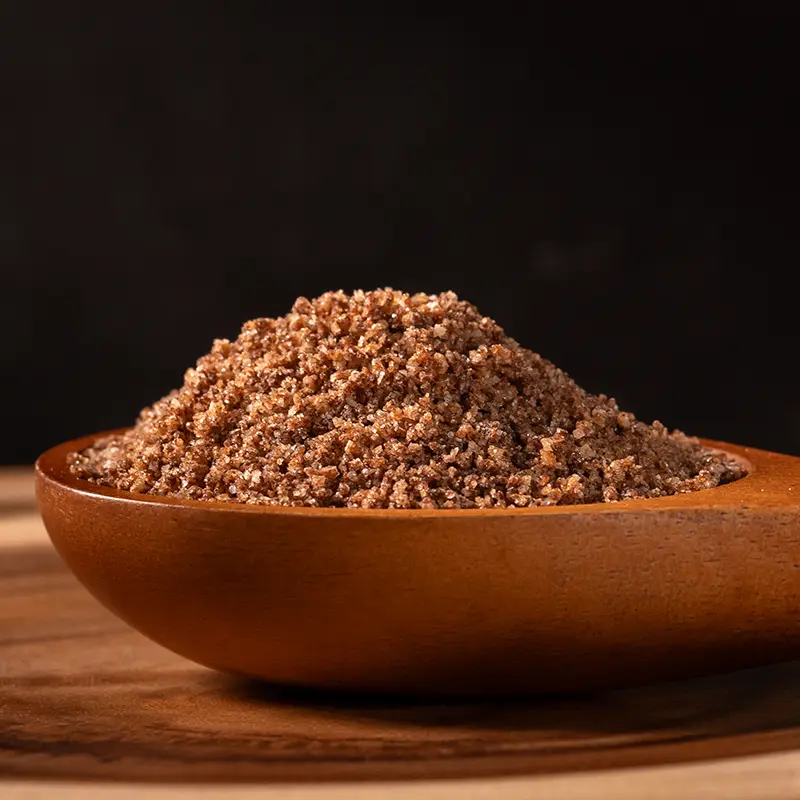
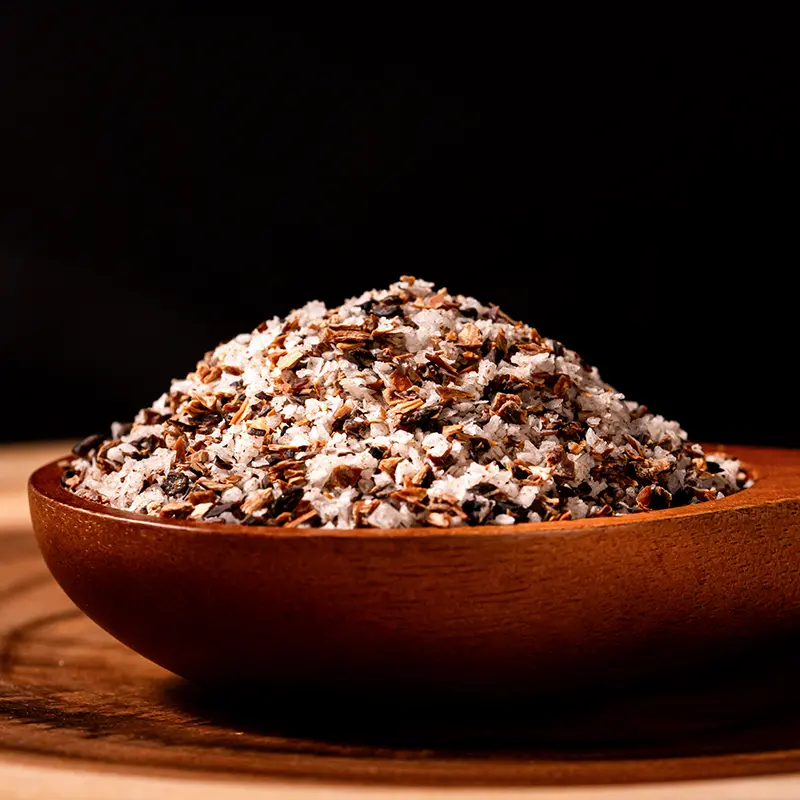
Some salts are best saved for the end. Black garlic salt and fermented mushroom salt can also go on before cooking, when you want their umami to meet heat, fat and browning.
On steak, pork, lamb, burgers or roast chicken skin, they can make the crust taste darker, richer and more savoury before you add anything at the table.
The goal is not to cover the meat. It is to build a deeper savoury layer into the crust, rendered fat and pan juices.
4. Salt After Cooking When You Want Surface Contrast
Sometimes the best moment to salt meat is after the heat has done its work. The crust is already browned. The chicken skin is crisp. The pork fat has softened. The burger is hot and juicy.
At that point, you are not trying to season through the meat anymore. You are finishing what is already there.
A little salt at the end stays closer to the surface. Some of it melts into hot fat or resting juices. Some of it stays clearer for the first bite. That is why the same pinch can feel more vivid after cooking than it would have felt before cooking.
Use this when the meat already tastes cooked and balanced, but still needs a little lift at the surface. On steak, it can sharpen the crust. On chicken skin, it can make the crispness taste clearer. On pork or lamb, it can wake up the fat. On burgers, it can bring back focus after the juices settle.
Just keep the hand light. Finishing salt added at the end is easier to notice, especially on lean meat. Fatty cuts give you a little more room because the fat softens the edge.
5. Salt During Resting When Fat and Juices Should Carry the Flavour
Resting is the middle ground.
The meat is off the heat, but it is still warm. Fat is soft, juices are moving, and the surface has not fully settled. Salt added here does not stay as sharp as salt added at the table, but it does not disappear as fully as salt added during cooking either.
This is useful for steak, lamb, pork, roast chicken and fatty cuts where you want the seasoning to move into the resting juices. It is also a good moment for black garlic, fermented mushroom, or preserved lemon salt when you want their flavour to open into warmth instead of sitting dry on top.
Use a light hand. Warm juices can make salt spread quickly, especially with butter, rendered fat, or pan juices nearby. Taste again before serving if you plan to finish with more salt.
6. Treat Ground Meat Differently Because Salt Changes Texture
With a steak or chop, salt mostly works from the surface inward. With ground meat, the structure is already broken open. If you mix salt through it, the salt reaches the proteins quickly and changes how the meat holds together.
That can be useful, or it can work against you.
For loose, juicy burgers, keep salt out of the mix until the last moment. Salt the outside of the patty just before cooking, or season the surface after shaping. That keeps the texture more open and tender.
For meatballs, sausages, kebabs, fillings or firmer patties, salt can go into the mix earlier. In those dishes, you often want more binding. The meat should hold together, keep its shape and eat a little more cohesively.
So the rule is simple: if you want a loose burger, salt late. If you want binding, salt earlier. With ground meat, timing does not only change flavour. It changes the bite.
When to Salt Meat by Type
When to salt meat changes by cut. A steak does not need the same timing as a burger. Chicken skin, pork fat, lamb, lean game, organ meats and braised meat all give salt a different job.
Steak
Salt early for deeper seasoning and better browning. Finish after resting for crust and contrast.
Thick steaks benefit from early salting because the seasoning has time to move inward and the surface can dry again before cooking. After resting, a final light adjustment can sharpen the crust without making the whole steak taste salty.
Chicken
Salt ahead when you want better seasoning and drier skin. Finish after cooking when crisp skin needs definition.
Skin-on chicken responds well to early salting because it helps the surface dry. That gives the skin a better chance to crisp. After cooking, a small amount of salt can make roast or grilled chicken taste clearer, especially where the skin is browned.
Pork
Salt before cooking so the meat does not taste flat. Finish fattier cuts with a light hand.
Pork has a milder flavour than beef or lamb, so it often needs salt before cooking to build a proper base. Fattier cuts can also take a final adjustment after resting, especially when warm juices, rendered fat or pan sauce are involved.
Lamb
Salt lightly. Lamb fat carries flavour quickly, so too much salt can make the meat feel heavy instead of clear.
Salt before cooking when you want browning and structure. Salt after cooking or during resting when you want the seasoning to move into the warm fat. Keep the amount restrained, especially on fattier cuts.
Burgers and Ground Meat
Salt late for loose, juicy burgers. Salt earlier only when you want binding.
For burgers, salt the outside of the patty just before cooking, or season after shaping. Mixing salt through the meat too early can make the texture tighter. For meatballs, sausages, kebabs or firmer patties, earlier salting can help the mixture hold together.
Stews and Braises
Salt in layers, but leave room. Liquid reduces and salt builds as the dish cooks.
In stews and braises, salt does not stay on the surface. It moves through liquid, fat and sauce. Season lightly at the start, adjust as the dish cooks, then taste again at the end when the liquid has reduced and the texture is set.
Lean Game
Use less salt and more control. Lean meat makes salinity feel sharper.
Venison, elk and rabbit have strong flavour and less fat to soften salt. Salt lightly before cooking when you need browning, then adjust carefully after resting. Small changes are easier to notice on these cuts.
Organ Meats
Salt lightly and close to the end. Liver, heart and kidney can become intense quickly.
Organ meats already have concentrated flavour. A small amount of salt can make them taste deeper and cleaner, but too much can push them harsh. Use restraint, especially if you are also using butter, pan juices or a strong sauce.
Should You Salt Steak Before or After Cooking?
For steak, both answers can be right. Salt steak early when you have time for the seasoning to move inward and the surface to dry again before cooking. For thick steaks, 45 to 60 minutes is useful; larger cuts can be salted several hours ahead or the day before.
If you do not have that time, salt right before cooking instead. After resting, adjust lightly if the crust needs more definition.
When to Salt Chicken
When to salt chicken depends on the cut. Salt skin-on chicken ahead when you want drier skin and better browning. This works well for roast chicken, thighs, wings and skin-on pieces.
For chicken breast, skewers, small pieces and quick-cooking strips, salt close to cooking. These cuts are thinner and do not need the same salting window as a thick steak. After cooking, finish lightly if the skin or surface tastes flat.
When to Salt Pork
Pork is one of the clearest examples of why when to salt meat matters. Its flavour is milder than beef or lamb, so it can taste flat without enough seasoning.
Salt pork before cooking when you want the meat itself to carry flavour. Use a moderate hand, especially on lean cuts, then leave room to adjust after resting when fat, juices or sauce are part of the bite.
When to Salt Burgers and Ground Meat
When to salt meat becomes especially important with burgers and ground meat, because salt changes texture, not only flavour.
For loose, juicy burgers, salt late. Shape the patty first, then salt the outside just before cooking. Mix salt through the meat earlier only when you want binding, as with meatballs, sausages, kebabs or firmer patties.
Common Mistakes When Salting Meat
Most mistakes with meat are timing mistakes, not salt mistakes. When to salt meat matters because salt can do the right job at the wrong moment.
Salting in the bad middle
You salt early enough to draw moisture to the surface, but not early enough for the surface to dry again before cooking. If you have time, salt properly ahead. If not, salt close to cooking and keep the surface dry.
Mixing salt into burgers too early
Salt mixed through ground meat changes the texture. That can make burgers tighter and denser than you want. For loose, juicy burgers, shape first and salt the outside just before cooking.
Treating lean meat like fatty meat
Lean cuts have less fat to soften salinity. Chicken breast, pork tenderloin, venison, elk, liver and heart can taste salty faster than steak, lamb or pork belly. Use less salt, then adjust after cooking.
Forgetting that resting juices carry salt
Salt added during resting can move quickly through warm fat and juices. That is useful, but it also means the flavour can build. Taste before adding more at the table.
Using culinary salt too heavily
Black garlic, fermented mushroom, preserved lemon and other culinary salts bring flavour as well as salinity. Use them for direction, not coverage.
With meat, a small amount in the right place usually does more than a heavy layer everywhere.
Go Deeper on the Science
Once you understand when to salt meat, the same timing logic becomes easier to apply across the rest of the kitchen. Meat is where browning, moisture, texture and flavour all meet. These guides explain the mechanics behind the timing rules.
Continue with Salt Timing and Flavour Guides
Meat is one timing problem. Potatoes, eggs, yoghurt and chef techniques all show how much the moment of salting changes the result.