How to Salt Pasta Water Without Making Pasta Too Salty
To understand how to salt pasta properly, start with the water: salt it once it reaches a boil, before the pasta goes in. The salt should dissolve into the water first, so the pasta absorbs seasoning as it cooks.
But salting pasta properly is not only about the water. Pasta is seasoned in three places: the cooking water, the sauce, and the final surface. Each one does a different job. The water seasons the pasta itself. The sauce carries salt, fat, starch, acidity, and aroma. Finishing salt is the final adjustment.
If the pasta water is bland, finishing salt cannot fully fix it later. The pasta may taste salty on the outside, but flat inside. Knowing how to salt pasta is mostly about balance: enough salt in the water to season the pasta, but enough restraint to leave room for the sauce.
How to Salt Pasta Water When Cooking Pasta
Salt the water once it reaches a boil, before the pasta goes in.
This timing matters for a simple reason: salt dissolves quickly in boiling water and seasons the pasta as it hydrates. If salt is added after the pasta has cooked, it mostly seasons the surface. The pasta may taste sharper for a moment, but the centre will still taste flat.
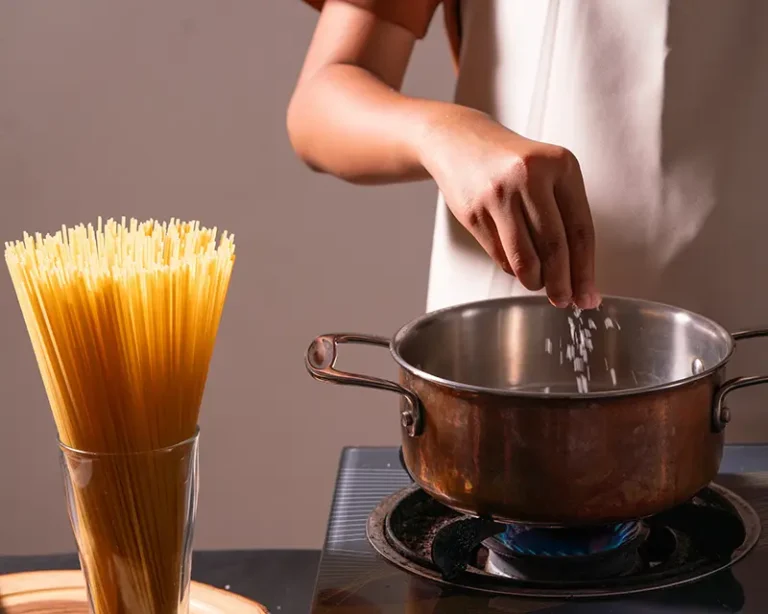
You do not need to salt cold water. It will still work once the water heats, but there is no real advantage. Waiting until the water boils keeps the process simple: boil the water, add salt, let it dissolve, then add the pasta.
The important point is not the exact second the salt enters the pot. The important point is that the salt is dissolved in the water before the pasta starts cooking.
👩🏽🍳 Quick Rule: salt the water when it boils, let the salt dissolve, then add the pasta.
How Much Salt To Use In Pasta Water
This is where learning how to salt pasta becomes practical: the water needs enough salt to season the pasta, but not so much that the sauce becomes difficult to balance.
The old rule says pasta water should taste “like the sea.” That is imprecise and often too salty. A better starting point is:
3–4 g of salt per litre of water
Use this as a baseline, then adjust depending on the sauce. A mild butter or olive oil pasta can handle slightly more seasoning in the water. A sauce with anchovies, capers, olives, cured meat, salty cheese, or concentrated pasta water needs more restraint.
The pasta should already taste lightly seasoned before it meets the sauce. If the pasta tastes flat by itself, the sauce has to compensate. That usually leads to pasta that tastes salty on the outside instead of balanced throughout.
Why Pasta Water Matters
Pasta absorbs water as it cooks. If that water contains salt, the pasta absorbs some of that seasoning while it hydrates.
This is why salted pasta water matters: it works while the pasta is still changing. It seasons the pasta before sauce, fat, cheese, herbs, or finishing salt enter the picture.
This is also why pasta cooked in unsalted water often tastes strangely empty. The sauce may be good, but the pasta underneath has no structure. It tastes like sauce sitting on starch.
If you want to know how to salt pasta so it tastes seasoned throughout, start with the water and finish the seasoning in the sauce.
Why Starchy Pasta Water Changes the Sauce
Pasta water is not just cooking water. As pasta cooks, starch moves from the pasta into the water. That starch can help sauce cling to pasta instead of sliding off it.
This is one of the quiet foundations of Italian pasta cooking: the pasta is often finished with the sauce, not simply boiled, drained, and topped.
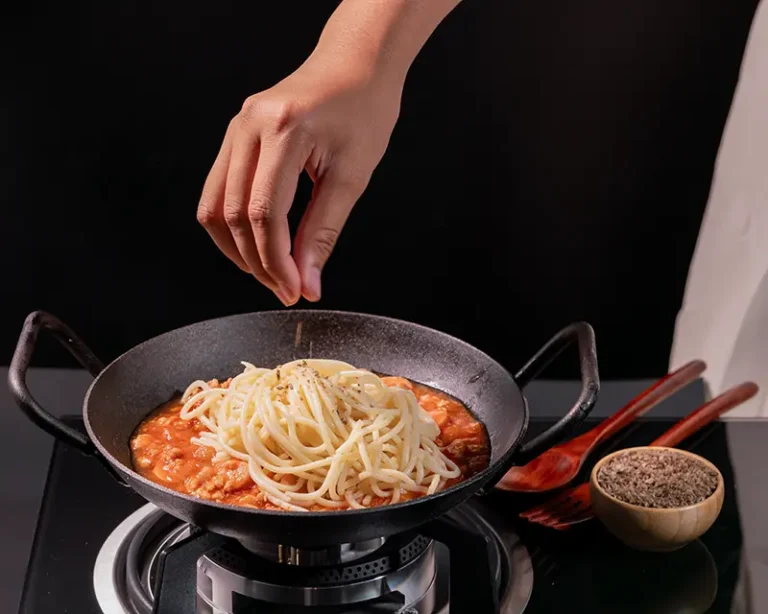
A small splash of cooking water helps bring pasta and sauce together in the final minute. The sauce tightens around the pasta, the pasta absorbs flavour, and the seasoning becomes part of the dish.
There is one detail most people miss: the amount of water changes the pasta water. If pasta is cooked in a very large pot of water, the starch is more diluted. If it is cooked in slightly less water, the water becomes starchier, which can make it more useful for building the sauce.
That does not mean crowding the pot or using too little water. It means using enough water for the pasta to move, while remembering that the cooking water may become part of the sauce.
The salt matters more when you use pasta water this way. If the water is heavily salted and then reduced into the sauce, the final dish can become too salty.
🧑🏽🍳 The Better Rule: salt the water enough to season the pasta, but keep it moderate if you plan to use the pasta water in the sauce.
When To Salt the Pasta Sauce
Taste the sauce before you add the pasta, but do not finish the seasoning yet.
At this point, the sauce should taste slightly under where you want it to end. The pasta will bring salt from the cooking water. If you add pasta water to loosen the sauce, that water brings salt too. If you season the sauce fully before those two things enter the pan, the finished dish can easily become too salty.
Once the pasta is in the sauce, stir or toss it for the final minute. Add a small splash of pasta water only if the sauce needs help coating the pasta. Then taste again.
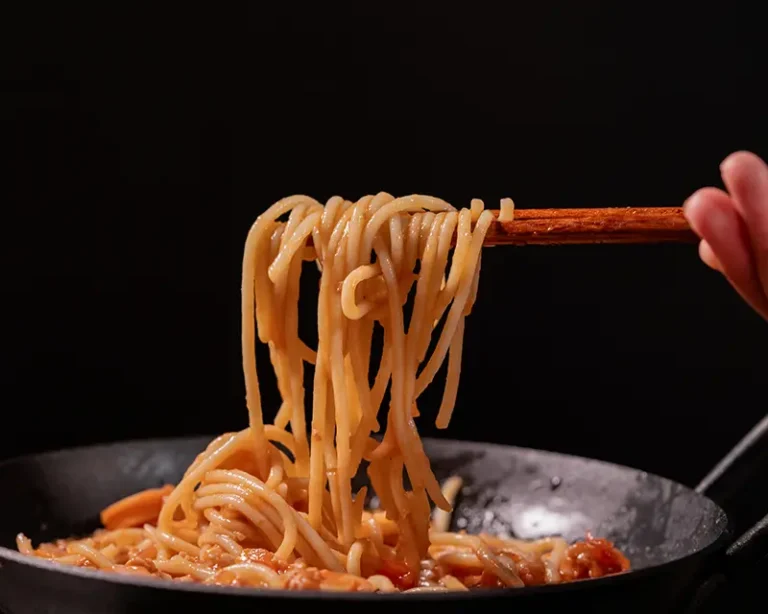
This is the moment to make the final adjustment. Add salt only if the pasta and sauce taste flat together.
For tomato sauces, this final adjustment can make the sauce taste brighter. For butter, olive oil, cheese, or cream sauces, be more careful because salt can become obvious quickly. If the sauce contains anchovies, olives, capers, cured meat, bottarga, parmesan, or pecorino, taste before adding anything.
🧑🏼🍳 Quick Rule: season the sauce lightly before adding pasta, then make the final adjustment once pasta, sauce, and pasta water are together.
When Finishing Salt Belongs on Pasta
Use finishing salt only after the pasta is cooked, sauced, and tasted.
If the pasta tastes flat because the water was bland, finishing salt will not solve the problem. This is why how to salt pasta is not the same as adding finishing salt at the end. Finishing salt will sit mostly on the surface: the first bite may taste sharper, but the pasta underneath will still taste empty. The main seasoning has to be built before the final pinch.
Finishing salt works best when the dish is already balanced and you want a final lift. Use a very small pinch just before serving, while the pasta is still hot. The heat and surface moisture will dissolve some of the crystals, while a little texture remains.
It makes most sense on simple pasta where the final surface matters: olive oil and garlic, butter and herbs, light tomato sauces, seafood pasta, mushroom pasta, or a simple cream sauce.
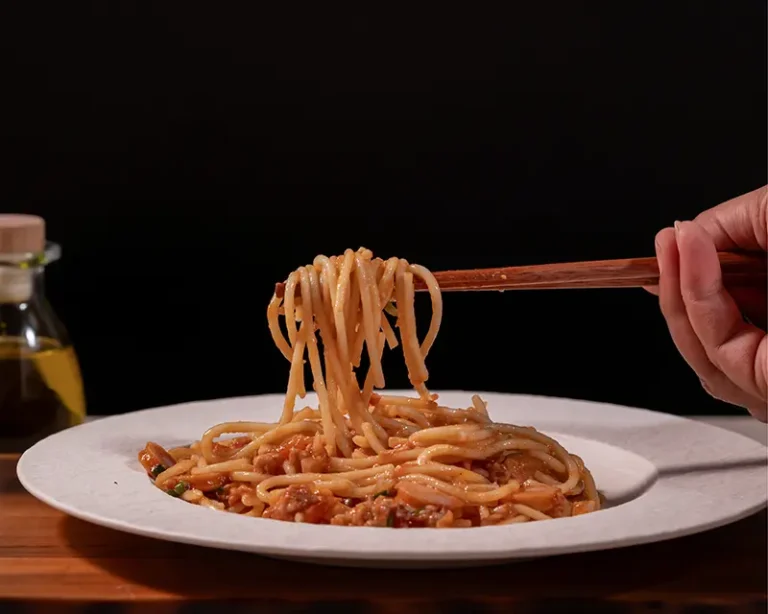
Skip it, or use almost none, when the dish already carries strong salty ingredients: anchovies, olives, capers, cured meat, bottarga, parmesan, pecorino, or reduced pasta water.
🧑🏾🍳 Better Rule: finishing salt should sharpen pasta that is already seasoned, not rescue pasta that started bland.
Cook With Better Timing
Join the Maison Kojira Letter for practical notes on salt timing, sauce, starch and the small kitchen decisions that make everyday food taste more complete.
Best Finishing Salts for Pasta
The best finishing salt depends on the sauce, but the amount depends on the pasta water.
If the pasta water was properly salted, the pasta already carries seasoning. If you also used pasta water to loosen or bind the sauce, that water has brought salt into the pan as well. At that point, finishing salt should be used only as a final lift.
Use finishing salt to echo the main flavour, add contrast, or lift aroma at the end.
Artisan Mineral Salt
Use on simple pasta where you want clarity without adding a strong flavour: olive oil, butter, garlic, tomato, herbs, or plain cheese sauces.
Preserved Lemon Salt
Use on seafood pasta, courgette, herbs, olive oil, light tomato sauces, or cream sauces that need brightness.
Fermented Mushroom Salt
Use on mushroom pasta, butter sauces, cream sauces, ragù, roasted vegetables, or pasta with parmesan or pecorino. Use very little, because it adds savoury depth quickly.
Saffron Salt
Use on seafood pasta, cream sauces, butter sauces, or delicate pasta where aroma matters more than sharpness.
Black Garlic Salt
Use on tomato sauces, roasted vegetable pasta, mushroom pasta, ragù, or darker butter sauces. It works best when the dish can handle sweetness, depth, and umami.
🧑🏽🍳 Salt Pairing Rule: choose the finishing salt after you know the sauce, and choose the amount after you taste the pasta, sauce, and pasta water together. That is how to salt pasta without making the final dish too salty.
More Guides on Salt, Starch and Final Seasoning
Pasta shows how salt works in stages: water first, sauce second, final pinch last. These guides continue the same logic across rice, risotto, potatoes, finishing salt and the way salt moves through food.
Join the Maison Kojira Letter
Eat sharper. Host better. Be more present. Get practical notes on flavour, ingredients and the small details that make food worth sharing.