Mussels Recipe: A Rich Lemon-Garlic Broth, Without Wine
Most mussels recipes begin with a splash of white wine. It’s a habit worth questioning, because mussels already bring one of the most important ingredients to the pot: their own wonderfully savoury juices.

As mussels steam, those juices collect into a naturally salty, umami-rich broth. A little garlic, olive oil and fresh herbs build on that flavour. Fresh lemon brings brightness, while preserved lemon adds something deeper: the rounded citrus character that develops through months of curing.
This alcohol-free mussels recipe lets the shellfish do much of the work. Kojira Preserved Lemon Salt melts into the warm broth, while fresh lemon and basil bring brightness and fragrance. Serve it with good bread, because you’ll want every last spoonful.
Mussels with Preserved Lemon & Basil
A bright, savoury mussels recipe without wine. Garlic and preserved lemon build flavour in the mussels’ natural broth, while butter adds richness and fresh lemon and basil bring brightness and fragrance.
Ingredients
- 1 kg mussels, fresh and live in their shells or commercially prepared on the half shell
- 1 tbsp extra virgin olive oil
- 1 small shallot, finely chopped
- 3 garlic cloves, thinly sliced
- 125 ml water
- ½–¾ tsp Kojira Preserved Lemon Salt, to taste
- 15 g unsalted butter, chilled
- 1 tbsp fresh lemon juice, adjusted to taste
- 10–12 fresh sweet basil leaves
- Fresh lemon wedges and crusty bread, to serve
In brief: Soften the shallot and garlic in olive oil, then add water and Kojira Preserved Lemon Salt. Steam the mussels until cooked, allowing their savoury juices to mingle with the broth. Swirl in butter, adjust with fresh lemon juice and finish with torn basil. Serve immediately with crusty bread.
How to Cook Mussels with Lemon, Garlic & Basil
The lovely thing about this mussels recipe is how quickly a handful of ingredients becomes something special. A little garlic, preserved lemon and a covered pot are all you need to get started. Once the mussels meet the fragrant lemon-garlic broth, everything comes together wonderfully quickly.
1. Get the Mussels Ready
A little preparation goes a long way, and you have two good options for this mussels recipe.
Using fresh, live mussels: Give them a rinse under cold running water, gently scrubbing away any sand or grit. If you spot a fibrous beard sticking out between the shells, pull it firmly towards the hinge to remove it.
Discard mussels with cracked or damaged shells. If a shell is open, give it a gentle tap. A live mussel should begin to close; discard any that remain unresponsive. Keep them chilled until you’re ready to cook.
Using prepared half-shell mussels: These are wonderfully convenient, especially when you’re cooking for guests. The mussels have already been opened and presented on one half of their shells, saving you much of the preparation work.
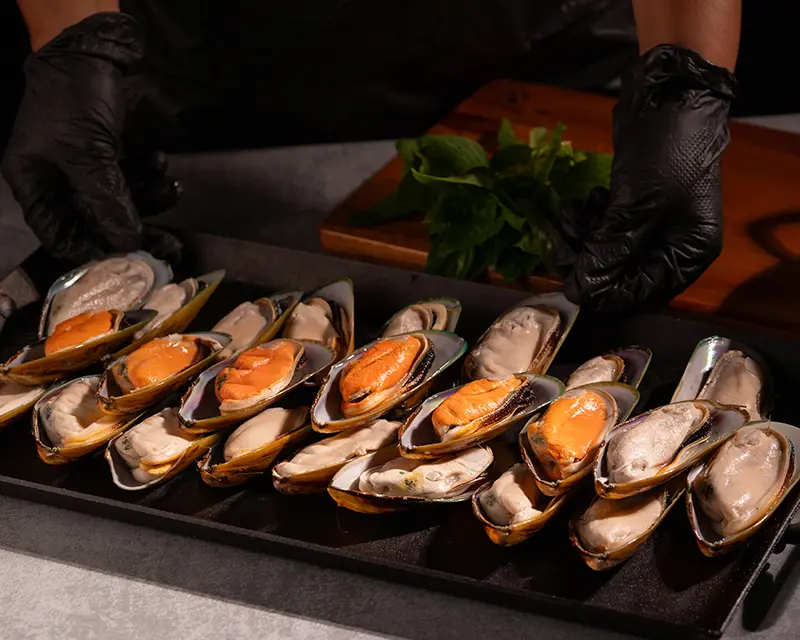
Check the packaging to see whether they’re raw, blanched or fully cooked. Follow the supplier’s thawing and cooking instructions, as the preparation varies between products. If frozen, thaw in the refrigerator when required.
Once your mussels are ready, the rest of the recipe moves beautifully quickly.
2. Let the Garlic and Shallot Work Their Magic
Warm 1 tablespoon of extra virgin olive oil in a large, deep pot over medium heat. Add the finely chopped shallot and let it soften gently for 2–3 minutes, stirring occasionally.
Now add the sliced garlic and cook for another 30–60 seconds. You’ll know it’s ready when that lovely garlic aroma rises from the pot.
Keep the garlic pale rather than golden brown. We’re building a gentle, fragrant base that will complement the sweet, delicate flavour of the mussels.
3. Bring the Preserved Lemon Broth to Life
Pour in 125 ml of water and stir in ½ teaspoon of Kojira Preserved Lemon Salt.
Bring everything to a gentle simmer. The small pieces of preserved lemon will begin to soften, releasing their rounded citrus character into the warm liquid.
This is where our mussels recipe takes a different direction from the familiar white-wine version. We’re creating a fragrant lemon-garlic broth that will become even more delicious once the mussels release their own savoury juices.
Using precooked half-shell mussels? They may release less cooking liquid than fresh mussels. You can replace the 125 ml water with unsalted seafood or vegetable stock for a fuller broth. Keep it unsalted so you can control the seasoning with Kojira Preserved Lemon Salt.
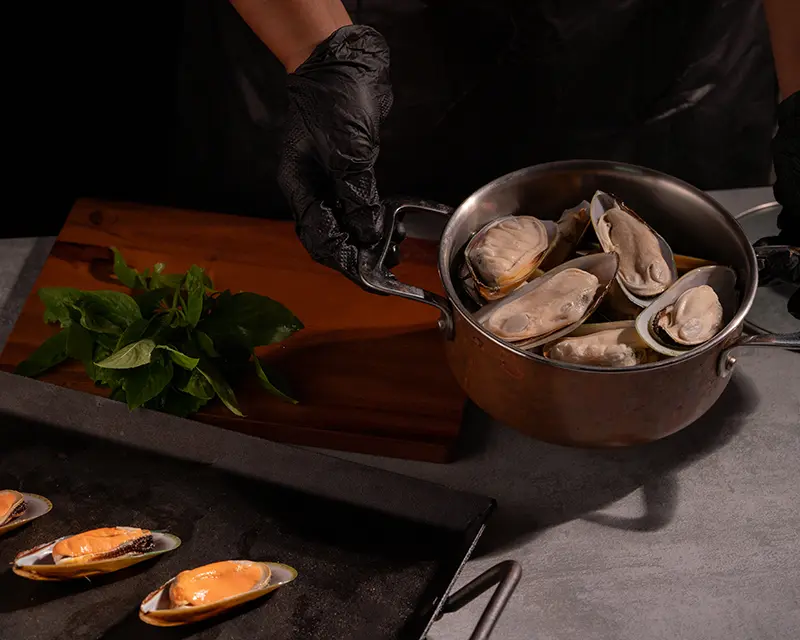
4. Steam the Mussels Until Tender
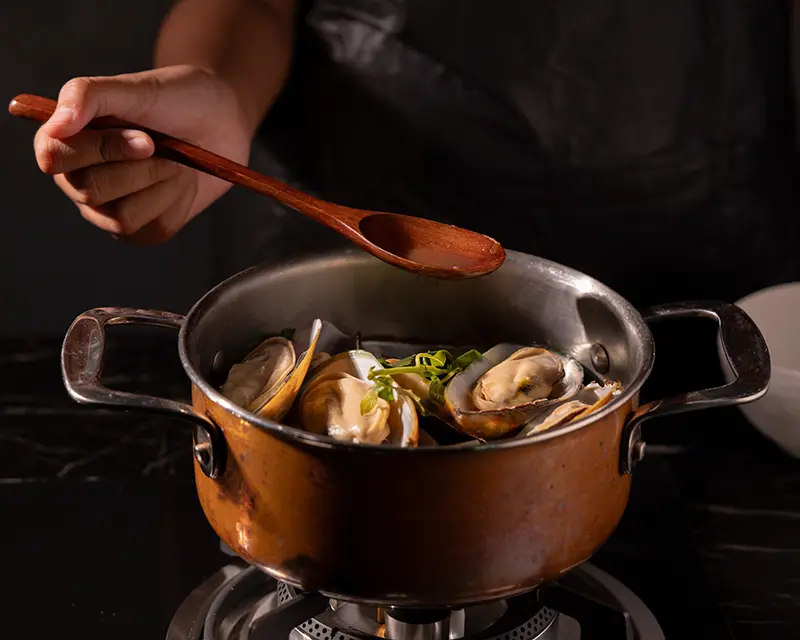
Now for the satisfying part. Add your mussels to the fragrant preserved-lemon broth, then cover the pot with a tight-fitting lid.
For fresh, live mussels: Turn the heat to medium-high and steam for approximately 5–7 minutes, shaking the pot gently once or twice to help them cook evenly. As the shells open, the mussels release their naturally salty, umami-rich juices into the broth.
Check that the mussels have opened and are thoroughly cooked, giving them a little more time if needed. Discard any that remain closed after cooking.
For prepared half-shell mussels: Arrange them in the pot with the flesh facing upwards where possible. Cover and follow the cooking time on the packaging. Raw or merely blanched mussels must be thoroughly cooked, while fully cooked mussels should be reheated according to the supplier’s instructions.
Because half-shell mussels are already open, the shells cannot tell you when they’re ready. For raw mussels, make sure the flesh is thoroughly cooked, reaching 63°C (145°F).
Whichever option you choose, the key is to keep the mussels tender and juicy. Once they’re ready, remove them from the heat rather than letting them simmer away while you finish the broth.
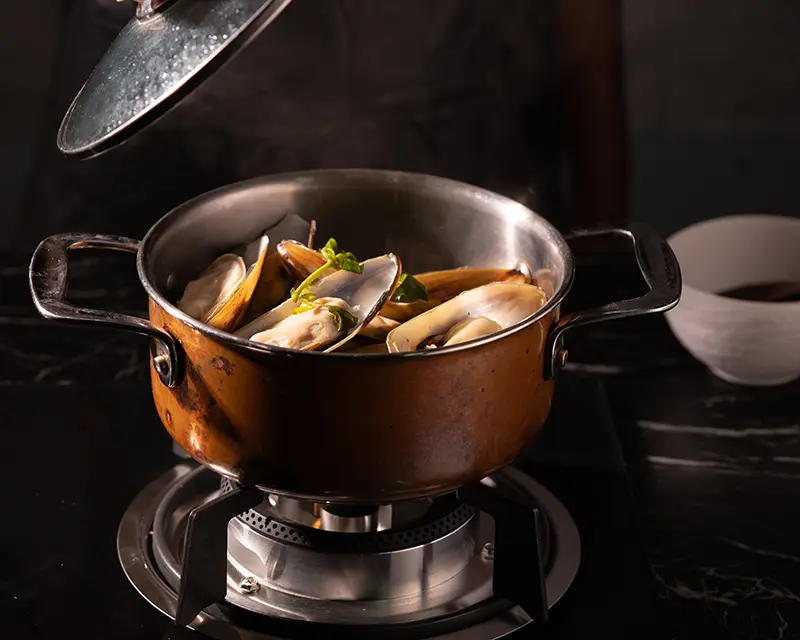
5. Make That Broth Irresistible
Using a slotted spoon, transfer the cooked mussels to a warm serving bowl, leaving all those lovely cooking juices in the pot.
Take a little taste of the broth. This is your moment to fine-tune the flavour.
Would you like a little more of that rounded, preserved-lemon character? Add up to another ¼ teaspoon of Kojira Preserved Lemon Salt, provided the broth isn’t already salty enough. Stir it through the hot liquid and give the lemon pieces a moment to soften.
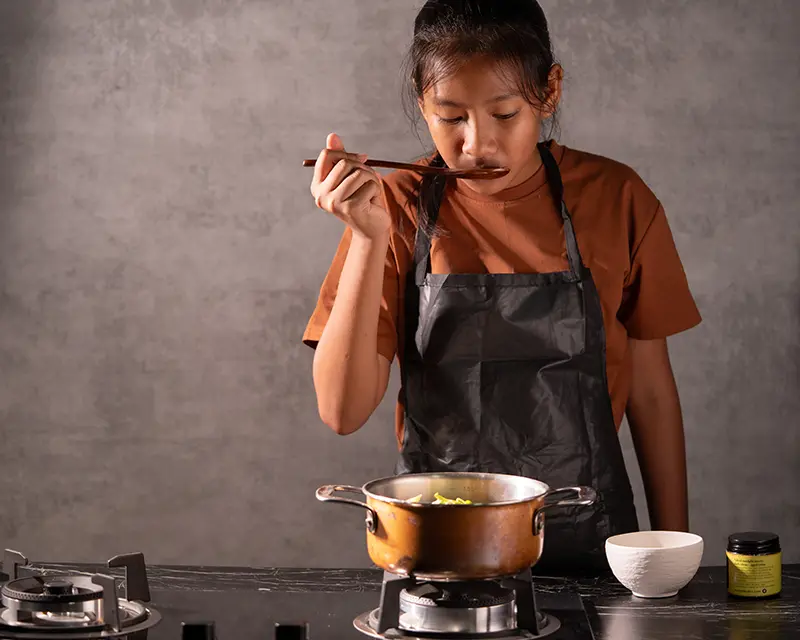
Take the pot off the heat and add 15 g of chilled unsalted butter. Swirl it gently into the broth until it melts, bringing a lovely silky richness to the lemon and garlic.
Now add 2 teaspoons of freshly squeezed lemon juice and taste again. If you’d like a brighter citrus finish, add the remaining teaspoon.
You should have a broth that’s savoury, buttery and beautifully lemony, with enough freshness to let the natural sweetness of the mussels shine.
6. Bring in the Fresh Basil
The final touch is fresh basil, and this is where the fragrance really comes alive. Tear 10–12 sweet basil leaves by hand and fold them gently into the warm broth. Adding them at the end preserves their fresh, sweet aroma.
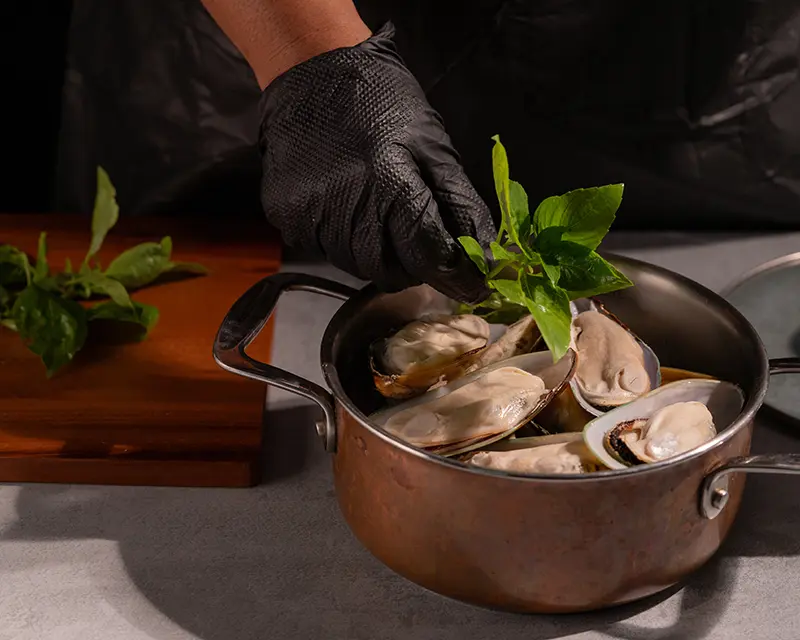
Spoon the broth generously over the mussels, making sure some of the softened preserved lemon, garlic and shallot find their way between the shells.
7. Bring Everything to the Table
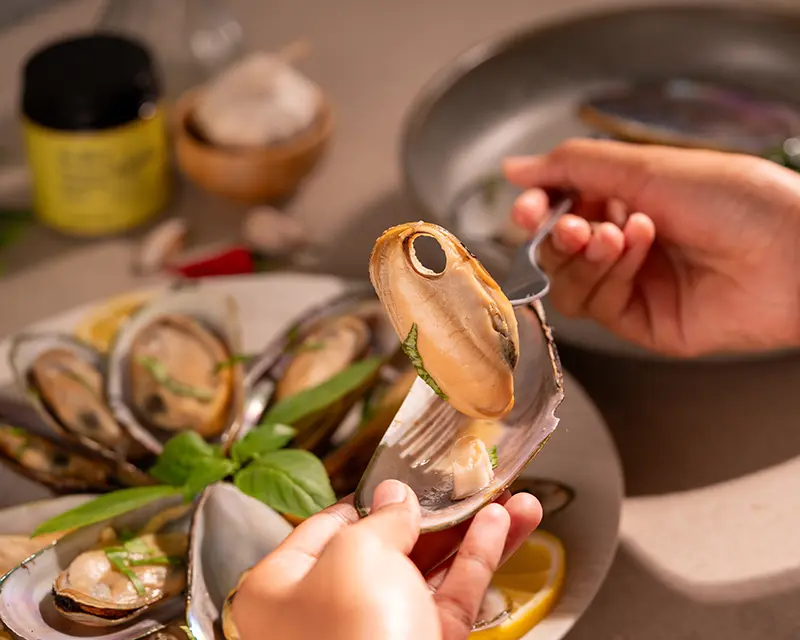
Serve the mussels immediately in warm, shallow bowls, with a few fresh lemon wedges and plenty of crusty bread alongside.
And don’t be shy with the bread. Once you’ve enjoyed the tender mussels, there’s still that wonderful broth waiting at the bottom of the bowl: buttery, garlicky, fragrant with basil and full of the bright, rounded flavour of two kinds of lemon. Some might say that’s the best part.
Why Mussels Make Such a Flavourful Broth
One of the loveliest things about cooking mussels is how much flavour they bring to the pot themselves. What begins as a little water, garlic and preserved lemon soon becomes a rich, fragrant broth, thanks largely to the mussels.
When fresh mussels steam, their shells open and release naturally salty juices. These contain compounds responsible for the mussels’ characteristic savoury taste, including glutamate, flavour-enhancing nucleotides and succinic acid. Together, they contribute to umami, the deep, satisfying savouriness that makes the cooking juices so delicious.
Prepared half-shell mussels can also contribute flavour to the broth, although the amount of liquid they release depends on how they’ve been processed. That is why a little unsalted stock can be useful when cooking with precooked mussels.
This is also why mussels need surprisingly little added liquid. Our 125 ml of water gets the steaming started, while the mussels contribute their own juices as they cook. Adding too much water would only dilute the flavour we’re trying to capture.
And what about the white wine found in so many traditional mussels recipes? Wine brings acidity and aroma, but it isn’t essential for a delicious broth. Here, fresh lemon provides the acidity, six-month-preserved lemon adds a deeper citrus character, and garlic, butter and basil complete the flavour.
There’s another interesting reason to consider cooking mussels without wine, particularly if you’re avoiding alcohol. Doesn’t the alcohol simply evaporate during cooking? The answer is more surprising than you might think.
How to Season Mussels Without Making Them Too Salty
Here’s something worth remembering whenever you cook mussels: the shellfish season their own broth.
As mussels steam, they release naturally salty juices into the cooking liquid. Depending on the mussels, that can already provide much of the seasoning you need.
That’s why we start with just ½ teaspoon of Kojira Preserved Lemon Salt. It gives the preserved lemon time to soften and mingle with the broth, while leaving room to adjust the flavour after cooking.
Taste before adding more. If the broth is already pleasantly salty but needs a little lift, another squeeze of fresh lemon may be exactly what it needs. If the salt level allows and you’d like more rounded citrus depth, add a little more preserved lemon salt.
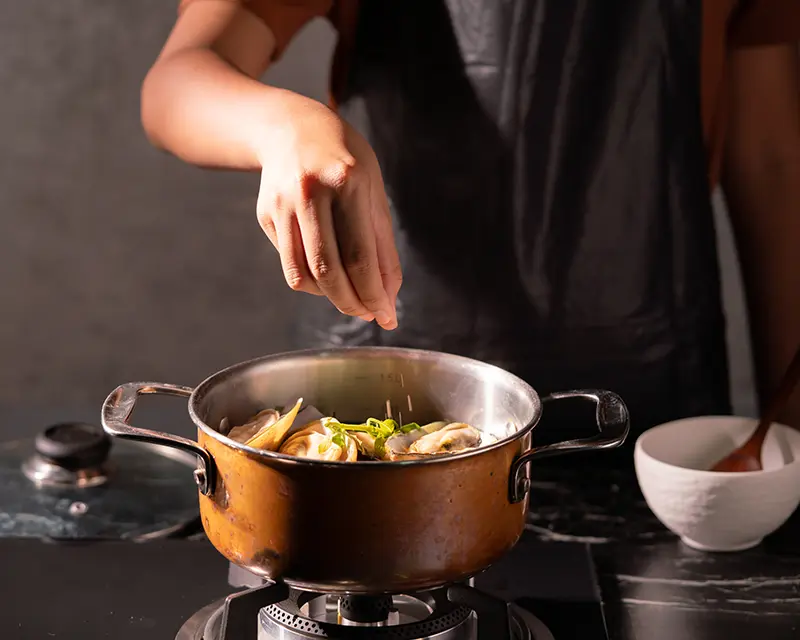
The goal is to bring out the natural sweetness and savoury depth of the mussels, with garlic, butter, basil and lemon adding richness, freshness and fragrance to the broth.
Why Fresh Lemon and Preserved Lemon Work So Well Together
There’s a reason we use two kinds of lemon in this mussels recipe. Each brings something different to the broth, and together they create a more interesting, layered citrus flavour.
Preserved lemon brings depth. The lemons in Kojira Preserved Lemon Salt are preserved for six months. During that time, salt draws moisture from the fruit, the peel gradually softens, and its flavour changes. The sharp acidity becomes less prominent, while the balance of aromatic compounds shifts. The bright, freshly cut lemon character develops into something more rounded, fragrant and savoury.
This change goes beyond texture. Research on salt-preserved lemons has found reductions in citric acid and citral, an important fresh-lemon aroma compound, alongside increases in citrus compounds such as limonene. These chemical changes help explain why preserved lemon develops a distinctly different flavour from fresh lemon.
Fresh lemon brings the brightness. Its citric acid gives the finished broth a lively, refreshing edge, particularly welcome alongside the richness of the butter. Adding the juice towards the end also lets you control exactly how much acidity the dish needs.
That’s why we add Kojira Preserved Lemon Salt to the broth before steaming, giving the softened lemon pieces time to mingle with the garlic and mussels’ savoury juices. Fresh lemon follows at the end, restoring that bright citrus lift.
Together, they create a lovely balance: the natural sweetness and umami of the mussels, the fragrance of garlic and basil, the richness of butter, and two expressions of lemon that complement each other beautifully.

Kojira Preserved Lemon Salt
Six months of preservation give our lemons their softer texture and beautifully rounded citrus flavour. Stir Kojira Preserved Lemon Salt into the warm broth and let the preserved lemon mingle with the garlic and the mussels’ naturally savoury juices.
฿907Add to basket
What to Serve with Mussels
A good mussels recipe deserves a few delicious things alongside it, especially when there’s a buttery, lemony broth waiting at the bottom of the bowl. Keep the accompaniments simple and let the mussels take centre stage.
Crusty Bread: For Every Last Drop
A warm baguette, sourdough or rustic country loaf is hard to beat. Tear off generous pieces and dip them into the broth, soaking up the garlic, softened preserved lemon and savoury mussel juices.
Choose bread with a good crust and a soft interior. You’ll want something sturdy enough to soak up all that flavour.
French Fries: The Belgian Classic
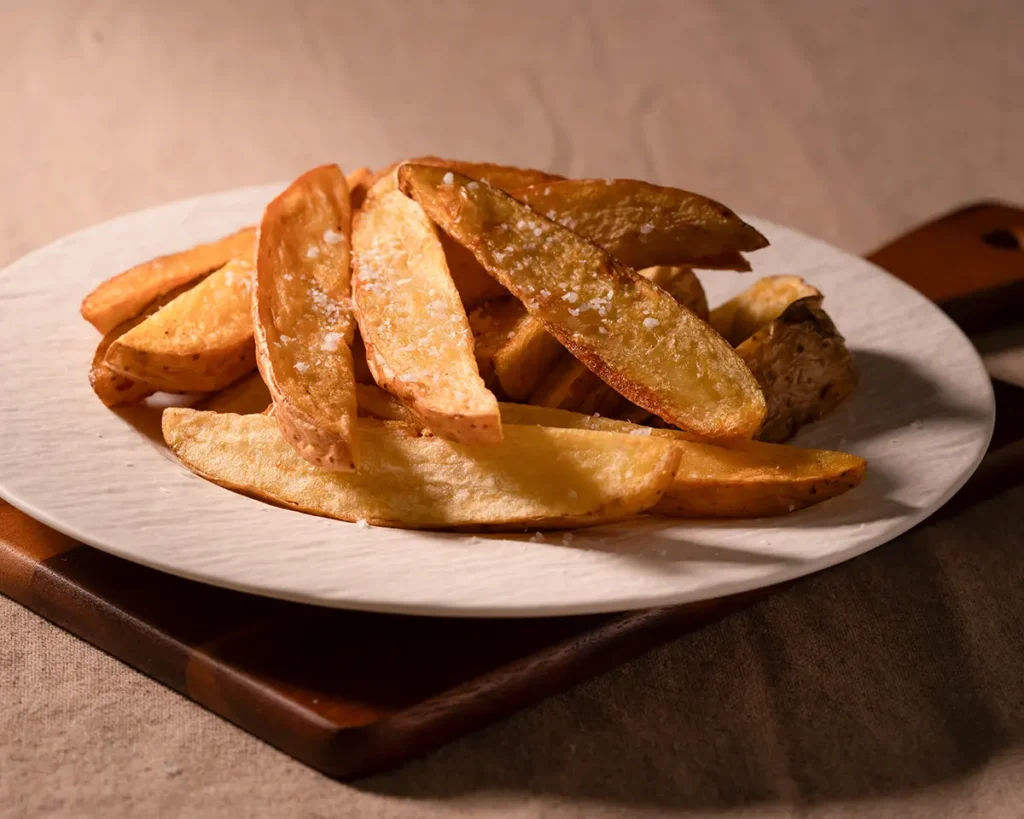
Mussels and fries, or moules-frites, are a beloved Belgian combination for good reason. Golden, crispy fries contrast beautifully with tender mussels and their fragrant broth.
Serve them alongside the mussels, ideally with a little mayonnaise. A few fries dipped into the lemon-garlic broth are rather delicious, too.
A Fresh Green Salad
For something lighter, serve the mussels with a simple salad of tender lettuce, cucumber and fresh herbs. A little olive oil and a squeeze of lemon are all the dressing you need.
The crisp vegetables make a lovely contrast to the warm, buttery broth, keeping the whole meal fresh and balanced.
Make It a Little Feast
If you’re making this mussels recipe for friends or family, start with our olive oil bread dip and a basket of warm bread while the mussels cook.
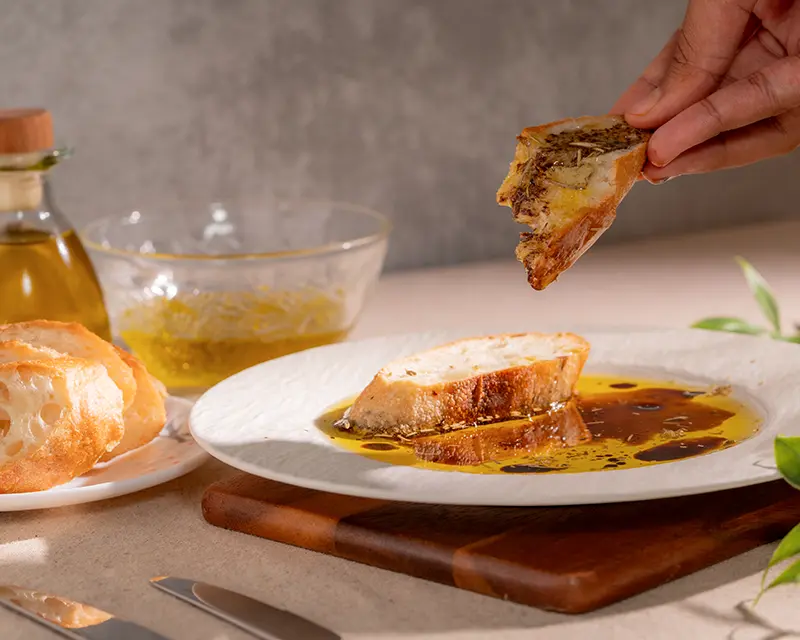
Then bring the steaming mussels straight to the table, set out a bowl for the empty shells, and let everyone help themselves. Good food, plenty of bread and absolutely no need to rush.
Cooking Tips for Perfectly Tender Mussels
A delicious mussels recipe depends on a few simple details: fresh shellfish, enough room in the pot and careful timing. Most of the preparation happens before cooking, and a little attention makes all the difference.
Choose Fresh Mussels and Keep Them Cold
Good mussels should smell pleasantly of the sea, with intact shells and no unpleasant fishy odour. Buy from a reputable seafood supplier and cook them as fresh as possible.
Until you’re ready to cook, keep live mussels refrigerated in an open container covered with a damp cloth. They need to breathe, so avoid airtight containers and never leave them submerged in fresh water.
Give Them Room to Steam
Choose a large pot with a well-fitting lid. The mussels need enough space for the steam to circulate and their shells to open.
Our recipe starts with 125 ml of water, but the mussels soon release their own cooking juices. We’re gently steaming them over a concentrated, flavourful liquid rather than boiling them in a pot full of water.
Watch the Mussels, Not Just the Clock
For fresh, live mussels, five to seven minutes is a useful steaming guide, although the exact time depends on their size, the pot and the heat. Check that the shells have opened and the mussels are thoroughly cooked.
Prepared half-shell mussels need a slightly different approach. Follow the cooking instructions on the packaging, particularly if they’ve already been blanched or fully cooked. Their shells are already open, so cooking time and the condition of the flesh matter more than shell movement.
Once the mussels are ready, remove them from the heat. Leaving them steaming for several extra minutes can turn beautifully tender mussels into something rather chewy.
Keep Every Drop of That Broth
When transferring the cooked mussels to a serving bowl, leave the juices in the pot so you can finish them with butter, fresh lemon and basil.
If you notice any sand or grit at the bottom, carefully pour the broth through a fine sieve before finishing it. That savoury cooking liquid is one of the best things about this recipe. Treat it with as much care as the mussels themselves.
Frequently Asked Questions About Mussels
How long does it take to cook mussels?
Fresh, live mussels generally take around 5–7 minutes to steam in a covered pot, although larger batches may take longer. Their shells should open and the flesh should be thoroughly cooked.
Prepared half-shell mussels may have different cooking times depending on whether they’re raw, blanched or fully cooked. Always check the supplier’s instructions.
For our lemon-garlic mussels recipe, allow approximately 10 minutes of cooking time when using fresh mussels, including softening the aromatics and preparing the broth.
Is it better to boil or steam mussels?
Steaming is our preferred method. Mussels need relatively little liquid because they release their own juices as they cook. A covered pot traps the steam, cooks the mussels quickly and keeps those delicious juices concentrated in the broth.
Boiling them in a large amount of water dilutes that flavour and makes it easier to overcook their delicate flesh.
Can I use frozen mussels for this recipe?
Yes, although you’ll need to adapt the method depending on the product.
Raw frozen mussels should be thawed safely and cooked thoroughly according to the package instructions. If you’re using precooked frozen mussels, they usually need only to be reheated as directed, rather than steamed for the full time required for live mussels.
Both can work with our lemon, garlic and basil broth, although fresh mussels in their shells give the most predictable result for the recipe as written.
How many mussels do I need per person?
Allow approximately 500 g of mussels in their shells per person for a main course, or 250 g for a starter.
Our mussels recipe uses 1 kg, making it generous enough for two people as a main course, especially with crusty bread and perhaps a salad alongside. For a larger gathering, double the quantities and use a sufficiently large pot.
Can you eat mussels during pregnancy?
Yes, mussels can be eaten during pregnancy when they’re sourced safely and thoroughly cooked. The NHS includes cooked mussels among seafood that can be eaten during pregnancy, while advising against raw shellfish.
Our mussels recipe is also completely alcohol-free, making it a lovely option for anyone avoiding wine during pregnancy or for other reasons.
More Guides on Seafood


A Letter From Our Kitchen
A recipe worth trying, an ingredient that surprised us, or a little discovery we couldn’t keep to ourselves.
Once a month, we share our favourites in the Maison Kojira Letter.