How to Salt Grilled Octopus for Better Flavour
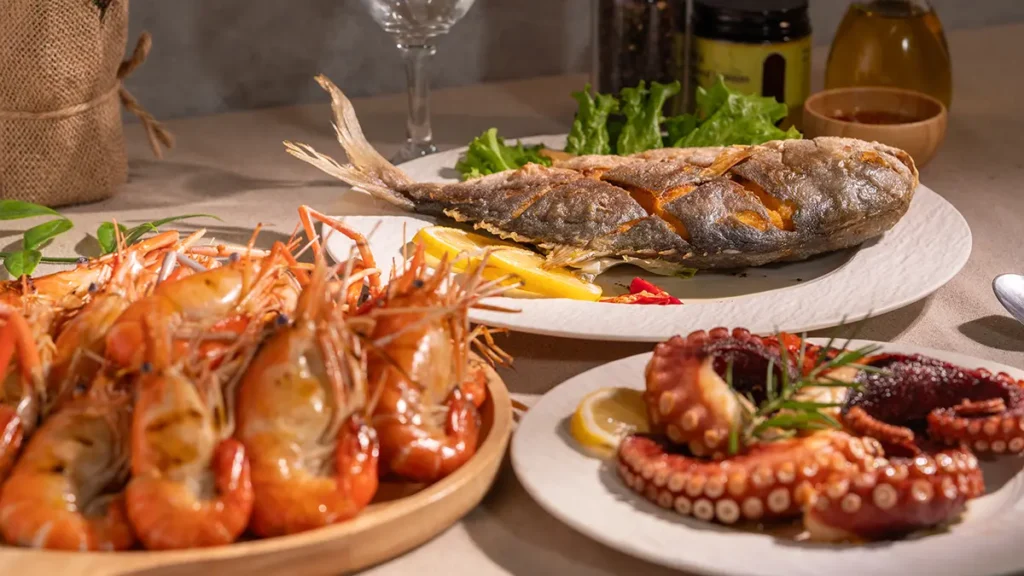
Grilled octopus is not everyday food. It is usually made for the table: smoky edges, olive oil, lemon, warm flesh, a little drama. When it works, it feels generous and complete. When it does not, the problem is usually not the grill alone. It is what happened before and after the grill.
When you serve grilled octopus, you are usually not covering it with a heavy sauce. You are finishing it: olive oil, lemon juice, herbs, char, maybe a little marinade or pan juice. How to salt grilled octopus depends on the moment. Salt can enter at different stages, but not every salt moment matters equally. Salt in the cooking water becomes background. Salt in a marinade can shape the base. The salt that changes the dish most clearly is the salt used at the end, while the octopus is still warm.
Quick Answer
How to Salt Grilled Octopus
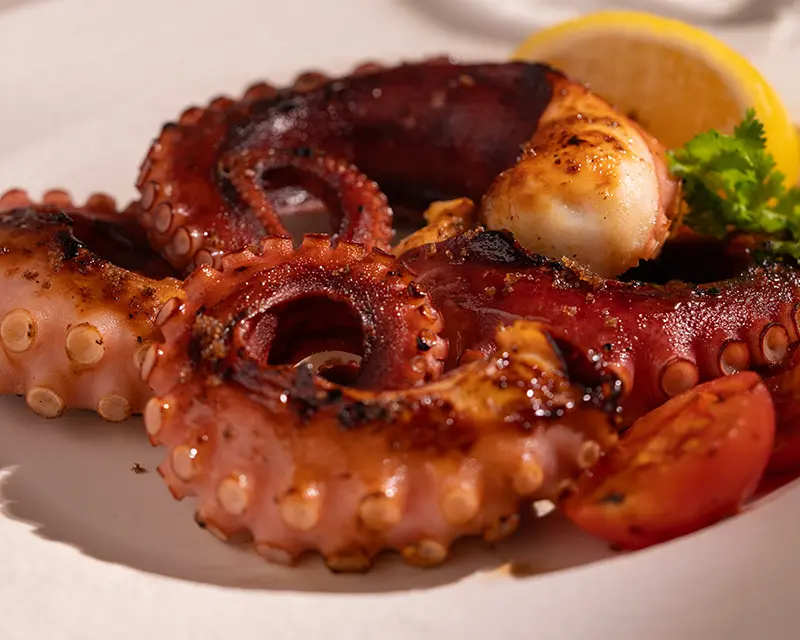
Salt grilled octopus after grilling or searing, while it is still warm. If the octopus is raw, cook it gently until tender first. If it is already cooked or pre-cooked, thaw it if needed, dry it well, then grill or sear it hot for char.
Use unsalted or lightly salted cooking water. Salt is not what makes octopus tender, and your best gourmet salt belongs later, where it can stay part of the dish.
Before grilling, pat the octopus dry so it chars instead of steaming. After grilling, lightly dress it with olive oil, lemon juice, pan juices or reduced marinade, then finish with salt while warm. This helps the salt catch on the charred edges, suckers and cut surfaces.
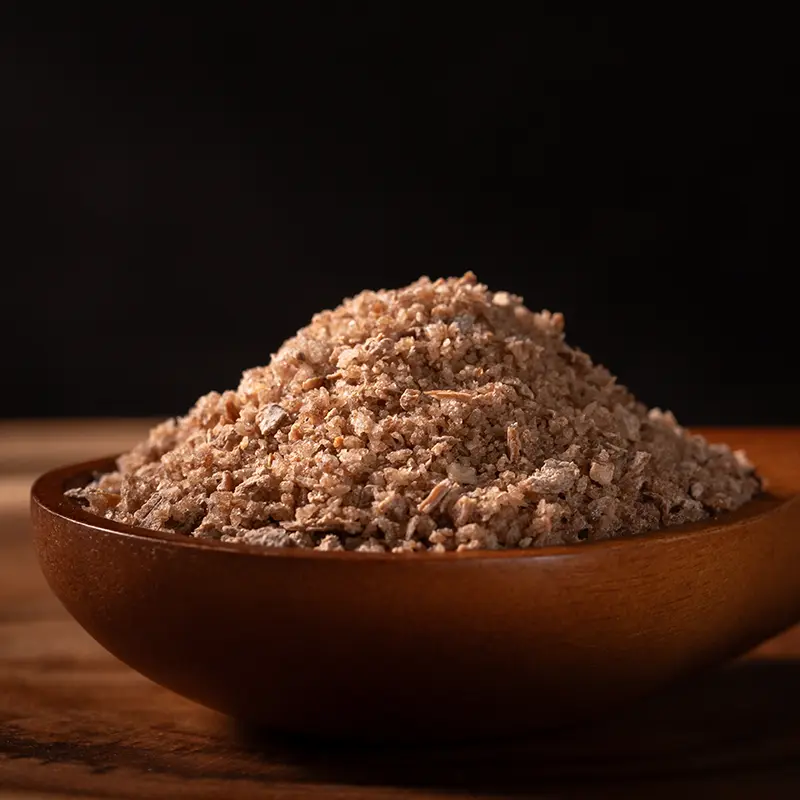
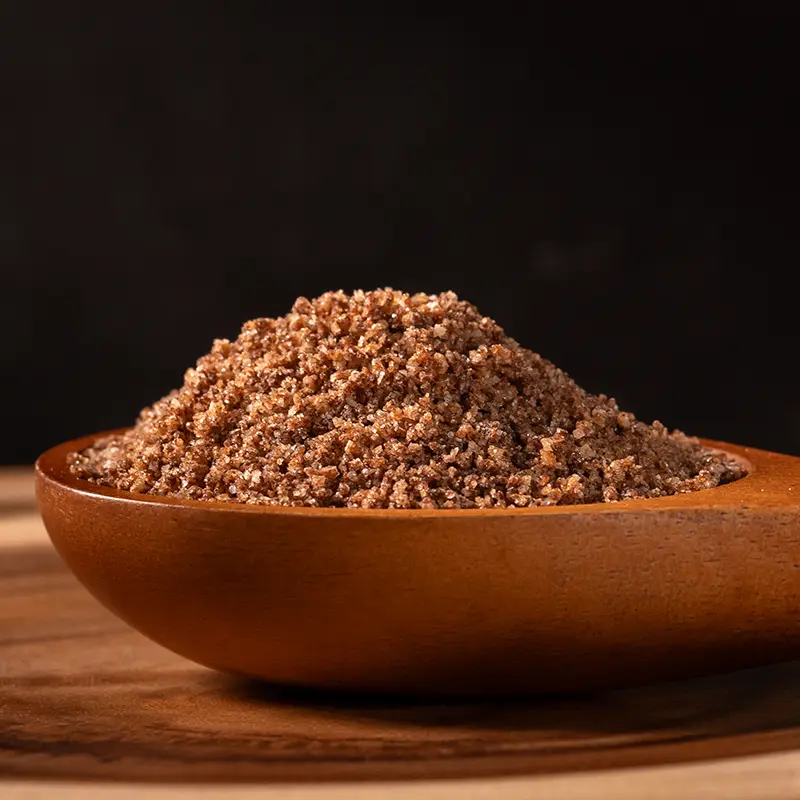
Use Kojira Artisan Mineral Salt for a clean finish, Kojira Preserved Lemon Salt for brightness and citrus depth, or Kojira Black Garlic Salt for deeper savoury flavour and char.
If Your Octopus Is Raw, Cook It Until Tender First
Before you decide how to salt grilled octopus, make sure the octopus is actually ready for the grill. Raw octopus usually needs to be cooked gently until tender before it is grilled or seared. If you bought it frozen, thaw it first, then check the label. Freezing can help the texture, but it does not automatically mean the octopus is cooked or ready to grill.
If the label says cooked, boiled, pre-cooked or ready to eat, the tenderness work has already been done. In that case, do not cook it again for a long time. Dry it, grill or sear it hot for char, then finish it while warm.
If the label only says raw or frozen, treat it as raw. Cook it gently until a knife or skewer slides into the thickest part with little resistance. The cooking water can be unsalted or only lightly salted, but do not treat octopus like pasta. Salt is not what makes octopus tender, and heavy salting at this stage can make the final dish harder to control.
Should You Marinate Octopus Before Grilling?
You can marinate octopus before grilling, but it is not required. If the octopus is already tender, a simple finish of olive oil, lemon, herbs and gourmet salt may be enough. Grilled octopus does not need to be heavily seasoned before it reaches the heat.
A marinade is useful when you want to build a base flavour before grilling. Olive oil, lemon juice, garlic, herbs, chilli, paprika or pepper can all work. A little salt in the marinade is fine, but keep it light. Marinade salt spreads into oil, lemon and surface moisture, so it becomes background seasoning rather than the final salt you taste most clearly.
Dry the Octopus Before Grilling or Searing
Once the octopus is tender, the next job is surface control.
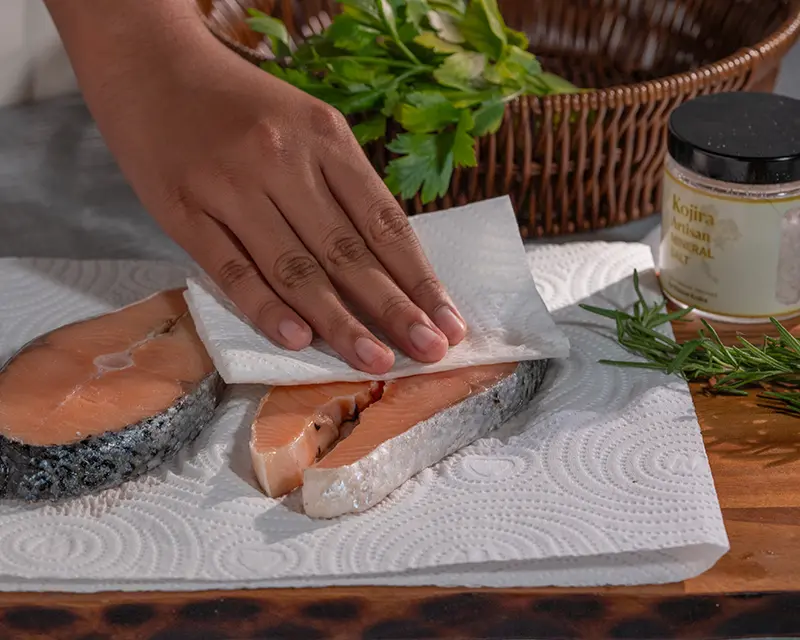
Before it goes on the grill, grill pan or hot pan, dry the octopus well with paper towel. This matters more than you would think. If the surface is wet, the octopus steams before it chars. The flavour becomes flatter, the edges brown less cleanly, and any salt added later has less texture to catch on.
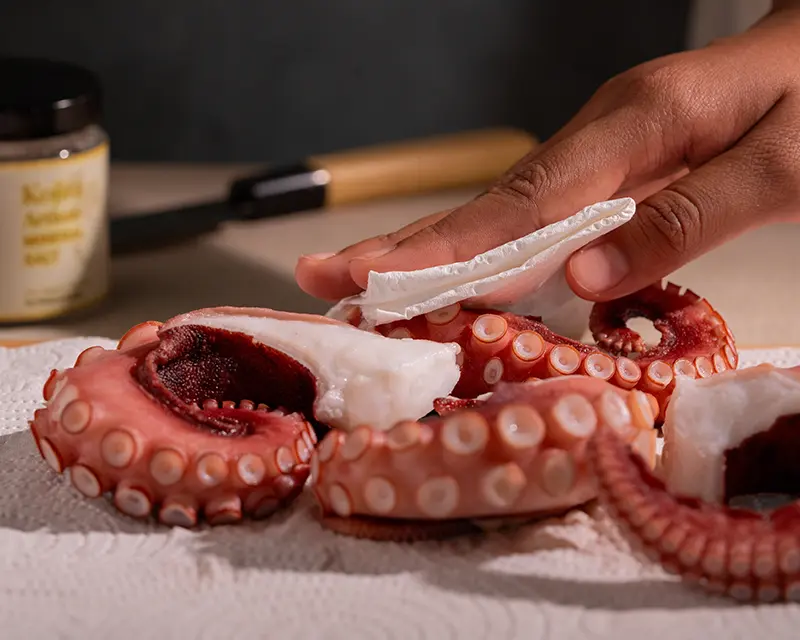
This is especially important if the octopus has just come out of cooking water, thawing liquid or a marinade. Let excess liquid drip off, then pat the surface dry. You are not trying to make the octopus dry inside. You are only drying the outside so heat can work properly.
Grill or Sear Until the Edges Char
Once the surface is dry, grill or sear the octopus over high heat until the edges brown and char. You can use an outdoor grill, a grill pan or a hot pan. The equipment matters less than the sequence: tender octopus, dry surface, hard heat. The browning you want is part of the Maillard reaction, the high-heat process that creates browned colour, deeper aromas and more savoury flavour.
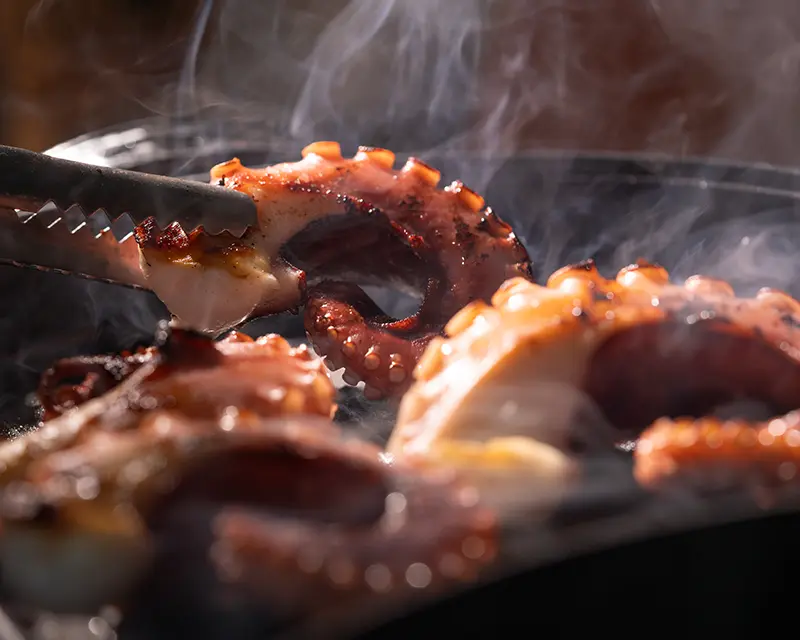
At this stage, you are not trying to cook raw octopus through. You are building surface flavour. The char gives the octopus smoke, bitterness, sweetness and texture. That is what the finishing salt will meet later. You want browned edges, a little bitterness, some sweetness from the surface, and enough texture for the salt to have somewhere to land.
Finish Warm With Salt
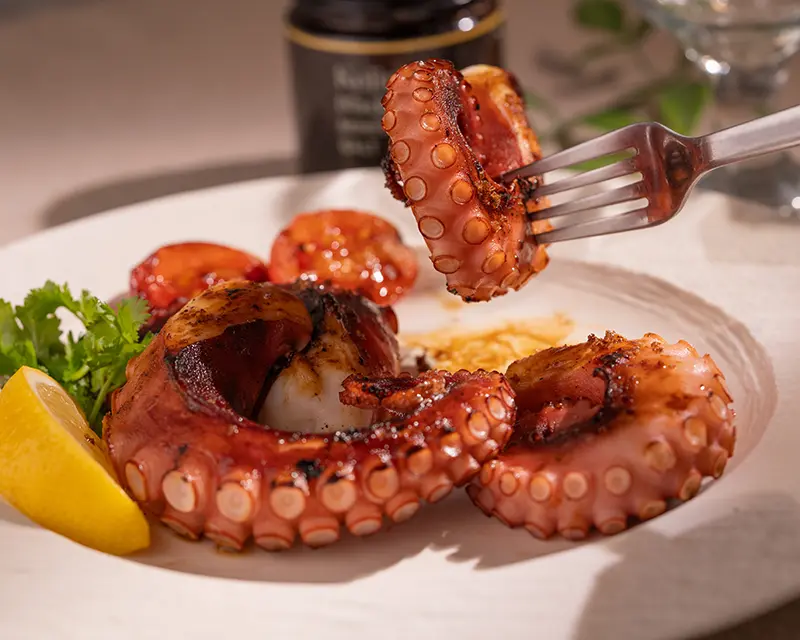
Once the octopus is browned and hot, move it to a plate or board. Spoon over a little olive oil, lemon juice, pan juice or reduced marinade while the surface is still warm. Then salt the octopus directly.
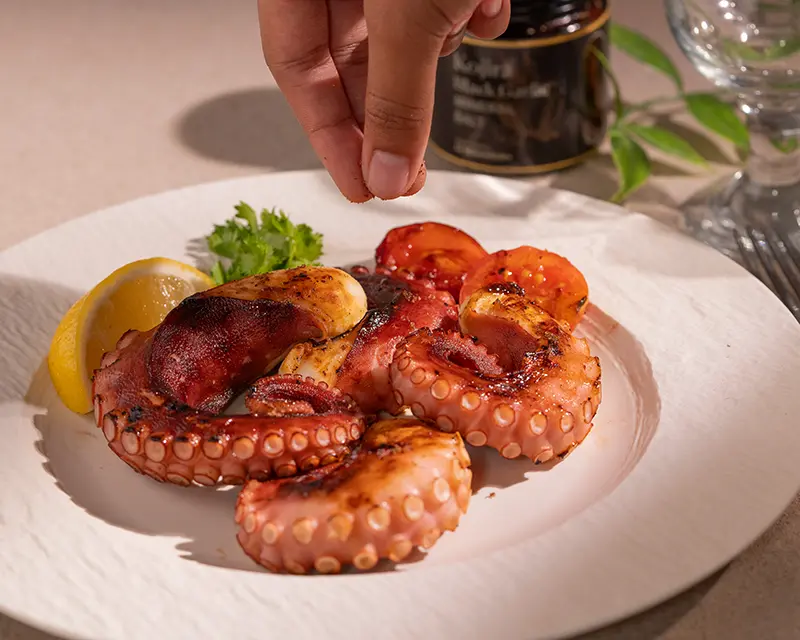
The salt should land on the tentacles, the cut sides and the charred edges, not in the empty space around them. On warm octopus, a few crystals soften into the oil and juices while some stay on the surface. That is what gives the dish those small bright hits of salt as you eat.
This is the moment where grilled octopus comes together: tender flesh, dark edges, olive oil, lemon, char and mineral crunch.
Serve Food Like You Know What You Are Doing
The Maison Kojira Letter shares the timing, flavour and hosting details that turn ordinary ingredients into food people remember.
Choose the Salt Direction
Grilled octopus can go in three good directions after it comes off the heat.
The first is clean and restrained: the octopus already has enough marinade, garlic, chilli, herbs or acidity, and you only want the final salt to sharpen the warm surface. For that route, use Kojira Artisan Mineral Salt. It gives clear salinity without pulling the dish in another direction.
The second is bright and Mediterranean: olive oil, herbs, fresh lemon, tomato, cucumber, yoghurt or lighter seafood sides. For that route, use Kojira Preserved Lemon Salt. It echoes the fresh lemon, but with more preserved-citrus depth and less wetness.
The third is dark and savoury: charred edges, olive oil, paprika, chilli, roasted potatoes, smoke and deeper grilled flavour. For that route, use Kojira Black Garlic Salt. It is the best match because it deepens the char and the natural sweetness of the octopus without turning the dish into garlic sauce.
Common Mistakes When Salting Grilled Octopus
Most mistakes in how to salt grilled octopus come down to timing, moisture and where the salt lands.
Salting the Cooking Water Too Heavily
Octopus is not pasta. The cooking water can be unsalted or lightly salted, but heavy salting makes the final dish harder to control. Save the more expressive salt for the finished octopus.
Treating Frozen Octopus as Ready to Grill
Freezing can help the texture, but it does not mean the octopus is cooked. If the label does not say cooked, boiled, pre-cooked or ready to eat, cook it gently until tender before grilling.
Grilling a Wet Surface
Wet octopus steams before it chars. After cooking, thawing or marinating, let excess liquid drip off and pat the surface dry before it hits the grill, grill pan or hot pan.
Using Finishing Salt Too Early
If expressive salt goes into the cooking water, marinade or hot pan, much of it disappears. Finishing salt works best after grilling, while the octopus is still warm.
Salting the Plate Instead of the Octopus
The salt should land on the tentacles, cut sides and charred edges, not in the oil around the dish. Salt the octopus directly so the crystals stay part of each bite.
Covering the Octopus Instead of Finishing It
Grilled octopus usually needs a clear finish, not more noise. Olive oil, lemon, herbs and the right salt should bring the octopus forward, not hide it.
Frequently Asked Questions About How to Salt Grilled Octopus
Should you salt octopus before grilling?
Usually, the most important salt moment comes after grilling, while the octopus is still warm. You can use a little salt in a marinade, but finishing salt gives more control because it stays closer to the surface of the dish you serve.
Should you salt the water when cooking octopus?
You can use unsalted or lightly salted water, but do not treat octopus like pasta. The cooking stage is mainly for tenderness, not final seasoning. Heavy salting in the water can make the finished dish harder to control.
Should you marinate octopus before grilling?
You can, but you do not have to. A marinade can build background flavour with olive oil, lemon, garlic, herbs, chilli or paprika. Before grilling, let excess marinade drip off and pat the surface dry so the octopus chars instead of steaming.
How do you make finishing salt stick to grilled octopus?
Move the hot octopus to a plate or board, spoon over a little olive oil, lemon juice, pan juice or reduced marinade, then salt the octopus directly. The crystals should land on the tentacles, cut sides and charred edges, not in the oil around the dish.
What salt is best for grilled octopus?
When deciding how to salt grilled octopus, choose the salt by the direction of the dish. Use Kojira Artisan Mineral Salt for a clean finish, Kojira Preserved Lemon Salt for olive oil, herbs and fresh lemon, and Kojira Black Garlic Salt for char, smoke, paprika, chilli or a darker savoury direction.
More Guides on Seafood, Browning and Finishing Salt
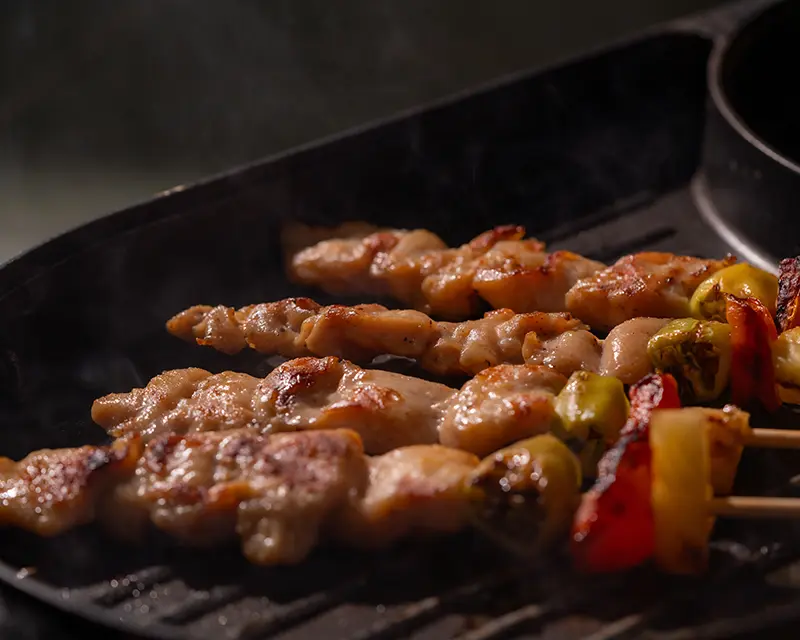
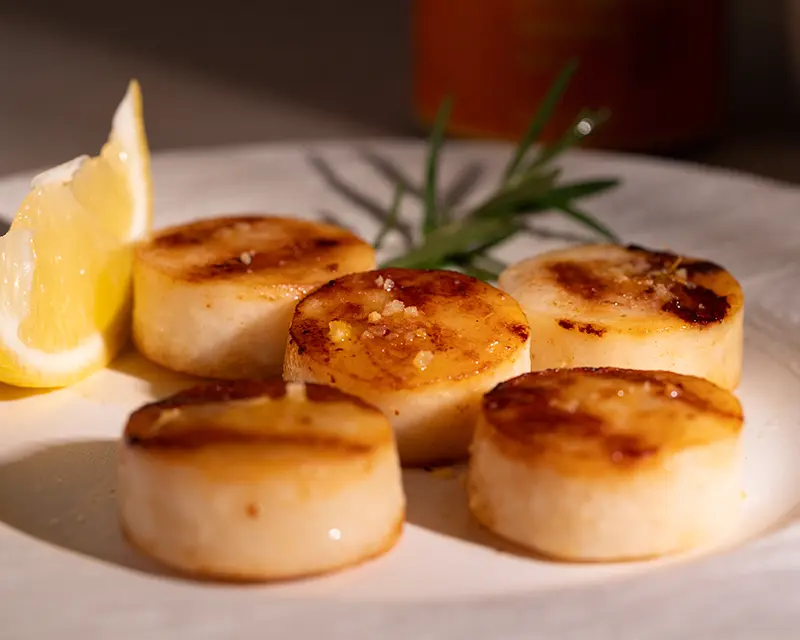
Grilled octopus shows why salt timing is never just one rule. The same logic changes with delicate seafood, scallops, browning and finishing salt: first understand what the heat is doing, then choose where the salt belongs.
Join the Maison Kojira Letter
Eat sharper. Host better. Be more present. Get practical notes on flavour, ingredients and the small details that make food worth sharing.