How to Season Risotto Properly: Stock, Salt, and Rich Flavour
Risotto looks simple when it is done well: rice, liquid, heat and patience. Simple, but delicious. The challenge is that risotto keeps changing as it cooks. The rice absorbs stock. Wine reduces. Mushrooms, seafood, saffron, pancetta, Parmesan, butter or olive oil can all change the final seasoning.
Knowing how to season risotto means tasting and adjusting as those flavours develop, rather than deciding on the final amount of salt at the beginning.
Season risotto gradually. Start with a balanced stock, taste as the rice cooks, and make the final adjustment only after the risotto has come together. Finishing salt belongs at the end, and only when the dish needs lift.
👨🏻🍳 Quick Rule: Season the stock lightly, build flavour gradually, and add finishing salt only after the risotto has come together.

How Risotto Builds Flavour as It Cooks
As you make risotto, the seasoning builds in layers. The stock is absorbed into the rice, while wine, aromatics and other ingredients gradually shape the flavour. Then butter, cheese or olive oil shift the balance again at the end, and finishing salt gives the dish its final direction.
You cannot fully judge the seasoning at the beginning, because the flavour keeps changing as the risotto cooks. The final decision only becomes clear once everything has come together. At that point, you may find that it needs more salt, but it may just as easily need brightness, aroma, savoury depth or a little more clarity.
Why You Should Wait Before Making the Final Adjustment
Risotto becomes too salty when the salt arrives from too many places at once. This is why how to season risotto is less about one perfect amount and more about controlling where the salt enters the dish.
Stock may already be seasoned. Cheese can add more. Pancetta, bacon, sausage, anchovy, seafood, mushrooms, or reduced cooking liquid can all push the seasoning further as the rice cooks. A risotto that tastes balanced halfway through can become too salty by the time the stock has reduced and the final ingredients have been folded in.
This is why risotto should not be seasoned aggressively at the beginning. Early salt moves into the rice, but the dish is still changing. Liquid reduces. Starch thickens. Cheese melts. Butter or olive oil softens the flavour. The final balance only becomes clear near the end.
Taste as the risotto cooks, but make the real decision after the rice is tender and the final ingredients have come together.
🧑🏽🍳 Better Rule: if risotto tastes perfectly salted halfway through, it may be too salty by the end.
Start Seasoning Risotto With a Balanced Stock
Stock creates the foundation of the risotto’s flavour. As the rice absorbs the liquid, it also absorbs its salt, aromatics and savoury character. This makes the stock more important than any single pinch added later.
Before you start, taste the stock warm. Not boiling, but warm enough to smell and taste properly. Cold stock can taste flatter than it will in the pan, especially when it contains fat, gelatin, mushrooms, bones, parmesan rind, seafood shells, or roasted vegetables.
The stock should taste lightly seasoned, but not finished. This is the safe point. If it already tastes fully salty before cooking, it may become too salty once the rice absorbs it and the liquid reduces.
Use an even lighter hand when the stock contains parmesan rind, cured meat, seafood shells, roasted bones, dried mushrooms, miso, soy sauce, or concentrated vegetable trimmings. These ingredients can taste gentle at first, then become much stronger after twenty minutes of cooking.
If the stock tastes weak, fix the stock before blaming the rice. More salt can make weak stock saltier, but it will not give it depth. Add better stock, aromatics, herbs, mushrooms, roasted vegetables, parmesan rind, or another flavour base before you add more salt.

👨🏽🍳 Quick Rule: the stock should taste lightly seasoned, not fully seasoned, because the risotto will concentrate it.
Build Balance with Acidity and Reduction
To season risotto well, you also need acidity. Rice, stock, butter, cheese and olive oil can make the dish rich and rounded. A bright element keeps that richness expressive rather than heavy. Without acidity, even a perfectly seasoned risotto can start to feel heavy.
Wine is one traditional way to bring acidity to risotto, especially when it is added early and reduced before the stock goes in. But wine is not the rule. The real job is balance: something bright enough to lift the rice, stock, and fat without making the dish taste sour.
For a non-alcoholic risotto, that brightness can come from lemon, tomato, a small amount of vinegar, fermented ingredients, a sharper stock, or, in the future, a Maison Kojira Éclat used carefully as an acid-aromatic lift.
Reduction still matters. As liquid cooks down, flavour concentrates. Salt becomes stronger. Acidity becomes more noticeable. A risotto with lemon, tomato, aged cheese, seafood, fermented ingredients, or a reduced stock may need less salt at the end than one built only on mild stock and fat.
Taste after the bright element has settled into the dish. Raw vinegar can taste harsh. Lemon added too early can fade. Wine that has not reduced can taste sharp. The final salt decision should come after the risotto tastes integrated.
👩🏼🍳 Basic Risotto Rule: build brightness first, then decide whether the risotto needs more salt.
Mantecatura: The Final Minute
Risotto is not finished when the rice is simply cooked. It is finished when the rice, liquid, fat, and added ingredients come together into one texture.
This final step is often called mantecatura: the risotto is taken off the heat and finished with butter, cheese, olive oil, or another fat. The motion matters. Stirring or folding brings the starch, fat, and remaining liquid together, turning loose rice in broth into something creamy and unified.

Do not make the final decision about how to season risotto before mantecatura. Butter can soften sharpness, cheese can add salt, and olive oil can make the dish feel rounder. Only after these ingredients have been incorporated can you judge the final balance.
Taste after the risotto has rested for a moment and the final fat or cheese has been folded in. That is when the dish tells you what it still needs.
🧑🏼🍳 Basic Risotto Rule: finish the texture before you finish the seasoning.
Cook With Better Final Judgement
Join the Maison Kojira Letter for practical notes on salt timing, stock, sauce and the small decisions that make food taste complete instead of merely seasoned.
Finish the Risotto with the Right Salt
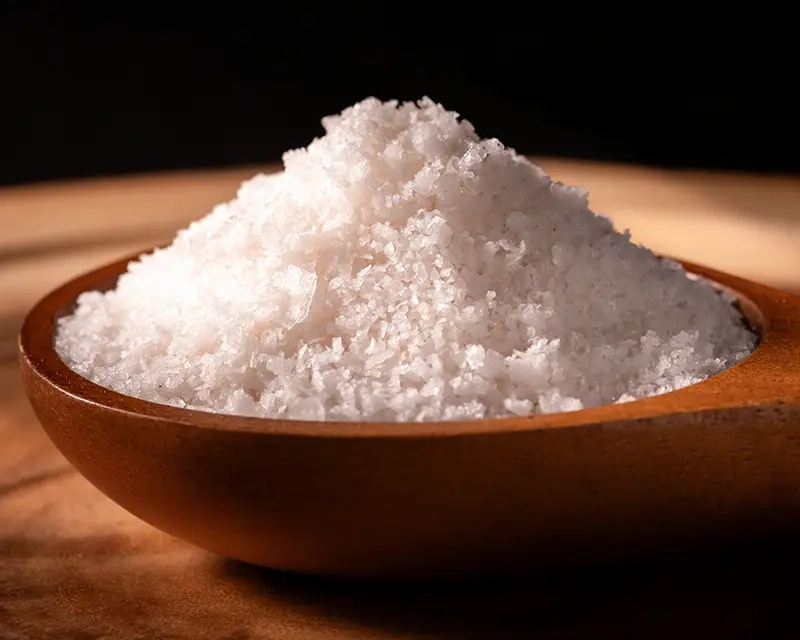
Finishing salt belongs at the end, when the risotto is warm, creamy, and ready to serve. At this point, how to season risotto becomes a final judgement, not a fixed measurement.
This is the moment when the right gourmet salt can turn risotto from acceptable to brilliant. Once the risotto has come together, taste it for direction. It may need mineral clarity, brightness, deeper savoury structure or a more aromatic finish. A very small amount of the right gourmet salt can provide that final distinction.
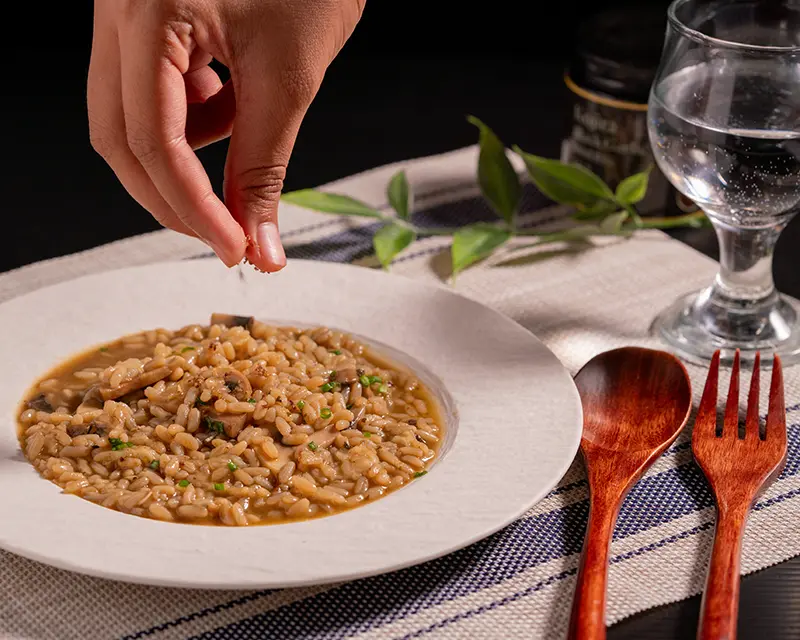
It can also add umami. That matters for risotto, because many of the best versions already live in savoury territory: mushroom, parmesan, pecorino, pancetta, bacon, sausage, anchovy, cured meat, seafood reduction, roasted stock, or browned butter. In those cases, the right salt should not simply make the risotto saltier. It should deepen the savoury structure.
Use finishing salt when the risotto needs more life at the end: mushroom risotto, saffron risotto, seafood risotto, pumpkin risotto, asparagus risotto, or a simple risotto finished with butter, cheese, or olive oil.
Use restraint when the risotto already contains salty stock, parmesan, pecorino, pancetta, bacon, sausage, anchovy, cured meat, seafood reduction, or salted butter. This does not mean finishing salt is forbidden. It means the amount should be tiny, and the choice should add flavour direction, not just salt.
👩🏼🍳 Salt Rule: finishing salt can rescue flatness, add umami, and complete aroma. It cannot fix over-salting.
Choose the Flavour Direction
Choose the salt according to what the finished risotto needs, not simply according to the fact that it is risotto. By the end, you already know what the dish has become. The stock will be reduced. The rice may be creamy. The mushrooms may be deep and savoury. The seafood may need brightness. The saffron may need aroma. The cheese, butter, olive oil, herbs, or added ingredients may already have changed the salt level.
That is when the right salt becomes obvious. You are not choosing a salt for “risotto” in general. You are choosing it for the risotto you just prepared. That is how to season risotto without flattening the dish into generic saltiness.
Kojira Artisan Mineral Salt
Use when the risotto needs clarity without changing the direction of the dish: butter, olive oil, asparagus, pumpkin, herbs, or light vegetable stock.
Kojira Fermented Mushroom Salt
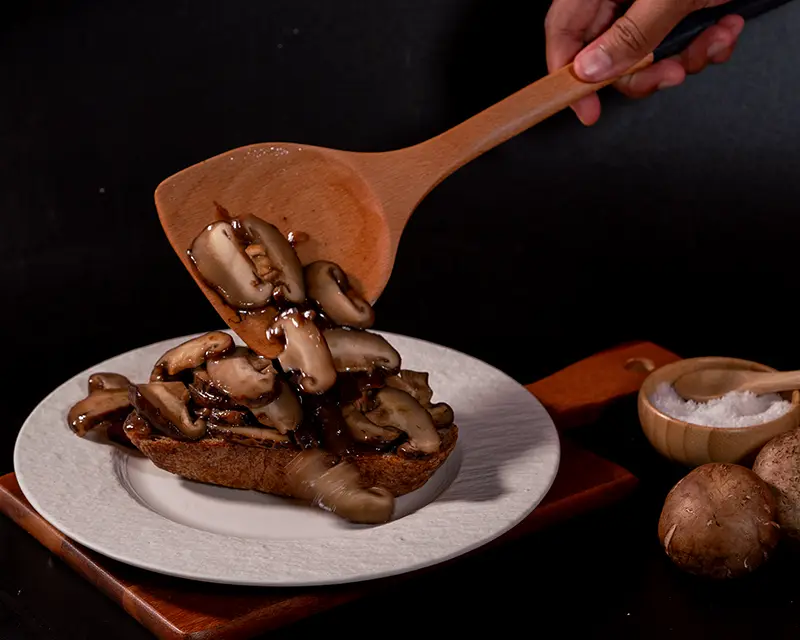
Use on mushroom risotto, brown butter risotto, roasted vegetable risotto, parmesan or pecorino risotto, and anything built on deep savoury notes. Use very little. It can make a flat risotto taste fuller quickly.
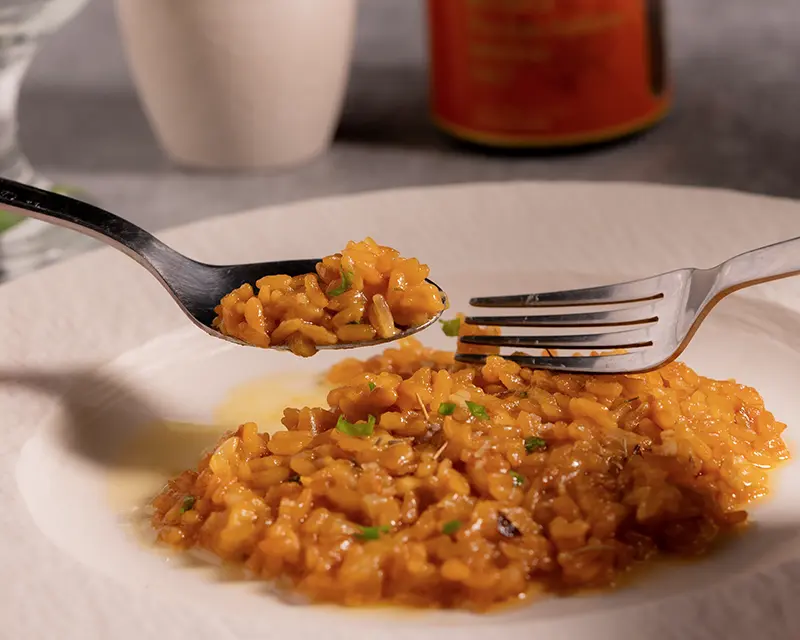
Kojira Preserved Lemon Salt
Use on seafood risotto, asparagus risotto, herb risotto, courgette risotto, or risotto that needs brightness at the end.
Kojira Black Garlic Salt
Use carefully on mushroom risotto, roasted vegetable risotto, beef or bone-broth risotto, or darker winter risottos. It works best when the dish can handle sweetness, depth, and umami.
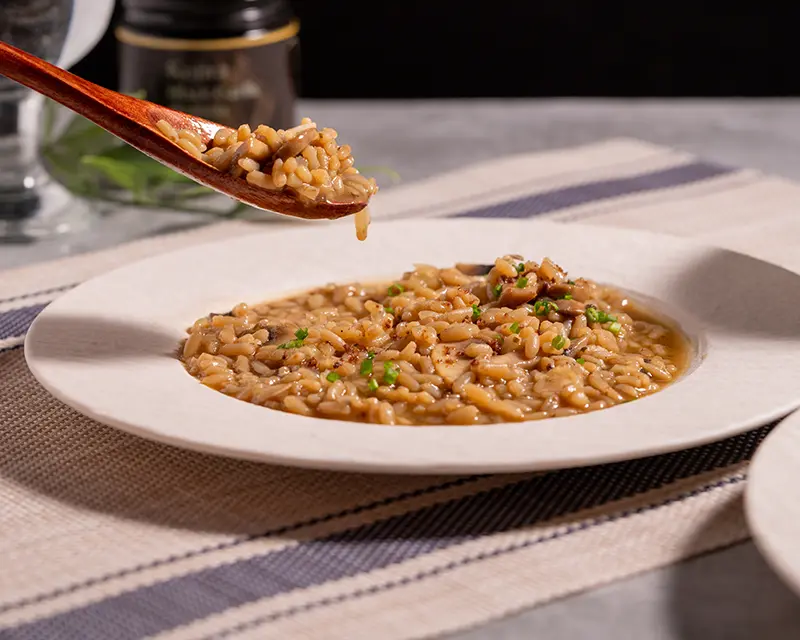
👩🏽🍳 Salt Pairing Rule: choose the salt by what you want to lift or amplify: clarity, brightness, savoury depth, aroma, or darker umami.
Frequently Asked Questions About How to Season Risotto
How do you season risotto properly?
Salt risotto gradually. Start with a balanced stock, taste as the rice cooks, and finish the seasoning only after the rice, liquid, fat, and added ingredients have come together.
Do you add salt to risotto?
Yes, but gradually. Start with the stock, taste as the rice cooks, and make the final adjustment after the risotto has come together.
How much salt should you add to risotto?
There is no fixed amount because stock, cheese, cured meat, seafood, mushrooms, and reduction all change the salt level. Start lower than you think, then adjust near the end.
Why is my risotto too salty?
Risotto becomes too salty when the stock, cheese, cured meat, seafood, or reduced liquid already carries salt and the dish is seasoned too heavily before it finishes cooking.
When should you decide the final salt level in risotto?
The best moment to decide how to season risotto is after the rice is tender, the stock has reduced, and the butter, cheese, olive oil, seafood, mushrooms, saffron, or other final ingredients have been folded in.
More Guides on Starch, Liquid and Final Seasoning
Once you understand how to season risotto, the same logic applies to rice, pasta, grains, and other dishes built around starch, liquid, and final seasoning.



Technique and Foundations
Join the Maison Kojira Letter
Eat sharper. Host better. Be more present. Get practical notes on flavour, ingredients and the small details that make food worth sharing.