How To Use Finishing Salt On Meat

A steak lifted from the pan, its surface dark and hot.
A roast chicken resting on the board, skin crisp, juices settling beneath it.
Slices of liver cut thick, still warm at the centre.

Heat, fat, and moisture are still moving. The surface begins to dry. Juices shift through the fibres as the meat rests.

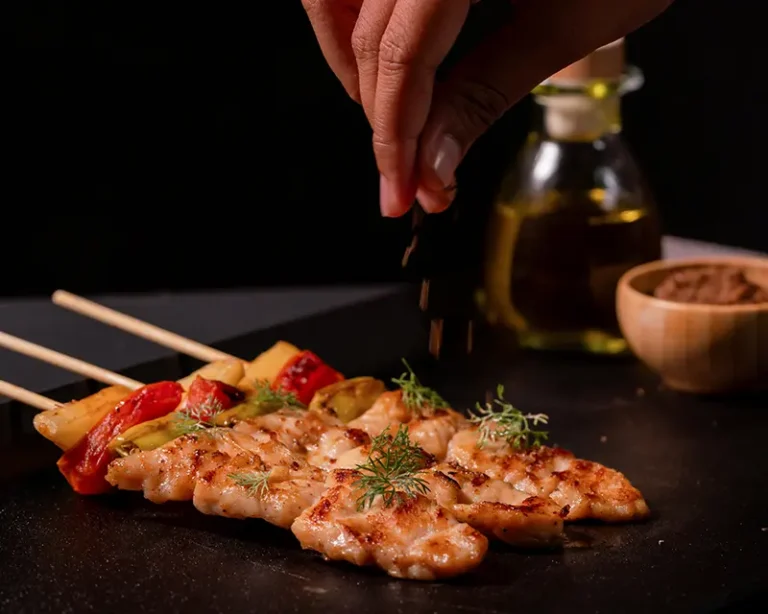
This is where finishing salt is applied. Some crystals dissolve into fat and warmth. Others stay on the surface. The result is uneven by design. Parts of the meat deepen, others sharpen.

Meat contains high levels of natural glutamates formed during cooking. Finishing salt amplifies these compounds, changing how flavour is perceived across the surface. The outcome depends on a few variables: how much moisture is present, how much fat is exposed, how hot the surface is, and when the salt is applied. Small changes in these conditions lead to very different results.

At Maison Kojira, finishing salts for meat are selected for how they interact with fat, heat, and structure.

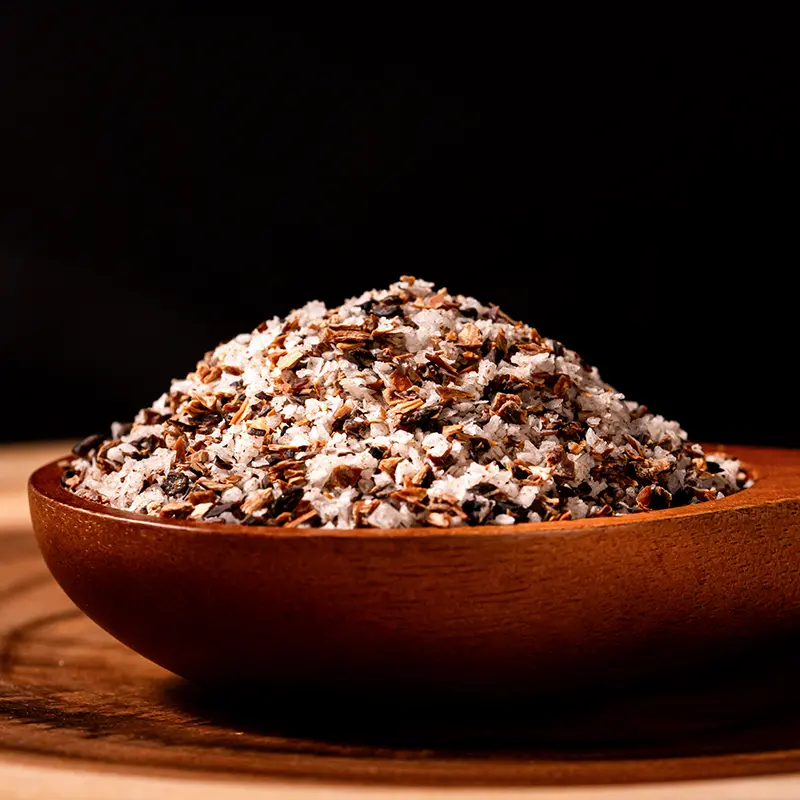
Mineral finishing salt adds definition and control.
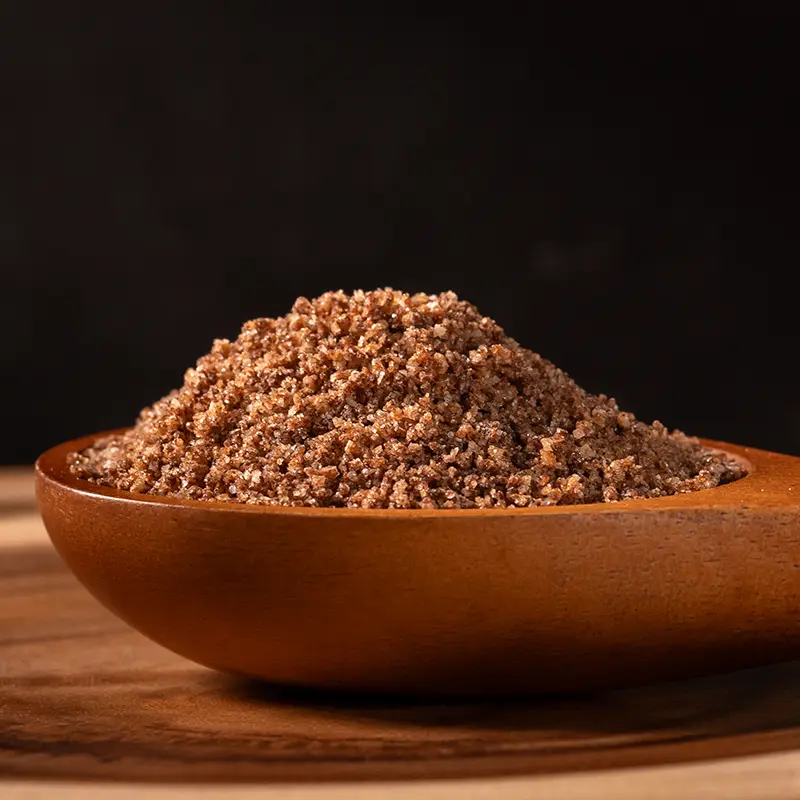
Umami salts deepen savoury flavour.
Citrus salts cut through richness and lift the dish.

The sections below break this down across different types of meat and cooking situations, showing how small adjustments change the result.

Looking for a specific type of meat? Jump directly:

Whole Cuts Of Red Meat

Fat absorbs and spreads salt, softening its impact. Leaner cuts respond more quickly and require more control.

Ground & Minced Meat

Salt integrates into the structure rather than staying on the surface, reducing contrast.

Poultry

Skin holds salt at the surface, while the meat absorbs it quickly and reduces contrast.

Organ Meats (Liver, Kidney, Heart)

Highly concentrated flavour that amplifies quickly. Small amounts of salt have a strong effect.

Principles Of Salt And Meat

Salt on meat follows five variables:

  • Surface moisture
  • Heat
  • Fat
  • Proteine structure
  • Timing

Moist surfaces dissolve salt. Drier surfaces hold it in place.
Heat drives salt into fat and juices. As the meat rests, salt remains closer to the surface.
Fat carries flavour and softens how salt is perceived. Lean meat tastes sharper under the same amount.
Protein structure affects how salt moves. Dense cuts hold it at the surface. Looser structures allow it to spread.

Meat is naturally rich in glutamates formed during cooking. Salt amplifies these compounds, increasing depth and clarity of flavour.

For a deeper look, see the Finishing Salt Guide, where we explain the different kinds of finishing salt and how they behave, and the guide How Salt Affects Flavour, which explores how salt shapes flavour at a structural level. But here, the focus stays on how these variables play out on the plate.


How To Use Salt On Beef Steaks

Beef has a dense muscle structure, varying levels of fat, and develops deep savoury flavour as it cooks. How salt behaves depends on how the meat is prepared.

In dry-heat cooking, the surface dries and forms a crust that holds salt at the surface.
In slow cooking, liquid surrounds the meat and salt dissolves into it completely.

Roasted, Grilled & Pan-Cooked Beef Steak

If you roast, grill or cook steak in a pan regularly, you already know there are strong opinions about salt.

Before cooking, after cooking, during resting – each approach changes the result.

  • Salt added before cooking draws moisture to the surface and begins to move into the meat. Given time, it spreads more evenly and supports browning.
  • Salt added during cooking has less control. It dissolves quickly and is harder to distribute evenly.
  • Salt added after cooking stays closer to the surface and shapes how the steak is experienced when you eat it.

These are not competing methods. They do different things.

Finishing salt sits at the end of this sequence. If you add it while the steak is still hot, part of it dissolves into the fat. If you wait until it has rested, more of it stays defined on the surface. One approach seasons more evenly, the other creates contrast across the steak.

This is also where culinary salts have the most impact. Because they sit at the surface, their flavour is experienced directly alongside the meat.

Salting Roasted, Grilled & Pan-Cooked Beef Steak Before Cooking (Structure and Browning)

Salt before cooking when you want even seasoning throughout the steak.

Given time, salt draws moisture to the surface, then moves back into the meat. This distributes seasoning more evenly and supports browning as the surface dries.

This works best for thicker cuts, where the interior needs seasoning as much as the surface. Culinary salts can be used here as part of a dry rub, where they remain on the surface and contribute to the crust. Under heat, their flavour integrates into fat and the outer layers of the meat, becoming part of the overall taste rather than staying distinct on the surface.

How much salt to use: Use enough to lightly coat the surface. Thicker cuts need slightly more, but fat matters just as much. Lean cuts respond more quickly and require restraint, while fattier cuts can take more salt without tasting harsh. Use less when you plan to add finishing salt after cooking.

Best salt to use on roasted, grilled and pan-cooked steak before cooking:

  • fine or medium salt, either mineral salt or sea salt: it spreads evenly and integrates into the meat before cooking begins
  • mushroom salt: deep savoury base and integrates well
  • black garlic salt: mellow, round, and blends into fat
  • spice-based salts (pimento, chili, pepper): hold structure under heat, build crust
  • smoked salts: reinforce grill/fire flavours

👨🏽‍🍳 Chef tip

Use herb or citrus salts after cooking. High heat reduces their freshness and can make herbs bitter.

Join the Maison Kojira Letter

Please wait...

You’re in.
Expect something worth your time.

Salting Roasted, Grilled & Pan-Cooked Beef Steak After Cooking (Surface and Contrast)

Salt after cooking when you want to control how flavour lands on the surface of the steak.

At this stage, the crust is dry, fat is exposed, and the interior has already been seasoned. Salt no longer moves into the meat. It interacts with what is already there. Some crystals dissolve into warmth and fat. Others remain defined. This creates contrast across the surface, sharpening certain areas while leaving others round and full.

This is where finishing salt has the most direct impact on how the steak is experienced.

How much salt to use: Use a light pinch. Lean cuts need less, as salt stays sharp. Fattier cuts can take slightly more, as fat softens the impact.

Best salt to use on roasted, grilled and pan-cooked steak after cooking:

  • flaky or coarse finishing salt: stays defined on the surface and creates contrast
  • mineral finishing salt: clean, controlled salinity without adding flavour
  • umami salts: deepen savoury flavour,
  • citrus salts: cut through fat and lift richness
  • herb, smoked, or spiced salts: add aroma at the surface, used in small amounts

👩🏼‍🍳 Chef tip

Salt from slightly above the steak, not directly over it.

A higher sprinkle spreads crystals across the surface instead of concentrating them in one spot. On a dry crust, this matters. If salt lands too densely, it creates sharp, uneven patches rather than controlled contrast.

Salting Roasted, Grilled & Pan-Cooked Beef Steak During Resting (Balance)

Salting during resting sits between both approaches.

The surface is still warm, and juices are moving through the meat. Part of the salt dissolves and spreads slightly, while some remains on the surface.

This creates a balance between even seasoning and surface definition.

How much salt to use: Use a moderate pinch. Some salt will dissolve and spread, especially on fatty cuts, while lean cuts will keep more intensity at the surface.

Best salt to use on roasted, grilled and pan-cooked steak during resting:

  • artisan mineral finishing salt: clean structure, always reliable
  • flaky sea salt: clear contrast and texture
  • mushroom salt: deepens savoury character without competing
  • black garlic salt: rounds richness, especially on fatty cuts
  • very light smoked salt: only when it matches the cooking method
  • herb finishing salts: only when the steak is paired with fat, butter, or aromatics (e.g. herb butter, resting juices, or oil)

👨🏼‍🍳 Chef tip

Rest the steak first, then salt in two stages. Add a light pinch early in the rest if you want part of the salt to melt into the fat, then adjust with a final few crystals just before slicing or serving.

How To Use Salt In Beef Stews

Salt in a stew behaves differently from steak.

There is no surface. No contrast. Everything is carried through liquid. As the stew cooks, water evaporates, collagen turns into gelatin, and fat disperses. Salt moves with that system. It spreads, integrates, and intensifies over time.

You’re not placing salt. You’re building it.

When to add salt in beef stews:

  • Before cooking: lightly season the meat before browning to build a base
  • During cooking: adjust in small pinches as liquid reduces
  • At the end: final correction once texture and concentration are set

Salt early sets direction. Salt during maintains balance. Salt at the end defines the result.

How much salt to use: Start restrained. Reduction concentrates everything. A stew that tastes correct early will often overshoot later if you’re not controlling it.

Build in layers and leave room for the final adjustment.

Best salt to use in beef stews:

  • fine mineral salt: primary choice for control and even distribution
  • standard sea salt: works similarly depending on grain size
  • mushroom salt: reinforces savoury depth as the stew develops
  • black garlic salt: adds roundness and subtle sweetness in richer stews

Avoid flaky finishing salts during cooking. They dissolve unevenly and don’t give you control in liquid.

👨🏻‍🍳 Chef tip

Salt, then wait. Let it simmer, reduce, or settle before tasting again. What you taste immediately after adding salt is not the final state, because it hasn’t distributed yet. Work in intervals.


How To Use Salt On Lamb

Lamb has a more open muscle structure, a distinct fat profile, and a naturally pronounced flavour that carries through cooking. How salt behaves depends on how that fat and structure respond to heat.

In dry-heat cooking, the surface dries and forms a crust, while the fat softens and releases aroma, carrying salt across the surface.
In slow cooking, liquid and rendered fat surround the meat, and salt dissolves into both, spreading evenly through the dish and shaping the overall balance.

Roasted, Grilled & Pan-Cooked Lamb

Lamb responds differently to salt because of how its fat behaves. As it cooks, the surface dries and forms a crust, but the fat softens and becomes more fluid. That fat carries flavour across the surface more actively than in beef.

  • Salt added before cooking begins to move into the meat and supports browning.
  • Salt added during cooking dissolves quickly and spreads with fat and juices, making it harder to control.
  • Salt added after cooking interacts with the surface, but on lamb it dissolves more readily into the softened fat, creating a more integrated, rounded result rather than sharp contrast.

These stages still build on each other, but they do not behave equally.

Finishing salt sits at the end of this sequence. If you add it while the lamb is still hot, it melts quickly into the fat and spreads across the surface. If you wait until it has rested, more of it stays defined, bringing clarity back to the flavour.

This is also where aromatic salts become more relevant. Because lamb fat carries aroma strongly, herb, citrus, and spice-based salts can shape the final impression more clearly when used at the surface.

Salting Roasted, Grilled & Pan-Cooked Lamb Before Cooking (Structure and Browning)

Before cooking, salt begins to shape how lamb cooks and how it tastes.

As soon as it touches the surface, it draws out a small amount of moisture. Given time, that moisture dissolves the salt and pulls it back into the meat. This spreads seasoning more evenly and helps the surface dry again, which supports better browning.

On lamb, this stage is more sensitive than with beef. The flavour is already pronounced, and the fat carries it strongly. If salt is too heavy at this point, it builds density early and reduces clarity later.

A light, controlled pre-salting step improves structure and browning without overwhelming the natural character of the meat.

How long to add salt on lamb before cooking: It depends what your goal is. Shorter timing keeps more of the effect at the surface. Longer timing moves seasoning further into the meat.

  • 15–30 minutes: light surface seasoning, improved browning
  • 45–60 minutes: more even distribution into the meat
  • longer resting (several hours): deeper seasoning, but requires restraint to avoid over-concentration

How much salt to use: Use a light, even coating. Lamb requires less aggressive pre-salting than beef. The goal is to support browning and build a base, not fully season the meat at this stage.

Best salt to use before cooking lamb:

  • fine mineral salt: spreads evenly and integrates quickly
  • fine sea salt: similar control depending on grain size

Avoid aromatic or finishing salts here. Heat and moisture flatten their character, and they lose definition during cooking.

👨🏽‍🍳 Common mistake

Salting heavily too early.

On lamb, this pushes flavour too far before cooking even begins. As fat renders and flavour concentrates, the result becomes heavy and less defined.

Salting Roasted, Grilled & Pan-Cooked Lamb After Cooking (Surface and Contrast)

Salt lamb after cooking when you want to control how flavour sits on the surface of the lamb. At this stage, the crust is set and the fat is soft and exposed. Unlike beef, that fat is more fluid and aromatic. Salt does not stay in one place for long. Some of it dissolves quickly into the warm fat and spreads across the surface. Less remains sharply defined.

This creates a more rounded, integrated result rather than strong contrast.

That shift matters. With lamb, salt at this stage is not only about contrast. It is about controlling richness and keeping the flavour clear.

How much salt to use: Use a restrained pinch. Lamb carries flavour strongly. Salt builds quickly, especially once it dissolves into the fat. Lean cuts need very little. Fattier cuts can take slightly more, but the increase is small.

Best salt to use on roasted, grilled and pan-cooked lamb after cooking:

  • flaky or coarse finishing salt: for light surface definition where some crystals remain intact
  • mineral finishing salt: clean salinity that balances richness without adding flavour
  • citrus salts: lift and cut through lamb fat, keeping the flavour from feeling heavy
  • herb salts: work well with resting juices or fat, adding aroma that spreads across the surfacevery light spice-based salts: used sparingly to add warmth without masking the meat

Use umami salts carefully. Lamb already has strong flavour, and additional depth can compress rather than improve it.

👨🏼‍🍳 Chef tip

If you want more definition, wait. Salt applied immediately after cooking melts quickly into the fat. If you wait until the lamb has rested slightly, more of the crystals stay on the surface, giving you clearer structure and better control.

Salting Roasted, Grilled & Pan-Cooked Lamb During Resting (Balance)

Salt during resting when you want to shape how flavour settles across the lamb. At this stage, the meat is off the heat, but the fat remains warm and fluid. Juices begin to redistribute, and the surface is still active.

On lamb, this moment leans strongly toward integration. Salt added now dissolves quickly into the softened fat and mixes with the resting juices. It spreads across the surface and into the outer layers. Very little remains sharply defined.

This builds a more even, rounded result rather than contrast.

How much salt to use: Use a light pinch. Salt moves quickly at this stage. What tastes balanced at first can build as it spreads with fat and juices. Leave room to adjust after resting.

Best salt to use on roasted, grilled and pan-cooked lamb during resting:

  • mineral finishing salt: clean salinity that integrates smoothly
  • fine flaky salt: dissolves partially while leaving minimal surface definition
  • very light citrus salt: can lift richness if used in small amounts

Avoid herb and aromatic salts at this stage. Heat and moving fat carry them too quickly, reducing clarity.

👩🏼‍🍳 Chef tip

Use two stages. Add a small pinch early in the rest to let it integrate, then adjust after resting with a few crystals for definition. This gives you both balance and control.


How To Use Salt On Pork

Pork has a finer muscle structure, moderate fat, and a milder flavour that develops as it cooks. How salt behaves depends on how that structure and fat respond to heat.

In dry-heat cooking, the surface dries and forms a crust, while the fat softens and carries salt across the surface, shaping how the meat is experienced.
In slow cooking, liquid and rendered fat surround the meat, and salt dissolves into both, spreading evenly and defining the overall flavour of the dish.

Roasted, Grilled & Pan-Cooked Pork

Pork responds clearly to how and when salt is applied.

  • Salt added before cooking draws moisture to the surface and begins to move into the meat. Given time, it spreads more evenly and supports browning.
  • Salt added during cooking has less control. It dissolves quickly into fat and juices and is harder to distribute evenly.
  • Salt added after cooking stays closer to the surface and shapes how the pork is experienced when you eat it.

Each stage does something different.

Finishing salt sits at the end of this sequence. If you add it while the pork is still hot, part of it dissolves into the fat and spreads across the surface. If you wait until it has rested, more of it stays defined, giving you clearer structure and more control over the final flavour.

This is also where culinary salts have a wider range. Because pork is milder, what you add at the surface becomes more noticeable, shaping not just balance, but the character of the dish.

Salts that bring structure keep the flavour clear, while those with citrus, herbs, or warm spices can shape the direction of the dish more visibly than on beef. Pork also carries a natural sweetness, so these salts work best when they frame that sweetness rather than compete with it. Used with restraint, they add definition and lift. Used too heavily, they mask the meat and flatten the result.

Salting Roasted, Grilled & Pan-Cooked Pork Before Cooking (Structure and Browning)

Before cooking, salt begins to shape how pork cooks and how it tastes.

As soon as it touches the surface, it draws out a small amount of moisture. Given time, that moisture dissolves the salt and pulls it back into the meat. This spreads seasoning more evenly and allows the surface to dry again, which supports better browning.

On pork, this stage is especially important. The flavour is milder than beef or lamb, so early seasoning defines the base rather than just supporting it. At the same time, pork can turn firm or slightly cured in texture if salted too heavily or left too long.

A controlled pre-salting step builds structure and flavour without tightening the meat.

How long to add salt on pork before cooking:

  • 15–30 minutes: light surface seasoning, improved browning
  • 45–60 minutes: more even distribution into the meat
  • longer resting (several hours): deeper seasoning, firmer texture if not controlled

Shorter timing keeps more of the effect at the surface. Longer timing moves seasoning further into the meat.

How much salt to use: Use a moderate, even coating. Pork needs enough salt early to avoid tasting flat, but not so much that the texture tightens or the flavour becomes dominant before cooking begins.

Best salt to use before cooking pork:

  • fine mineral salt: spreads evenly and integrates quickly
  • fine sea salt: similar control depending on grain size

Avoid aromatic or finishing salts here. Heat and moisture reduce their clarity, and they lose definition during cooking.

👨🏽‍🍳 Common mistake

Salting too heavily or too far in advance.

Pork responds quickly to salt. Too much, too early can tighten the texture and push the flavour toward a cured character rather than a natural cooked one.

Salting Roasted, Grilled & Pan-Cooked Pork After Cooking (Surface and Contrast)

Salt after cooking when you want to control how flavour sits on the surface of the pork.

At this stage, the crust is set and the fat is soft but less dominant than in lamb. Salt does not spread as aggressively, which means more of it can remain defined on the surface while part dissolves into the warmth and fat.

This creates a balance between integration and contrast.

That balance matters. Pork carries less intensity than beef or lamb, so what sits on the surface becomes more noticeable. Salt here doesn’t just sharpen, it defines the flavour of the meat.

How much salt to use: Use a light to moderate pinch. Pork needs enough salt to bring out its flavour, but it builds quickly at the surface. Lean cuts need restraint. Fattier cuts can take slightly more, as the fat softens the effect.

Best salt to use on roasted, grilled and pan-cooked pork after cooking:

  • flaky or coarse finishing salt: stays defined and creates clear surface contrast
  • mineral finishing salt: clean salinity that sharpens flavour without adding weight
  • citrus salts: lift richness and bring clarity, especially on fattier cuts
  • herb salts (thyme, rosemary, sage): sit clearly on the surface and align naturally with pork
  • light spice-based salts: add warmth and depth without overwhelming the meat

Use umami salts with restraint. Pork has a natural sweetness, and too much depth can mask it rather than improve it.

👨🏼‍🍳 Chef tip

Adjust after resting. Salt applied immediately after cooking will dissolve more quickly. If you want clearer definition, wait until the pork has rested, then finish with a final pinch to control how the flavour lands on the surface.

Salting Roasted, Grilled & Pan-Cooked Pork During Resting (Balance)

Salt during resting when you want to shape how flavour settles across the pork. At this stage, the meat is off the heat, but still warm. Fat softens, juices redistribute, and the surface remains active.

On pork, this moment sits between integration and definition. Salt added now dissolves partly into the fat and resting juices, spreading across the surface and into the outer layers. At the same time, some crystals remain intact, giving light surface definition.

This creates a balanced result: more integrated than beef, more defined than lamb.

How much salt to use: Use a light pinch. Salt spreads at this stage, but not as aggressively as on lamb. What you add will carry through the surface, so leave room to adjust after resting.

Best salt to use on roasted, grilled and pan-cooked pork during resting:

  • mineral finishing salt: clean salinity that integrates without overpowering
  • fine flaky salt: dissolves partly while keeping light surface presence
  • light citrus salt: can lift richness if used sparingly

Use herb and spice salts carefully here. Some of their aroma will disperse into the fat, reducing clarity compared to adding them later.

👩🏼‍🍳 Common mistake

Relying only on early seasoning. If you skip this stage and the final adjustment, pork often tastes flat. The flavour sits inside the meat but lacks clarity at the surface.


How To Use Salt On Venison

Venison has a dense muscle structure, very little fat, and a pronounced, mineral flavour that becomes more defined as it cooks. How salt behaves depends on how the meat handles moisture and heat.

In dry-heat cooking, the surface dries quickly and forms a crust, but with little fat to carry flavour, salt stays more defined on the surface and tastes sharper.
In slow cooking, liquid surrounds the meat and salt dissolves into it, spreading evenly, but without much fat, the flavour remains direct and less rounded.

Roasted, Grilled & Pan-Cooked Venison

Venison requires more precision with salt.

Before cooking, during resting, after cooking, each stage shapes the result, but with less margin for error than beef or pork.

  • Salt added before cooking draws moisture to the surface and begins to move into the meat. Given time, it spreads more evenly and supports browning.
  • Salt added during cooking has less control. It dissolves quickly into surface moisture and is harder to distribute evenly.
  • Salt added after cooking stays at the surface, where it is felt more directly.

These stages serve different purposes.

Finishing salt sits at the end of this sequence. If you add it while the venison is still hot, some of it dissolves slightly into surface moisture, but without fat to carry it, most remains defined. If you wait until it has rested, the crystals stay even more distinct, creating clear, direct contrast.

This is also where culinary salts require restraint. Because venison is lean and its flavour is already pronounced, anything added at the surface is experienced immediately and without softening.

Salting Roasted, Grilled & Pan-Cooked Venison Before Cooking (Structure and Browning)

Before cooking, salt begins to shape how venison cooks and how it tastes.

As soon as it touches the surface, it draws out a small amount of moisture. Given time, that moisture dissolves the salt and pulls it back into the meat. This spreads seasoning more evenly and allows the surface to dry again, which supports better browning.

On venison, this stage is critical. The meat is lean, with very little fat to soften or carry flavour. Early seasoning sets the base directly. If it is uneven or too heavy, there is little to balance it later.

A controlled pre-salting step improves structure and browning while keeping the flavour clear.

How long add salt to venison before cooking:

  • 15–30 minutes: light surface seasoning, improved browning
  • 45–60 minutes: more even distribution into the outer layers
  • longer resting (several hours): deeper seasoning, but increases risk of firmness if not controlled

Shorter timing keeps the effect closer to the surface. Longer timing moves seasoning further into the meat.

How much salt to use: Use a light, even coating. Venison needs less salt than beef or pork at this stage. The goal is to prepare the surface and build a base, not fully season the meat.

Best salt to use before cooking venison:

  • fine mineral salt: spreads evenly and integrates quickly
  • fine sea salt: similar control depending on grain size

Avoid aromatic or finishing salts here. Heat and moisture reduce their clarity, and they lose definition during cooking.

👩🏽‍🍳 Chef tip

After salting, let the venison sit uncovered for a short time before cooking. This allows the surface to dry again after the initial moisture is drawn out. A drier surface browns more cleanly and forms a better crust.

Salting Roasted, Grilled & Pan-Cooked Venison After Cooking (Surface and Contrast)

Salt after cooking when you want to control how flavour sits on the surface of the venison. At this stage, the crust is set and the surface is dry. There is little fat to carry or soften the salt. What you add stays where it lands and is felt directly.

Some crystals dissolve slightly into surface moisture, but most remain defined. The result is clear, immediate contrast rather than integration.

That clarity matters. On venison, salt at this stage does not round the flavour, it sharpens it.

How much salt to use: Use a very light pinch. Venison has little fat to soften intensity. Salt stays sharp and builds quickly. Even small increases are noticeable.

Best salt to use on roasted, grilled and pan-cooked venison after cooking:

  • flaky or coarse finishing salt: creates clean, controlled contrast across the surface
  • mineral finishing salt: precise salinity that sharpens flavour without adding weight
  • very light citrus salt: can lift and bring freshness if used sparingly

Use herb, spice, and umami salts with restraint. Without fat to carry them, their flavour sits directly on top of the meat and can dominate quickly.

🧑🏾‍🍳 Chef tip

Apply salt closer to serving. If added immediately after cooking, some salt will still dissolve into surface moisture. Waiting until the venison has rested keeps the crystals more defined and gives you tighter control over contrast.


How To Use Salt On Elk

Elk has a dense muscle structure, very little fat, and a clean, pronounced flavour that becomes more defined as it cooks. How salt behaves depends on how the meat handles moisture and heat.

In dry-heat cooking, the surface dries quickly and forms a crust, but with minimal fat, salt remains more defined on the surface and tastes sharper.
In slow cooking, liquid surrounds the meat and salt dissolves into it, spreading evenly, but without much fat, the flavour stays direct and less rounded.

Elk requires a precise approach to salt.

Roasted, Grilled & Pan-Cooked Elk

Before cooking, during resting, after cooking, each stage shapes the result, but with very little margin for error due to its leanness.

  • Before cooking, salt begins to move into the meat and shape browning.
  • During cooking, control drops. Salt dissolves quickly into surface moisture.
  • After cooking, it stays at the surface and is felt directly.

These are not competing methods. They do different things.

Finishing salt sits at the end of this sequence. If you add it while the elk is still hot, a small part dissolves into surface moisture, but without fat to carry it, most remains defined. If you wait until it has rested, the crystals stay even more distinct, creating clear, direct contrast.

This is also where culinary salts require restraint. Elk has a clean but pronounced flavour, and with little fat to soften additions, anything placed at the surface is experienced immediately and without buffering.

Salting Roasted, Grilled & Pan-Cooked Elk Before Cooking (Structure and Browning)

Before cooking, salt begins to shape how elk cooks and how it tastes. As soon as it touches the surface, it draws out a small amount of moisture. Given time, that moisture dissolves the salt and pulls it back into the meat. This spreads seasoning more evenly and allows the surface to dry again, which supports better browning.

On elk, this stage requires tight control. The meat is lean, with very little fat to carry or soften flavour. Early seasoning sets the base directly. If it is uneven or too heavy, there is little to balance it later.

A controlled pre-salting step improves structure and browning while keeping the flavour clean.

How long add salt to elk before cooking:

  • 15–30 minutes: light surface seasoning, improved browning
  • 45–60 minutes: more even distribution into the outer layers
  • longer resting (several hours): deeper seasoning, but increases risk of firmness if not controlled

Shorter timing keeps the effect closer to the surface. Longer timing moves seasoning further into the meat.

How much salt to use: Use a light, even coating. Elk needs restraint at this stage. The goal is to prepare the surface and build a base, not fully season the meat.

Best salt to use before cooking elk:

  • fine mineral salt: spreads evenly and integrates quickly
  • fine sea salt: similar control depending on grain size

Avoid aromatic or finishing salts here. Heat and moisture reduce their clarity, and they lose definition during cooking.

🧑🏼‍🍳 Chef tip

Let the meat come closer to room temperature before cooking.

Elk cooks quickly and dries out fast. If it goes into the pan cold, the outside overcooks before the centre catches up. A more even starting temperature gives you better control over doneness and keeps the surface from tightening too aggressively once salted.

Salting Roasted, Grilled & Pan-Cooked Elk After Cooking (Surface and Contrast)

Salt after cooking when you want to control how flavour sits on the surface of the elk. At this stage, the crust is set and the surface is dry. There is very little fat to carry or soften the salt. What you add stays where it lands and is felt directly.

Some crystals dissolve slightly into surface moisture, but most remain defined. The result is sharp, immediate contrast rather than integration.

That clarity matters. On elk, salt at this stage does not round the flavour, it defines it.

How much salt to use: Use a very light pinch. Elk has little fat to buffer intensity. Salt stays sharp and builds quickly. Even small increases are noticeable.

Best salt to use on roasted, grilled and pan-cooked elk after cooking:

  • flaky or coarse finishing salt: creates clear, controlled contrast across the surface
  • mineral finishing salt: precise salinity that sharpens flavour without adding weight
  • very light citrus salt: can lift and add freshness if used sparingly

Use herb, spice, and umami salts with restraint. Without fat to carry them, their flavour sits directly on top of the meat and can dominate quickly.

🧑🏽‍🍳 Common mistake

Trying to build richness with salt. Elk does not respond to salt the way fattier meats do. Adding more does not create depth, it makes the flavour harsher and more exposed.

Salting Roasted, Grilled & Pan-Cooked Elk During Resting (Balance)

Salt during resting when you want to shape how flavour settles across the elk.

At this stage, the meat is off the heat, but still warm. Juices begin to redistribute, and the surface remains slightly active, but there is very little fat to carry or spread flavour.

On elk, this moment is limited. Salt added now dissolves only lightly into surface moisture and resting juices. It spreads slightly across the outer layers, but most of it remains close to where it lands. The result is only partial integration, with clear definition still present.

This stage softens edges slightly, but it does not create full balance on its own.

How much salt to use: Use a very light pinch. Salt does not travel far at this stage, but it still builds quickly because there is little fat to buffer it. Keep the adjustment small and controlled.

Best salt to use on roasted, grilled and pan-cooked elk during resting:

  • mineral finishing salt: clean salinity that integrates slightly without overwhelming
  • fine flaky salt: dissolves partially while keeping surface definition

Avoid aromatic salts here. Without fat to carry them, they remain isolated and can feel disconnected rather than integrated.

🧑🏼‍🍳 Chef tip

Season the cutting board lightly instead of the meat. As the elk is sliced, each piece picks up a small amount of salt. This controls distribution and avoids concentrating salt in one area.


How To Use Salt On Ground Beef

Ground beef behaves differently from whole cuts.

The muscle structure is already broken down, fat is dispersed throughout, and salt can move through the meat immediately when mixed. Instead of sitting on the surface, it interacts directly with the proteins and changes both flavour and texture.

In dry-heat cooking, salt can either stay at the surface or be mixed into the meat. If mixed early, it binds the proteins and creates a firmer, more cohesive texture. If added later, it stays at the surface and keeps the texture looser and more tender.
In slow cooking, salt dissolves fully into the mixture and spreads evenly as the dish cooks, shaping the overall flavour without affecting structure as strongly.

Pan-Cooked & Grilled Ground Beef

Ground beef follows a different logic from whole cuts.

Before cooking, during cooking, after cooking, each stage changes not just flavour, but texture.

  • Salt added before cooking does more than season. When mixed into ground beef, it dissolves into the proteins and binds them together. Given time, the mixture becomes tighter and more cohesive.
  • Salt added during cooking has less control. It dissolves into rendered fat and moisture but cannot change the structure once the meat is set.
  • Salt added after cooking stays at the surface and shapes how the ground beef is experienced when you eat it.

These are not interchangeable methods. They create different results.

Finishing salt sits at the end of this sequence. If you add it while the meat is still hot, part of it dissolves into surface fat. If you wait until it has rested slightly, more of it stays defined, adding contrast to each bite.

This is also where culinary salts need restraint. Because ground beef has a looser structure and more exposed surface area, anything added at the end is felt quickly and across multiple small pieces rather than in a single cut.

This is also where burgers diverge.

For a loose, juicy burger, salt is usually kept at the surface and added just before or after cooking, so the meat stays tender. When salt is mixed into ground beef earlier, the texture becomes firmer and more cohesive, which suits dishes like meatballs or fillings.

Understanding this difference is key. With ground beef, salt does not just season, it determines structure.

Salting Roasted & Pan-Cooked Ground Beef Before Cooking (Structure and Binding)

Before cooking, salt changes how ground beef behaves. As soon as it is mixed into the meat, it dissolves into the proteins and begins to bind them together. Given time, the mixture becomes more cohesive and holds its shape more firmly during cooking.

This is not just seasoning. It is structural. On ground beef, this stage determines texture. Mixed lightly and briefly, the result stays relatively tender. Mixed longer or left to rest, the meat becomes tighter and more elastic.

A controlled pre-salting step lets you decide how firm or loose the final result will be.

How long to add salt to ground beef before cooking:

  • immediate cooking after mixing: light binding, more tender texture
  • 10–20 minutes: noticeable cohesion, holds shape more firmly
  • longer resting: tighter, more elastic texture

The longer salt sits in the mixture, the stronger the binding effect.

How much salt to use: Use a moderate, even amount. Too little and the mixture will not hold together well. Too much, or too much mixing, and the texture becomes dense.

Best salt to use before cooking ground beef:

  • fine mineral salt: distributes evenly and binds consistently
  • fine sea salt: similar effect depending on grain size

Avoid coarse or flaky salts here. They do not distribute evenly through the mixture.

👨🏼‍🍳 Chef tip

Mix only as much as needed. Once the salt is added, overworking the meat strengthens the binding effect. Stop as soon as the mixture comes together to avoid a dense result.

Salting Roasted & Pan-Cooked Ground Beef During Cooking (Adjustment and Control)

Salt during cooking when you want to adjust flavour without changing structure.

At this stage, the meat has already set. The proteins have tightened, fat has started to render, and the surface is breaking into smaller pieces or forming a crust, depending on how it is cooked.

Salt added now no longer binds the meat. It dissolves into rendered fat and surface moisture, spreading across the pan and coating the meat more loosely. Some of it clings to the surface, but much of it distributes through the fat.

This gives you control over flavour, but not texture.

How much salt to use: Add in small pinches. Salt spreads quickly through fat and moisture at this stage. What feels light at first can build across the whole pan.

Best salt to use during cooking ground beef:

  • fine mineral salt: dissolves quickly and distributes evenly
  • fine sea salt: similar effect depending on grain size

Avoid coarse or flaky salts here. They do not dissolve evenly and can create uneven seasoning.

👨🏽‍🍳 Chef tip

Salt after the meat has started to brown. If added too early, salt draws out moisture and can interfere with browning. Let the meat develop some colour first, then adjust seasoning.

Salting Roasted & Pan-Cooked Ground Beef After Cooking (Surface and Finish)

Salt after cooking when you want to control how flavour lands across the finished meat. At this stage, the structure is set. The meat has browned, fat has rendered, and the surface is broken into many small pieces or defined edges. Salt no longer moves into the meat or changes how it holds together. It stays at the surface.

Some crystals dissolve lightly into residual heat and fat, but much of it remains defined, sitting across multiple small surfaces rather than one continuous crust.

This creates a scattered, immediate effect. Small points of intensity across the dish rather than a single, continuous layer.

How much salt to use: Use a light, even pinch. Because ground beef is divided into many small pieces, salt distributes quickly across the whole dish. It is easy to overdo.

Best salt to use on ground beef after cooking:

  • fine or medium mineral salt: distributes evenly across small surfaces
  • fine flaky salt: adds light texture without concentrating too heavily in one spot

Avoid very coarse salts here. They do not distribute well across smaller pieces and can create uneven bites.

👨🏼‍🍳 Common mistake

Adding salt in one final heavy addition. Because the meat is already cooked, salt sits on the surface and does not integrate. Large additions create sharp, uneven flavour rather than balanced seasoning.


How To Use Salt On Burgers

Burgers sit between structure and control. They are made from ground beef, but the goal is different. Instead of a cohesive mixture, the aim is a loose, juicy patty with a defined crust.

Salt determines that outcome. If it is mixed into the meat, it binds the proteins and creates a firmer, tighter texture. If it is kept at the surface, the patty stays more open and tender.

In burgers, this distinction matters more than anything else.

Pan-Cooked & Grilled Burgers

Salt changes both texture and flavour depending on when it is applied.

  • Salt added before forming and mixed into the meat creates a tighter, more uniform structure. The patty holds together firmly but loses some tenderness.
  • Salt added after forming, just before cooking, stays at the surface. It seasons the exterior and supports browning while keeping the interior loose.
  • Salt added after cooking sharpens flavour at the surface and adds final contrast.

These are not variations. They lead to different burgers.

For most burgers, salt is kept at the surface to preserve tenderness and control how flavour develops as the patty cooks.

Finishing salt sits at the end. If added while the burger is still hot, part of it dissolves into surface fat. If added just before serving, more of it stays defined, adding a clearer final layer of seasoning.

Because burgers have a large surface area and exposed fat, anything added at the end is experienced quickly and across the whole bite.

Salting Burgers Before Forming (Structure and Binding)

Salt added before forming changes how a burger behaves.

As soon as it is mixed into the ground beef, it dissolves into the proteins and begins to bind them together. The meat becomes more cohesive, holding its shape more tightly as it cooks. This creates a different kind of burger. Instead of a loose, tender interior, the texture becomes firmer and more uniform. The bite is tighter, with less separation between the meat fibres.

This is useful in some cases, but it is not the default.

For most burgers, this works against the goal. A tightly bound patty loses the open, juicy texture that defines a good burger.

How long to add salt to burgers before forming the burger:

  • immediate forming and cooking: light binding, slightly firmer texture
  • 10–20 minutes after mixing: noticeable tightening
  • longer resting: dense, more elastic texture

The longer salt remains mixed into the meat, the stronger the binding effect.

How much salt to use: Use restraint. Even a small amount of salt begins to change the structure. The effect is driven more by contact and time than by quantity alone.

Best salt to use before forming burgers:

  • fine mineral salt: distributes evenly and binds consistently
  • fine sea salt: similar control depending on grain size

Avoid coarse or flaky salts here. They do not mix evenly and create inconsistent structure.

👨🏽‍🍳 Chef tip

If you want a looser burger, keep salt out of the mix. Season the surface instead. This preserves tenderness and gives you more control over the final result.

Salting Burgers After Forming, Just Before Cooking (Surface and Browning)

Salt added after forming, just before cooking, keeps the structure of the burger intact while seasoning the surface.

At this stage, the meat is no longer being mixed. The interior stays loose and open, while the salt sits on the outside of the patty. As the burger cooks, that surface salt draws out a small amount of moisture, then dissolves and spreads across the exterior. This supports browning and builds a crust while keeping the inside tender.

This is the default approach for most burgers.

How much salt to use: Use a moderate, even coating on both sides. Because the salt stays at the surface, it needs to be sufficient to season each bite as the crust forms.

Best salt to use before cooking burgers:

  • fine or medium mineral salt: distributes evenly and dissolves at the right speed
  • fine sea salt: similar control depending on grain size

Avoid very coarse salts here. They dissolve too slowly and can create uneven seasoning during cooking.

👩🏼‍🍳 Common mistake

Salting too early and letting the patties sit. This pulls moisture to the surface and interferes with browning. The result is a softer, less defined crust.

Salting Burgers After Cooking (Surface and Finish)

Salt added after cooking is the final layer of control. At this stage, the crust is set, fat has rendered to the surface, and the interior structure is fixed. Salt no longer affects texture or browning. It sits on top of the burger and shapes how the first bite is experienced.

Some crystals dissolve slightly into the warm fat, but much of it remains defined. This creates a clear, immediate impact, sharper and more direct than earlier seasoning.

This is not a replacement for proper seasoning before cooking. It is a finishing step.

How much salt to use: Use a light, controlled pinch. Because the salt stays at the surface, even small amounts are noticeable. The goal is to refine, not to correct.

Best finishing salt for burgers:

  • citrus salts: lift richness and cut through fat, especially on fattier blends
  • herb salts (thyme, rosemary, sage): sit clearly on the surface and align with the meat without overpowering it
  • spice-based salts (fennel, garlic, chilli, warm spices): add depth and direction to the flavour of the burger
  • light umami salts: can deepen flavour, but should be used carefully to avoid masking the meat

👨🏼‍🍳 Common mistake

Pressing the burger after salting. Once salt is on the surface, pressing forces it into the meat unevenly and squeezes out juices that would otherwise carry flavour. You lose both structure and control.


How To Use Salt On Sausages

Sausages are already seasoned before they reach the pan.

Salt has been mixed into the meat, binding the proteins and setting the flavour throughout. The interior is fully seasoned, and the structure is already fixed. That changes how you use salt. You are not building seasoning. You are deciding whether it needs adjustment.

In dry-heat cooking, the casing tightens and the surface browns, while fat renders inside. Any salt added at this stage stays mostly on the outside.
In stews or braises, sausages release fat and seasoning into the liquid, and salt dissolves into the dish as a whole.

Pan-Cooked & Grilled Sausages

Salt plays a limited role.

  • Salt added before cooking is not needed. The sausage is already seasoned, and additional salt does not improve the result.
  • Salt added during cooking dissolves into fat and moisture, but offers little control and can make the surface taste overly salty.
  • Salt added after cooking sits on the casing and shapes the first bite.

These are not equal stages. Most of the time, no additional salt is required.

Finishing salt sits at the end of this sequence. If added while the sausage is still hot, part of it dissolves into surface fat. If added just before serving, more of it stays defined on the casing.

Use this only when needed.

How much salt to use: Use a very light pinch, if at all. The sausage already contains salt. The goal is contrast, not additional seasoning.

Best salt to use on sausages:

The type of finishing salt should match what is already in the sausage.

If the sausage is herb-forward, a clean mineral or light flaky salt keeps the flavour defined instead of adding more aroma.
If it is simply seasoned, herb or citrus salts can add a new layer at the surface.
If it is heavily spiced or smoked, additional flavoured salts should be used carefully, as they stack quickly and can make the flavour feel crowded.

The more complex the sausage, the simpler the finishing salt should be.

👨🏻‍🍳 Chef tip

Taste before adding salt. Sausages vary in seasoning. Adjust only if needed, not by default.


How To Use Finishing Salt On Chicken

Chicken sits between meat and seafood.

It has structure, but not density.
It carries fat, but not in excess.
It can dry out, or it can stay juicy depending on how it’s cooked.

This makes salt highly sensitive to timing. Used early, it seasons through the flesh. Used late, it defines the surface and controls how each bite lands. The difference is not subtle.

Salt on chicken follows three variables:

  • Moisture: Chicken releases juices as it cooks. Wet surfaces dissolve salt quickly.
  • Fat (Skin vs Flesh): Skin behaves like a barrier and a carrier. Flesh absorbs more directly.
  • Heat & Timing: High heat dries the surface. This is where finishing salt becomes effective.

Early salting builds depth.
Late salting creates contrast.

Chicken breast (Pan-Seared or Roasted)

Chicken breast is lean and low in fat. It does not carry flavour on its own. As it cooks, chicken breast separates into two distinct zones.

The surface dries slightly, especially with searing or roasting.
The interior stays moist, but relatively neutral.

That split is what you work with. Chicken breast needs two stages of salt: before, and after cooking.

Salt added early moves into the meat as moisture shifts and heat tightens the structure.
Salt added at the end stays on the surface, dissolving only as you eat.

When to add finishing salt on chicken breast: Chicken breast needs to be salted twice.

  • Before cooking, apply a light, even layer and let it sit briefly.
    This draws out a small amount of moisture, helps the surface dry, and allows seasoning to begin moving into the flesh.
  • After cooking, finish with a small pinch just before serving, while the meat is still warm.
    At this stage, the salt stays on the surface, creating contrast across each bite.

How much salt to use: Keep it controlled. Chicken breast has no fat buffer. Too much salt dominates quickly, especially at the surface. You’re aiming for balance between internal seasoning and surface clarity, not intensity.

Best finishing salts for pan-seared or roasted chicken breast:

  • Mineral finishing salt: Gives structure to a mild protein. Clean, direct, precise.
  • Citrus salts: Add lift and prevent the flavour from feeling dry or closed.
  • Light umami salts, such as mushroom salt: Add depth, but only in restraint. Enough to support, not to lead

👨🏻‍🍳 Chef tip

Slice the chicken, then salt. Apply the finishing salt directly onto the cut surfaces, not the whole piece. The juices on the surface will catch part of the salt and spread it slightly, while some crystals stay intact.

That way, each slice carries both the integrated seasoning from the juices and surface salt for contrast. If you salt the whole breast before slicing, most of it stays on the outside and never reaches the interior.

Chicken Thighs (Roasted, Grilled, or Pan-Cooked)

Chicken thighs are richer, softer, and higher in fat. They carry flavour more easily than breast and respond differently to salt.

As they cook, the structure loosens and fat begins to render.

The surface can crisp, especially with roasting or pan-searing.
The interior stays soft, juicy, and more forgiving.

That changes how salt behaves. Fat carries salt across the palate, while the softer structure allows some of it to move slightly beyond the surface.

Chicken thighs still need two stages of salt: before, and after cooking.

Salt added early integrates more easily than in breast, moving with moisture and fat as the meat cooks.
Salt added at the end settles into the surface and partially dissolves into rendered fat, creating a more rounded finish.

When to add finishing salt on chicken thighs: Chicken thighs should be salted twice.

  • Before cooking, apply a moderate, even layer and let it sit briefly. This helps seasoning move into the meat and supports browning as fat renders.
  • After cooking, finish with a pinch while still hot. At this stage, the salt lands on the surface and begins to dissolve into the fat, spreading flavour more evenly than on lean cuts.

How much salt to use: Moderate. Thighs can carry more salt than breast because of their fat content and softer structure. But excess still flattens the flavour and removes contrast. You’re aiming for depth, not heaviness.

Best finishing salts for roasted, grilled or pan-cooked chicken thighs:

  • Mineral finishing salt: Balances richness and keeps the flavour defined.
  • Mushroom salt or black garlic salt: Adds savoury depth that integrates naturally with the darker meat
  • Saffron salt or warm aromatic salts: Work with the fat and heat, adding a rounded, subtle warmth.

👨🏼‍🍳 Chef tip

Salt while the thighs are still hot, not after they’ve rested fully. At that moment, the rendered fat is still fluid on the surface. The salt catches, partially dissolves, and spreads.

If you wait too long, the fat sets and the salt stays where it lands, making the seasoning feel more separate and less integrated.

Whole Chicken (Roasted)

A whole chicken is not one surface. It’s multiple structures cooking at the same time.

The breast is lean and cooks faster.
The thighs are fattier and more forgiving.
The skin dries, tightens, and can crisp if handled correctly.

This creates uneven behaviour. Some areas absorb salt. Others hold it on the surface. You’re managing all of them at once.

Salt has to be layered with intent: before cooking to build depth, and after cooking to define the surface.

As the chicken roasts, fat renders and moves across the surface.

  • the skin dries and crisps, and holds finishing salt
  • the breast firms and stays lean, and needs internal seasoning
  • the thighs soften and release fat, they carry salt more easily

Salt added early begins seasoning the interior, especially in the breast.
Salt added at the end lands differently depending on where it hits, staying on crisp skin, dissolving slightly into softer areas.

When to add finishing salt on whole roasted chicken: Whole chicken needs to be salted twice.

  • Before cooking, apply an even layer across the entire bird, including the cavity if used. Let it sit so moisture rises and seasoning begins to move into the meat. This supports browning and builds a base.
  • After cooking, finish just before serving. Apply salt across the surface, then again lightly after carving.

How much salt to use: Moderate, but controlled. A whole chicken can handle more salt overall, but uneven application creates imbalance between cuts. You’re aiming for consistency across different textures, not intensity in one area.

Best finishing salts for roasted whole chicken:

  • Mineral finishing salt: Gives structure across both crisp skin and carved meat.
  • Citrus salts: Lift the overall flavour and prevent richness from building across the whole dish.
  • Mushroom or black garlic salt: Adds depth, especially on darker meat and roasted areas

👩🏼‍🍳 Chef tip

Change how you salt across the bird. Salt the skin from close so the crystals land exactly where you place them and stay on the surface. Salt the carved meat from slightly higher so it spreads more evenly and catches on the juices. Same salt, different approach.

Poached or Steamed Chicken

Poaching or steaming a chicken is almost the opposite of roasting or searing. There is no dry surface. No crust. No place for salt to sit. The chicken cooks in moisture and stays fully hydrated.

That changes how salt behaves. It doesn’t stay on the surface. It dissolves immediately and spreads evenly.

As the chicken cooks, it holds water rather than losing it. The surface stays wet, so salt dissolves on contact. The interior stays soft and uniform, so here seasoning spreads evenly

Salt added at the end does not create texture or variation. It blends into the surface almost instantly. This removes the sharpness you get from finishing salt on dry-cooked chicken.

When to add finishing salt on poached or steamed chicken: Salt happens in two stages, but the balance shifts.

  • Before or during cooking, season the liquid or the meat itself. This is where most of the flavour is built.
  • After cooking, add only a very light finishing pinch, just before serving.

How much salt to use: Medium before cooking. Light at the end. Most of the salt should already be in the chicken from the cooking stage. Too much at the end makes the surface taste flat and overly salty at the same time.

Best finishing salts for poached or steamed chicken:

  • Fine mineral salt: Dissolves quickly and seasons evenly without drawing attention.
  • Light citrus salts: Add lift and prevent the flavour from feeling soft or diluted.

👩🏽‍🍳 Chef tip

Dry the surface before you finish. After steaming or poaching, let the chicken sit for a moment or pat it lightly.
You’re not trying to cool it, just remove excess surface moisture. Then add the finishing salt.


How To Use Finishing Salt On Turkey

Turkey is not just larger chicken. The structure is more extreme. The breast is bigger, leaner, and more prone to drying.
The legs are denser, richer, and take longer to cook. The skin stretches across a wide surface and doesn’t crisp evenly.

This creates stronger contrast across the bird. Some areas dry out quickly. Others stay protected and hold fat.

Salt has to work across all of it.

Used early, it builds flavour into the meat, especially where there is little fat to carry it.
Used late, it needs to be placed with more control, so each part eats balanced rather than uneven.

Salt on turkey follows three variables:

  • Moisture: Large cuts lose water unevenly. Some areas dry fast, others stay moist.
  • Fat (Dark vs White Meat): Dark meat carries salt easily. White meat needs more support.
  • Heat & Timing: Long cooking times amplify both dryness and concentration. Timing determines whether salt integrates or stays defined.

Whole Turkey (Roasted)

Whole turkey is large, uneven, and slow to cook. It does not behave as one piece.

The breast is lean and dries quickly.
The legs are richer and take longer to cook.
The skin covers a wide surface and crisps unevenly.

As it cooks, the bird separates into multiple zones. Some areas dry and firm up. Others stay soft and carry fat.

That’s what you work with. Whole turkey needs two stages of salt: before, and after cooking.

Salt added early builds flavour into the meat, especially in the breast where there is little fat to carry it.
Salt added at the end lands differently depending on where it hits, staying on crisp skin, dissolving slightly into carved meat.

When to add finishing salt on whole turkey: Whole turkey needs to be salted three times.

  • Before cooking, apply an even layer across the entire bird and let it sit. This draws out moisture, helps the skin dry, and allows seasoning to begin moving into the meat.
  • After cooking, finish just before serving, and again after carving. On the skin, salt stays on the surface and creates contrast. On the sliced meat, juices catch part of the salt and spread it slightly.

How much salt to use: Moderate, but controlled. A large bird can handle more salt overall, but uneven application becomes obvious quickly. Too much on the breast makes it feel dry. Too little on the legs makes them feel flat. You’re balancing different cuts at once, not seasoning a single surface.

Best finishing salts for roasted whole turkey:

  • Mineral finishing salt: Gives structure across both crisp skin and carved meat. Clean and consistent.
  • Citrus salts: Add lift and prevent the overall flavour from feeling heavy across multiple bites.
  • Mushroom or black garlic salt: Add depth, especially on darker meat and roasted areas

👨🏽‍🍳 Common mistake

Carving and serving without adjusting salt. A whole turkey doesn’t hold seasoning evenly through cooking.
The outer skin may be well seasoned, but once you cut into it, the interior, especially the breast, often isn’t. If you don’t adjust after carving, the first bite tastes right, the next falls flat.


How To Use Finishing Salt On Duck

Duck is driven by fat. As it cooks, that fat renders, rises to the surface, and coats the meat. It doesn’t just sit there, it moves, carries flavour, and lingers on the palate.

That’s what makes duck different. Salt doesn’t behave in isolation here. It follows the fat.

Added early, it works into the meat beneath the skin, building depth before the fat fully renders.
Added at the end, it lands on the surface, then spreads as it meets the warm fat, softening and extending across each bite.

This is why duck rarely tastes under-seasoned. The risk is the opposite. Without control, it becomes heavy. Salt has to do two things at once: cut through the richness, and keep the flavour from collapsing into itself.

Duck Breast (Pan-Seared)

Duck breast is defined by fat and skin. A thick layer of fat sits beneath the skin. As it cooks, that fat renders slowly, rising to the surface and coating the meat.

The skin dries and crisps. The meat underneath stays tender and slightly firm. This creates two distinct zones.

The skin becomes dry and rigid, so it can hold salt on the surface.
The fat beneath stays fluid and carries salt as it melts.

That’s what you work with. Duck breast needs two stages of salt: before, and after cooking.

Salt added early seasons the meat beneath the fat and supports rendering.
Salt added at the end lands on the skin, then begins to dissolve into the warm fat, spreading across each bite.

When to add finishing salt on duck breast: Duck breast needs to be salted twice.

  • Before cooking, apply a moderate, even layer, especially on the skin side. Let it sit briefly so moisture rises and the skin begins to dry. This helps rendering and crisping.
  • After cooking, finish just before serving, while the skin is still hot and crisp. At this stage, the salt lands on the surface, then partially dissolves into the rendered fat.

This creates contrast on the skin and a more continuous flavour across the meat.

How much salt to use: Moderate. Duck can carry more salt than chicken because of its fat. But too much removes contrast and makes the richness feel heavy. You’re balancing crispness and fat, not pushing intensity.

Best finishing salts for pan-seared duck breast:

  • Flaky mineral salt: Stays on the crisp skin, delivering clean bursts of salt against the fat.
  • Citrus salts: Cut through richness and keep the flavour from feeling dense.
  • Light smoked salt: Reinforces the seared flavour without overpowering the meat.

👨🏻‍🍳 Chef tip

Score the skin, then salt into the cuts. The salt settles into the scored lines and stays in place as the fat renders.
This gives you more even seasoning across the skin, instead of it sitting only on the surface.

If you skip this, the fat can wash the salt away as it melts, and the seasoning becomes uneven.

Confit Duck (Duck Legs)

Confit starts with salt and ends in fat.

The duck is cured first, then cooked slowly in its own fat until the meat turns completely tender. By the time it’s ready, the seasoning is already inside. It’s not something you add at the end, it’s been built in from the beginning.

That changes the role of finishing salt. There’s no dry surface during cooking. The meat stays soft, the fat coats everything, and any salt added at the end dissolves almost immediately. You don’t get contrast. You get integration.

So you’re not building flavour here. You’re adjusting it. As the duck cooks, it absorbs both salt and fat over time. The seasoning moves through the meat, while the surface remains covered in fat. That’s why it tastes round and complete without needing anything else.

The only moment where finishing salt becomes distinct again is if you crisp the skin afterwards.

Now you have two surfaces:

  • crisp skin that can hold salt
  • soft meat underneath that’s already seasoned

That’s the only place where finishing salt creates contrast again. Everywhere else, it blends in.

When to add finishing salt on confit duck: Confit duck is already seasoned before cooking. Most of the salt is built in during curing. Finishing salt isn’t always needed. If served soft, straight from the fat, leave it. The surface is wet, and any extra salt will dissolve and flatten the flavour.

If you crisp the skin, add a small pinch just before serving. Now the salt sits on the surface and brings back contrast.

How much salt to use: Minimal. Confit duck is already seasoned throughout. Taste first, then adjust lightly if needed.

Best finishing salts for confit duck:

  • Flaky mineral salt: Works only if the skin is crisped. Adds contrast against the richness.
  • Citrus salts: Lift the flavour and cut through the fat.
  • Light herb salts: Bring freshness, but need restraint to avoid overpowering the dish.

👨🏻‍🍳 Chef tip

Always taste before you add anything. Confit duck can vary a lot depending on how long it was cured and how it was stored. Some pieces are already perfectly seasoned. If you add salt automatically, you lose that balance.


How To Use Finishing Salt On Rabbit

Rabbit is lean, fine-grained, and delicate. It has very little fat to carry flavour. It cooks quickly and loses moisture easily.

That makes salt highly sensitive.

Used early, it moves into the meat quickly and can tighten the texture if overdone.
Used late, it sits on the surface and defines the flavour, but without fat to carry it, it stays more direct and sharp.

Salt on rabbit follows three variables:

  • Moisture: Rabbit loses water quickly as it cooks. A dry surface will hold finishing salt, but the interior can become dry if over-seasoned.
  • Fat (or lack of it): There is no fat buffer. Salt doesn’t spread or soften — it stays more pronounced.
  • Heat & Timing: Fast cooking means less time for salt to integrate. Timing determines whether it penetrates or stays on the surface.

Rabbit (Roasted or Pan-Cooked)

Rabbit is lean, fine-grained, and quick to cook. It does not carry much fat, and it does not forgive heavy seasoning. As it cooks, moisture leaves fast.

The surface can dry and take on light colour.
The interior stays tender, but only if handled carefully.

That creates a narrow window. Too little salt, and it tastes flat. Too much, and it dries out and tightens.

That’s what you work with. Rabbit needs two stages of salt: before, and after cooking.

Salt added early moves quickly into the meat and begins seasoning the interior.
Salt added at the end stays on the surface, giving definition to an otherwise delicate flavour.

When to add finishing salt on rabbit: Rabbit needs to be salted twice, but lightly.

  • Before cooking, apply a small, even layer and let it sit briefly. This allows the salt to begin moving into the meat without pulling out too much moisture.
  • After cooking, finish with a light pinch just before serving, while still warm. At this stage, the salt sits on the surface and sharpens the flavour.

How much salt to use: Low to moderate, with restraint. Rabbit has no fat buffer. Salt stays more direct and noticeable. You’re aiming for clarity, not intensity.

Best finishing salts for roasted or pan-cooked rabbit:

  • Fine mineral salt: Clean and controlled. Seasons without overwhelming the meat.
  • Light citrus salts: Add lift and keep the flavour from feeling dry.
  • Very light herb salts: Work well with the delicate flavour, but must stay subtle.

👨🏻‍🍳 Chef tip

Add finishing salt in smaller pinches than you think. Because rabbit is lean, salt doesn’t spread or soften. What you add is exactly what you taste. Start light, then adjust.


How To Use Finishing Salt On Organ Meats (Liver, Kidney, Heart)

Organ meats are dense, fast-cooking, and high in moisture. They carry strong, mineral flavours and very little structural resistance. Once they hit the pan, they change quickly. The surface can sear and take on colour. The interior stays soft, almost creamy.

That creates a narrow window. Salt moves fast here. It dissolves quickly and spreads easily, especially on hot, moist surfaces.

Used early, it integrates almost immediately and can intensify the flavour too much.
Used late, it sharpens and defines, but only if the surface is dry enough to hold it.

Salt on organ meats follows three variables:

  • Moisture: High moisture means salt dissolves quickly and spreads fast.
  • Flavour intensity: The base flavour is already strong. Salt amplifies it quickly.
  • Heat & Surface: A proper sear creates a dry surface where finishing salt can sit. Without it, salt integrates instantly.

Organ Meats (Seared or Sautéed)

Organ meats cook fast and demand precision. The surface can sear and hold salt briefly. The interior stays soft and highly responsive to seasoning.

That’s what you work with. Organ meats need controlled salting, not aggressive layering.

When to add finishing salt on organ meats: Salt lightly before cooking, if at all.

  • Before cooking, use a minimal amount or skip entirely, depending on the dish. The flavour is already strong, and salt moves in quickly.
  • After cooking, add a small pinch just before serving, while the surface is still hot. If the meat is well-seared, the salt will sit briefly before dissolving, giving you some contrast.

When to add finishing salt on organ meats: Salt lightly before cooking, if at all.

  • Before cooking, use a minimal amount or skip entirely, depending on the dish. The flavour is already strong, and salt moves in quickly.
  • After cooking, add a small pinch just before serving, while the surface is still hot. If the meat is well-seared, the salt will sit briefly before dissolving, giving you some contrast.

How much salt to use: Low amount. Organ meats amplify salt quickly. Too much makes them taste harsh and metallic.

You’re aiming to control intensity, not increase it.

Best finishing salts for organ meats:

  • Fine mineral salt: Precise and controlled. Seasons without overwhelming.
  • Citrus salts: Lift the flavour and balance the richness.
  • Very light aromatic salts: Can soften intensity, but must stay subtle.

👨🏻‍🍳 Chef tip

Get the sear right before you think about salt. If the surface is wet or soft, salt disappears immediately. A proper sear gives you a moment where salt can sit and be felt. That moment is where you control the dish.


How Finishing Salt Works Across Different Ingredients

Finishing salt behaves differently depending on the ingredient it is applied to.

Surface moisture, fat, sugar, and structure all change how salt dissolves, spreads, and is perceived. The same pinch can integrate completely, remain on the surface, or shift flavour in different ways depending on the food.

Understanding these differences turns finishing salt into a controlled part of cooking rather than a final adjustment.

At Maison Kojira, each ingredient group is explored separately, with practical guides that show how finishing salt behaves in real cooking. If you want to go deeper into how different salts work, see our Finishing Salt Guide.

Meat and Seafood

Warm proteins release moisture at the surface, which allows finishing salt to dissolve partially and highlight savoury flavours.

→ How to Use Finishing Salt on Meat
→ How to Use Finishing Salt on Seafood

Eggs and Vegetables

Eggs and vegetables respond quickly to surface seasoning because of their moisture content and delicate structure.

How to Salt Eggs
→ How to Use Finishing Salt on Vegetables

Starches and Grains

Starchy foods distribute salt differently, with much of the seasoning remaining near the surface.

→ How to Use Finishing Salt on Potatoes
→ How to Use Finishing Salt on Grains

Sauces and Simple Foods

Minimal dishes often rely on finishing salt to clarify flavour and create contrast at the last moment.

→ How to Use Finishing Salt on Simple Foods

Fruits and Desserts

Small amounts of salt can intensify sweetness and increase aromatic contrast in fruit and chocolate-based desserts.

→ How to Use Finishing Salt on Fruits and Desserts

Explore Culinary Salts For Meat

Salt behaves differently on fat, heat, and protein. Choosing the right salt changes how flavour develops across the surface of the meat.

The Maison Kojira collection is built around how salt interacts with real ingredients – from structured mineral salts to umami and citrus blends designed for meat.

Do you need to salt meat both before and after cooking?

Yes.
Salt before cooking builds flavour inside the meat.
Salt after cooking defines the surface.
Skip one, and the result is either flat or one-dimensional.

Should you salt meat right out of the pan?

Not immediately.
If it’s still releasing steam or sitting in liquid, the salt disappears.
Give it a moment, then apply while it’s warm and stable.

Why does finishing salt work better on some meats than others?

Because of the surface.
Dry, crisp surfaces hold salt and create contrast
Soft, wet surfaces dissolve salt and create even seasoning

Why does restaurant meat taste more balanced?

Because salt is layered.
It’s adjusted before cooking, during cooking, and at the end.
Each stage does something different.
Most home cooking skips one of those steps.