Umami Salt: Why Food Tastes Flat Without It (and How to Use It Properly)
You season a dish properly, but it still feels like something is missing. The salt is there. The flavour is clear. But it doesn’t hold. It fades too quickly. That missing layer is usually umami. It’s why some dishes taste deep, savoury, and satisfying.
Salt makes flavour sharper and more defined. Umami makes it deeper and longer-lasting.
That’s why ingredients like mushrooms, black garlic, and fermented foods change a dish so noticeably. They don’t just add flavour, they extend it.
Umami salt combines both effects in a single ingredient. Used well, it brings depth to meat, eggs, roasted vegetables, and broths without making them taste heavier or overly salty.
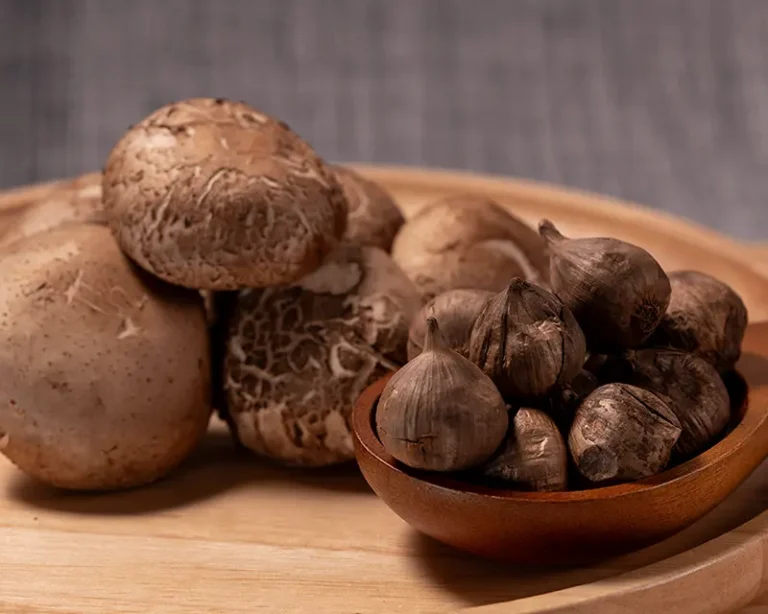
What Umami Taste Feels Like (and Why It Changes Food)
Before you can use umami deliberately, you need to recognise it in food. It shows up most clearly in moments where flavour stops feeling thin and starts to hold.
A mushroom cooked until its moisture has evaporated and the surface begins to brown.
A piece of aged cheese that doesn’t just taste salty, but stays present after you swallow.
A broth that feels steady and complete instead of fading after the first sip.
The taste isn’t sharp like salt, and it isn’t heavy like fat. It sits underneath, keeps it from fading, and carries it forward.
That’s why food with umami feels more stable. The flavour doesn’t spike and disappear. It builds, then lingers, so each bite feels connected to the next.
Why Food Without Umami Feels Flat
A dish can be properly salted and still feel unfinished.
Roasted vegetables, for example, can taste sweet and balanced at first. The salt is there, the edges are defined, but the flavour drops off quickly. What’s missing isn’t more seasoning, it’s something that carries the flavour beyond the first moment.
That’s the role of umami. It doesn’t make the dish louder. It changes how the flavour holds. Instead of peaking and fading, it stays present and connects the different elements, especially when fat is involved.
Without it, flavours sit next to each other. With it, they start to move as one.
What Makes Umami Salt Different from Regular Salt
Salt works at the surface. It sharpens what’s already there, bringing sweetness forward and tightening the overall profile. But its effect is immediate and short.
Umami works through the whole bite. It builds underneath the initial taste and extends it, so the flavour doesn’t disappear after the first second.
That’s why a dish can be well salted and still feel flat, and why a small amount of umami can change it completely.
Used together, salt defines the start. Umami determines what happens after. That’s the difference between food that tastes clear and food that actually holds.
Why Black Garlic and Mushrooms Work So Well
Some ingredients don’t just contain umami, they change how it behaves when they’re transformed. Umami salt builds flavour through whole ingredients like fermented garlic or mushrooms, rather than isolated compounds. (See: Umami Salt vs MSG)
Garlic is one of them. Raw garlic is sharp, aggressive, and narrow.
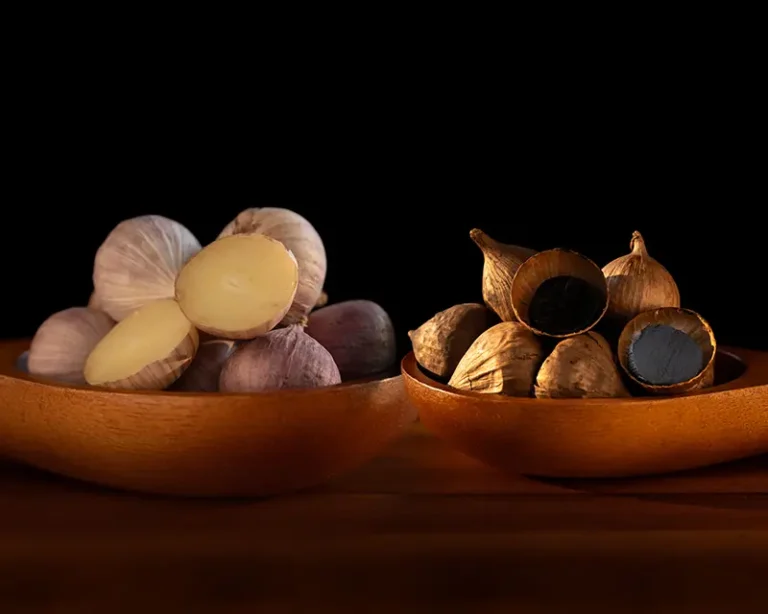
When it’s slowly aged into black garlic, that profile disappears. What you get instead is dark sweetness with a deep savoury base — closer to balsamic, molasses, or cooked meat than fresh garlic. The flavour is no longer a spike. It fills the whole bite and stays there.
→ Explore black garlic salt

Mushrooms work differently.
Fresh mushrooms already carry natural glutamates, but the flavour is relatively light and fades quickly. Fermentation concentrates those compounds and deepens the savoury character. When the mushrooms are then dried, that flavour becomes more concentrated again. And when the fermentation brine is used in the salt itself, that intensity is carried directly into the crystals.
The result is a clean, direct savoury base that is significantly more concentrated, but still comes entirely from the ingredient.
Used in umami salts, these ingredients bring depth without adding harshness.
→ Explore fermented mushroom salt
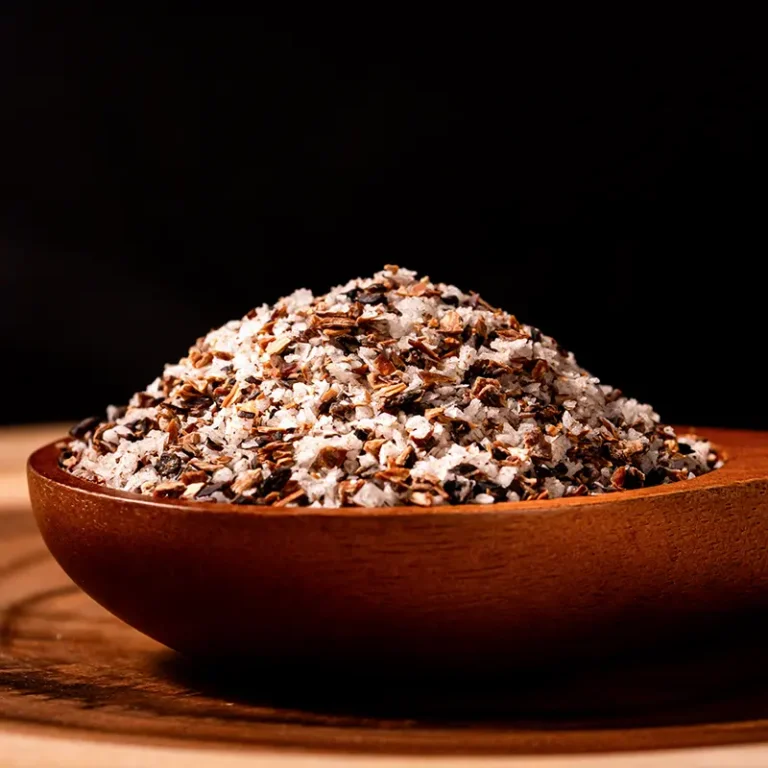
Both follow the same principle: they increase concentration and keep flavour more stable.
The difference is in the result.
Black garlic replaces sharpness with depth.
Fermented mushrooms reinforce and extend what’s already there.
This is why black garlic salt and fermented mushroom salts create more impact than regular salt. Regular salt makes flavour clearer. Umami salts change the flavour itself and how long it remains noticeable.
Best Foods for Umami Salt
Meat and Protein
Works especially well on steak, lamb, and roasted chicken, where added depth enhances the natural savoury base.
Eggs
Eggs respond strongly to umami. A small amount adds depth and makes the flavour feel more complete.

Vegetables
Roasted vegetables benefit most. The added umami balances sweetness and brings structure.
Broths and Sauces
Useful for finishing. It adds depth without increasing heaviness or saltiness.
Where It Does NOT Work Well
Umami salt is not universal. Avoid using it on:
- delicate dishes where subtle flavours matter
- foods that are already heavily fermented
- very wet surfaces where the salt dissolves immediately
In these cases, the effect becomes either overwhelming or disappears entirely.
What to Do With This
If a dish tastes sharp but fades quickly, adding more salt won’t fix it.
That’s the signal. Use umami salt at that point, just before serving. You’re not trying to season again. You’re trying to stop the flavour from dropping off.
That’s the difference between food that tastes correct and food that tastes complete.
Explore Umami Salts
Is umami salt the same as MSG?
No.
MSG is a single isolated compound.
Umami salt delivers glutamates through whole ingredients, along with additional flavour compounds that create depth and a longer finish.
Can you replace regular salt with umami salt?
No.
Use regular salt to season the base.
Use umami salt to add depth at the end, when flavour feels flat.
When should you add umami salt?
At the end.
Add just before serving, on a dry surface.
If added too early, the flavour spreads and loses impact.