Olive Oil Bread Dip: What to Add and What to Serve It With
Most olive oil bread dip recipes begin the same way: olive oil, garlic, herbs, chilli flakes, maybe parmesan, then stir everything together.
It works. But it also means every bread course tastes almost the same. A better place to start is with the meal itself.
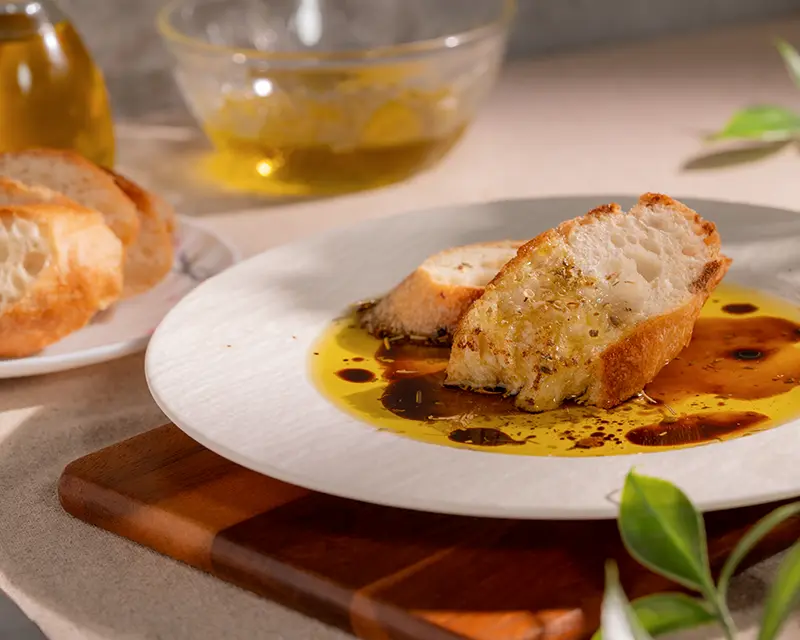
Bread with olive oil is usually the first thing people eat. It sets the tone for everything that follows. Instead of asking what should go into the dip, ask what comes next. The bread course can subtly introduce those flavours or deliberately contrast them, making the whole meal feel more considered.
Once you’ve chosen that direction, keep the dip simple. Good extra virgin olive oil already brings fruit, bitterness, pepper and aroma. It rarely needs much help. A few drops of aged balsamic. One good gourmet salt. A fresh sprig of rosemary or thyme if you have it. Often, that’s enough.
5-minute recipe
Simple Olive Oil Bread Dip
Ingredients
- 80 ml extra virgin olive oil
- ¼ teaspoon finishing salt, adjusted to crystal size
- warm sourdough, baguette or country bread
- optional: aged balsamic, fresh herbs or black pepper
Method
- Pour the olive oil into a shallow dish shortly before serving.
- Sprinkle the finishing salt over the surface without fully stirring it in.
- Add one optional accent if it suits the meal.
- Serve immediately with warm bread.
How to Make Olive Oil Bread Dip
There isn’t a single correct recipe. Build it around the meal.
Start with:
- good extra virgin olive oil
- warm bread
- one gourmet finishing salt
Then decide what role the bread course should play. It can introduce the flavours that come next or deliberately contrast them.
If seafood is on the menu, preserved lemon or saffron creates a natural bridge. If roast meat or steak follows, black garlic adds savoury depth without overpowering the olive oil. Around vegetables and lighter dishes, a clean mineral salt often lets the ingredients speak for themselves.
Once you’ve chosen a direction, stop. A few drops of aged balsamic, a sprig of fresh rosemary or thyme, or a grind of black pepper may improve the dip, but none are essential. Add them because they suit the meal, not because every olive oil bread dip recipe includes them.
How to Serve Olive Oil Bread Dip
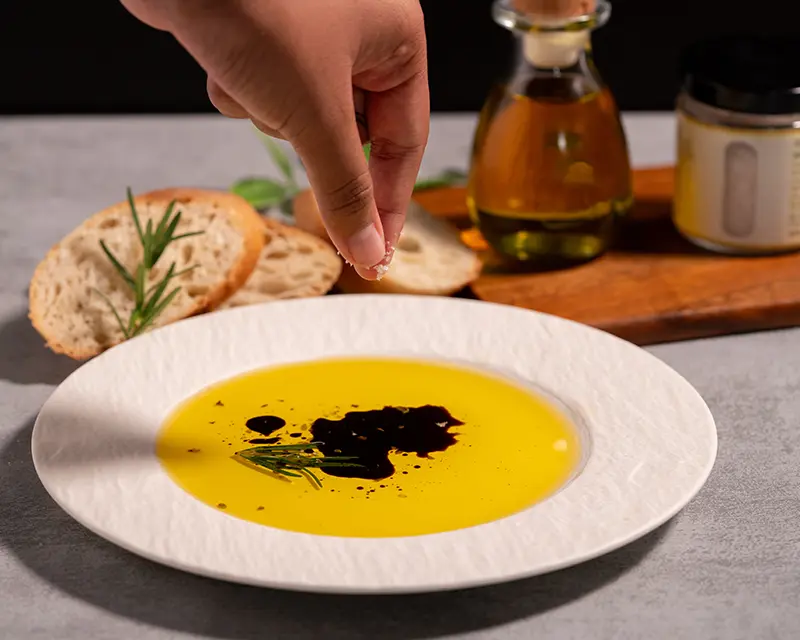
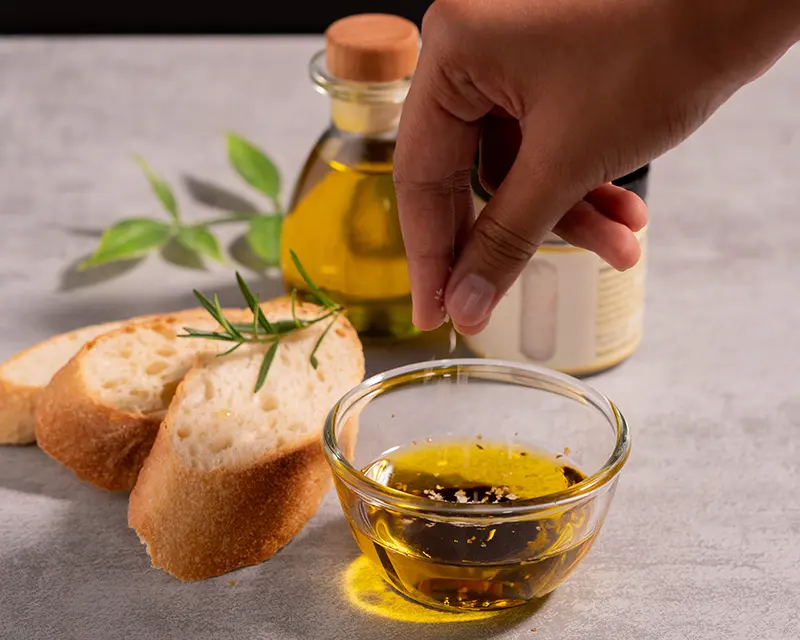
A good olive oil bread dip comes together at the table, not in the kitchen. Pour the olive oil into a shallow dish shortly before serving. Sprinkle the finishing salt over the surface rather than stirring it in, so some crystals stay on top while others dissolve into the oil. The best bites are slightly uneven: olive oil first, then bread, then a little salt, herb or balsamic where it lands.
Warm the bread just before serving and keep it wrapped in a clean cloth until everyone is at the table. Fresh bread, good olive oil and one thoughtful finishing touch almost always beat a bowl full of ingredients.
If you decide to add balsamic, herbs or black pepper, use them sparingly. The olive oil should remain the main flavour, with everything else supporting it rather than competing for attention.
Match the Bread Course to the Meal
There isn’t a single best olive oil or finishing salt for bread dipping. The right combination depends on the meal you’re building and the role you want the bread course to play.
Sometimes it prepares the palate for what comes next. Other times it provides contrast, making the following course feel brighter or more memorable. In both cases, the goal is the same: let the bread, the olive oil and the rest of the table feel connected.
For a Simple Bread and Olive Oil Starter
Sometimes the bread course is exactly that: warm bread, good olive oil and conversation. Nothing else needs to compete for attention.
Choose a delicate or buttery extra virgin olive oil with enough fruit to stand on its own. When the oil is the main attraction, restraint usually gives the best result.
A clean mineral salt adds texture and gentle salinity without changing the character of the oil. Fruity, grassy or lightly peppery notes remain clear, while the crystals provide enough contrast to keep each bite interesting.
This is also the most versatile approach when several small dishes follow and the bread course should simply welcome people to the table rather than point towards a particular cuisine.
Host With Better Small Details
The Maison Kojira Letter brings you practical notes on salt, olive oil and the small hosting details that make food worth sharing.
For Seafood and Mediterranean Tables
Seafood benefits from freshness and restraint, and the bread course can begin introducing those flavours before the first plate arrives.
A grassy or peppery extra virgin olive oil works particularly well here. Herbal notes, gentle bitterness and a peppery finish naturally complement grilled fish, prawns, shellfish and Mediterranean vegetables without becoming dominant.
From there, decide how closely you want the bread course to follow the meal. Preserved lemon salt brings brightness with a savoury edge, creating a natural bridge to seafood while allowing the olive oil to remain at the centre. Saffron salt takes a warmer, more aromatic direction, hinting at shellfish, rice dishes and Mediterranean cooking without announcing itself too loudly.
The result should feel effortless. People may not consciously notice the connection, but they will notice that the bread course flows naturally into everything that follows.
For Roast Meat and Richer Dishes
When richer flavours are coming, the bread course can carry more depth without becoming heavy.
Choose a fuller-bodied extra virgin olive oil with enough fruit and pepper to stand alongside grilled meats, roast beef, lamb or earthy mushrooms. A more robust oil gives the bread course enough presence while still allowing the next dishes to take over naturally.
Black garlic salt adds mellow sweetness and roasted savoury notes that deepen the olive oil instead of masking it. Unlike fresh garlic, it contributes complexity without sharpness, creating a richer first course that still tastes balanced and elegant.
Rather than competing with the meat, the bread course prepares the palate for those darker, roasted flavours and makes the transition between courses feel seamless.
For Fresh Vegetable Tables
When tomatoes, grilled courgettes, aubergine, peppers or roasted vegetables are the focus, simplicity usually works best.
A fresh, fruit-forward extra virgin olive oil lifts the natural sweetness of the vegetables while keeping the bread course bright and inviting. Heavy, intensely peppery oils can easily dominate these lighter flavours, so restraint often creates the better balance.
A clean mineral salt keeps the vegetables at the centre of attention. If herbs already play an important role in the meal, a well-made herb salt can gently carry those flavours into the bread course without making the olive oil feel secondary.
The bread should support the vegetables, not compete with them. When every element shares the same fresh direction, even a simple meal feels complete.
For Cheese and Charcuterie Boards
When bread is served with cheeses and cured meats, the olive oil bread dip becomes part of the board rather than a starter in its own right.
A medium-bodied extra virgin olive oil usually provides the best balance. It has enough character to stand beside cheeses and charcuterie without overwhelming either, allowing people to move naturally between bread, olive oil and the rest of the board.
Black garlic salt pairs particularly well with aged cheeses, cured meats and grilled bread, adding savoury depth that complements rather than dominates. If the board leans towards softer cheeses, olives and Mediterranean accompaniments, a herb salt creates a lighter, fresher direction that ties those flavours together.
The aim is not to make the bread course another feature of the board. It should become the thread that links everything else together.
When You Want a Little Heat
Some meals simply benefit from a little more edge. Choose a robust, peppery extra virgin olive oil that already has enough structure to stand beside stronger flavours. The natural bitterness and pepperiness of the oil provide a foundation for a restrained chilli salt rather than competing with it.
Used sparingly, chilli salt sharpens the appetite and makes each bite feel more lively. It works particularly well with grilled bread, roasted peppers, smoky vegetables, charcuterie and other dishes that already carry deeper roasted flavours.
Use a light hand. The chilli should lift the table rather than dominate it, while the olive oil remains the flavour people remember long after the bread has disappeared.
Serving Mistakes to Avoid
Adding Too Many Ingredients
Garlic, herbs, chilli, balsamic, parmesan and several spices can all work in olive oil bread dip. Together, they often compete with one another.
Choose one clear direction and let the olive oil remain the main flavour.
Choosing the Salt Before the Meal
Start with what you are serving afterwards. Choose an olive oil that suits the meal, then decide which finishing salt completes that direction.
Pouring the Olive Oil Too Early
Prepare the bread and the rest of the table first. Pour the olive oil shortly before serving, while its aroma and peppery notes are still at their clearest.
Stirring Everything Together
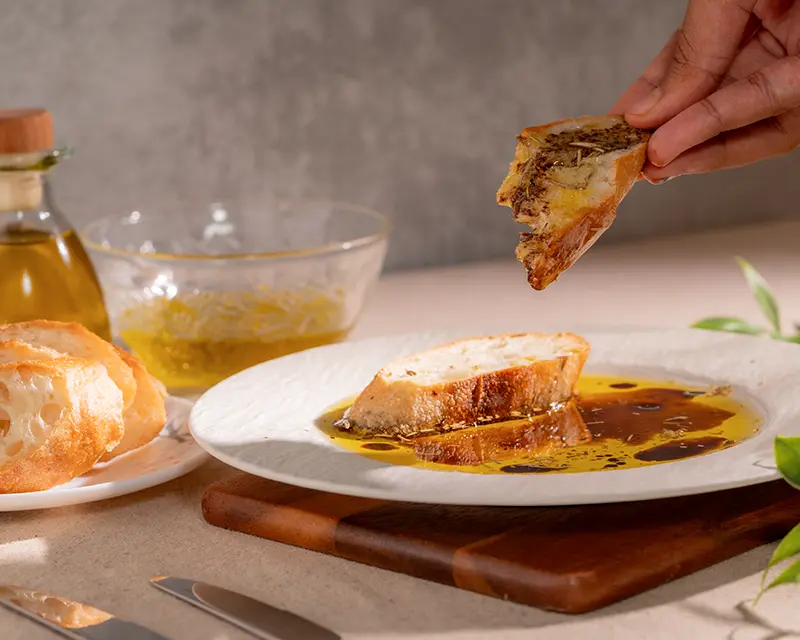
Sprinkle the finishing salt over the surface and add herbs or balsamic sparingly. Slightly uneven bites create texture and small contrasts as people eat.
Serving Cold Bread
Warm bread gives you a crisper crust, softer crumb and a more aromatic bite. Even a few minutes in the oven makes a noticeable difference.
Frequently Asked Questions About Olive Oil Bread Dips
What is the best olive oil for bread dipping?
There isn’t a single best choice. Extra virgin olive oils range from delicate and buttery to grassy, peppery and robust, depending on the olive varieties, harvest, climate and production methods. Choose an oil that suits the meal you’re serving, then build the bread course around it with a complementary finishing salt. If you’re new to olive oil tasting, Olive Oil Times has an excellent overview of extra virgin olive oil flavour characteristics
What should I put in olive oil for bread dipping?
Start with olive oil, warm bread and one finishing salt. Add balsamic, herbs, black pepper or chilli only when they suit the meal. The dip usually improves when you choose one clear direction instead of combining everything.
Should olive oil bread dip be mixed?
Usually, no. Pour the oil into a shallow dish and add the salt and other accents over the surface. Some ingredients will dissolve while others remain visible, creating more texture and variation from bite to bite.
Can I make olive oil bread dip ahead of time?
Prepare the bread and any additions in advance, but pour the olive oil shortly before serving. Freshly poured oil keeps its aroma and character better than oil left sitting in a shallow dish.
What bread is best for olive oil dipping?
Sourdough, baguette, focaccia and rustic country bread all work. Choose bread with enough crust and structure to carry the oil without falling apart, and warm it shortly before serving.
Is balsamic vinegar necessary?
No. A few drops can add sweetness and acidity, especially with robust olive oil, cheese or roasted vegetables. Good olive oil and finishing salt are enough on their own.
The best olive oil bread dip does not begin with a fixed list of ingredients. It begins with the meal. Choose the oil, bread and finishing touch that belong at that table, then stop before the dip becomes more complicated than the food around it.
More Simple Table Pairings
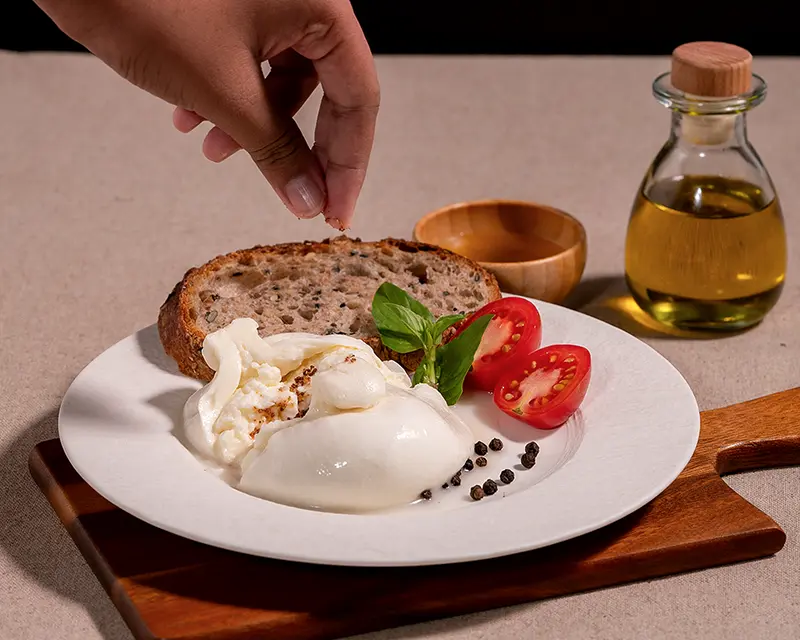
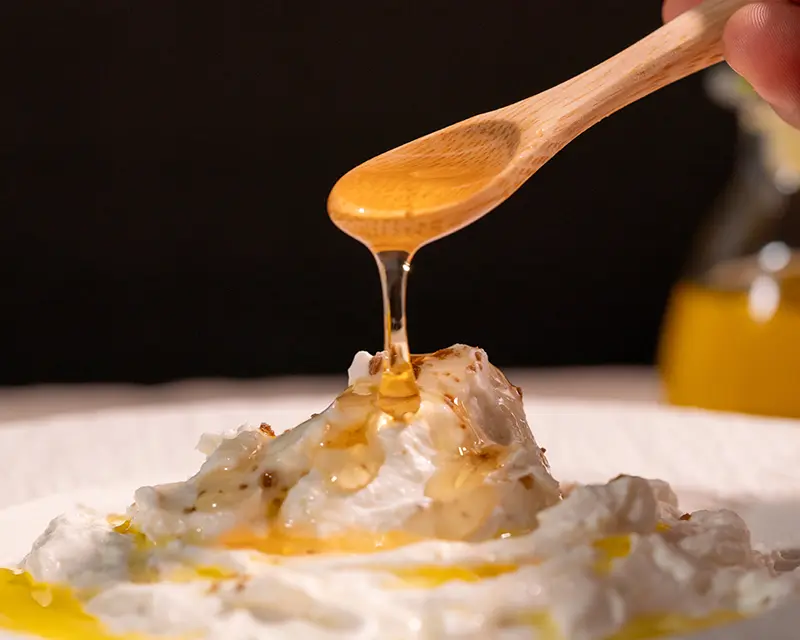
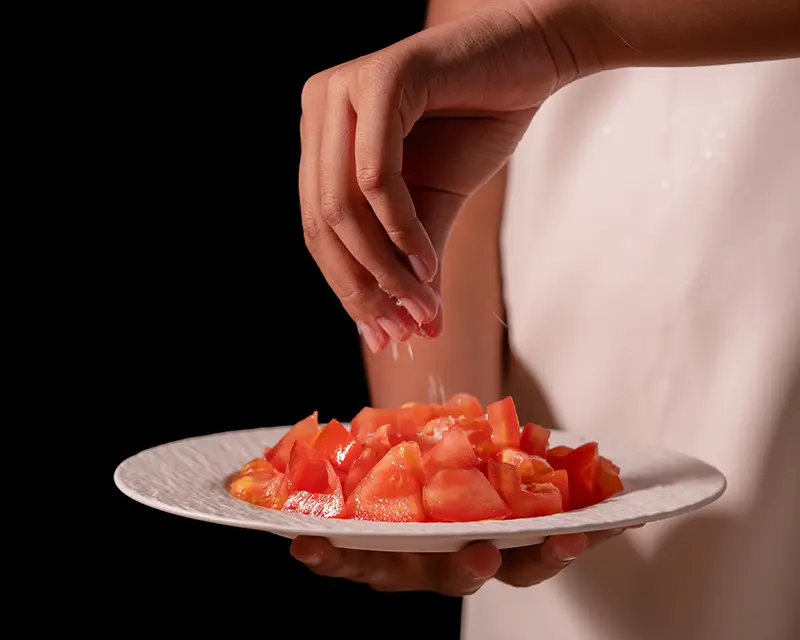
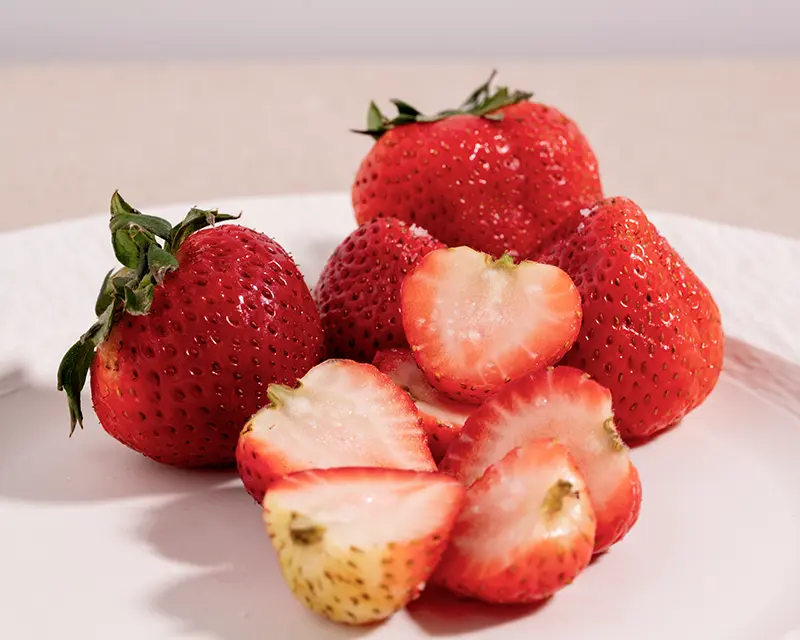
Bread and olive oil rarely stand alone. They belong beside soft cheese, yoghurt, fruit and tomatoes, and a final pinch of salt that makes the table feel more intentional.
Join the Maison Kojira Letter
Eat sharper. Host better. Be more present. Get practical notes on flavour, ingredients and the small details that make food worth sharing.