Salt on Desserts: The Simple Trick That Makes Sweets Taste Better
Salt on desserts makes more sense from Bangkok than from a baking textbook. It sounds like a small trick, but it seriously improves the way sweet food lands. Here, sweetness rarely stands alone. Fruit is eaten with salt, chilli, sugar, and lime. Iced desserts carry coconut, syrup, beans, jelly, fruit, cream, and sometimes a savoury edge. Palm sugar is deep, citrus is sharp, mango can take heat, and coconut wants salt. Sweet food is expected to have tension.
That is why salt on desserts is not a gimmick. Used carefully, it gives sweet food the same final adjustment cooks already use on savoury dishes.
That is the lens for this guide. Salt on desserts is not salt mixed into dough, batter, pastry, or caramel recipes. That kind of salt seasons from within. Salt on desserts works differently. It is the final move: you add a small pinch on the surface, just before eating, so chocolate tastes darker, caramel tastes less heavy, ice cream tastes less flat, and cream or custard tastes fuller.
The goal is not a salty dessert. The salt should disappear into the pleasure of the bite: chocolate tasting darker, caramel tasting less heavy, ice cream tasting less flat, cream tasting fuller, and butter tasting more golden.
Quick Rule: Add Salt at the End, Use Less Than You Think
Salt on desserts works best at the end. Add it after the dessert is plated, just before serving or eating.
Do not stir it through unless the recipe specifically needs salt inside the mixture. On finished desserts, salt works because it stays on the surface. It touches the tongue directly, then dissolves into chocolate, caramel, cream, butter, or cold dairy as you eat.
Use less than feels useful. A dessert can turn harsh quickly if the salt becomes obvious before the sweetness, fat, cocoa, or cream. Start with a light pinch across the surface, taste, then stop early.
👨🏼🍳 Quick Rule: take the amount of salt you think you need, then cut it in half before adding it to dessert. Taste first. You can always add another tiny pinch, but once dessert tastes salty, you have gone too far.
Why Salt Works on Desserts
Salt works on desserts because sweet food has more going on than sweetness. The best use of salt on desserts starts with noticing what the dessert is missing: contrast, lift, focus, or restraint.
Chocolate carries bitterness and roasted flavour. Caramel carries cooked sugar, butter, and sometimes a slight edge of bitterness. Ice cream and custard carry cold dairy and fat. Cakes, brownies, tarts, and ganache can taste rich but slightly blurred if everything is only sweet.
Salt changes how you taste flavour, and gives those flavours a sharper outline. Used lightly, it makes sweetness feel more precise, richness feel less heavy, and aroma easier to notice. Used heavily, it breaks the dessert.
That is why timing matters. Salt mixed into a recipe becomes part of the structure. Salt added at the end stays closer to the surface, where it changes the first contact with the tongue.
Salt on Desserts vs Salt Inside Dessert Recipes
There are two different ways salt works in sweet food.
Salt inside a dessert recipe becomes part of the dessert. It seasons dough, batter, pastry, caramel, custard, or cream from within. That kind of salt belongs to the recipe.
Salt on desserts is different. You add it after the dessert is made, usually just before serving or eating. It stays closer to the surface, so the first bite gets contrast before the salt dissolves into the chocolate, cream, caramel, butter, or cold dairy.
This is why the amount has to be small. You are not correcting the whole dessert. You are finishing the bite.
Quick Pairings: What Salt Works Best on Desserts
A small pinch of salt can change a dessert, but the right salt depends on what the dessert is built around. Chocolate needs contrast. Caramel needs lift. Ice cream needs focus. Cream and custard need restraint.
Chocolate & Cocoa
Best with: flaky salt, black garlic salt
Dark chocolate, brownies, ganache, mousse, and cocoa-heavy desserts need contrast. Flaky salt gives clean texture. Black garlic salt only belongs where the chocolate is dark enough to carry deeper roasted, umami notes.
Caramel & Butter
Best with: mineral salt, saffron salt
Caramel, browned butter, toffee, butter cakes, and custard-based desserts need lift. Mineral salt keeps the sweetness clean. Saffron salt works when the dessert has cream, honey, vanilla, or golden caramel notes.
Ice Cream & Frozen Desserts
Best with: flaky salt, citrus salt
Cold dulls flavour. A light pinch of salt can make vanilla, chocolate, caramel, gelato, frozen yoghurt, and semifreddo taste clearer. Citrus salt works best with fruit, yoghurt, vanilla, or cream.
Cream, Custard & Dairy
Best with: mineral salt, saffron salt, preserved lemon salt
Creamy desserts need the lightest touch. The salt should make the dairy taste fuller, not savoury. Use mineral salt for clean balance, saffron for warmth, preserved lemon for brightness.
👨🏼🍳 Pairing Rule: choose the salt by what the dessert needs: contrast for chocolate, lift for caramel, focus for ice cream, and restraint for cream or custard.
Salt on Chocolate and Cocoa Desserts
Chocolate needs definition. You see this clearly with serious chocolate traditions: Belgian pralines, Swiss milk chocolate, French ganache, Italian gianduja, dark chocolate tarts, brownies, mousse, and cocoa-heavy ice cream. They are built around sweetness, fat, bitterness, roast, and texture. When the chocolate is good, you do not want to cover it. You want to make it easier to taste.
That is where salt helps. A small pinch on the surface can soften the bitter edge, sharpen the sweetness already inside the chocolate, and make the cocoa taste darker and more complete. The salt should not announce itself first. It should make you notice the chocolate more.
Add it at the end, once the dessert is plated or the surface has set enough to hold it. On mousse, ganache, brownies, chocolate tarts, and ice cream, the salt should stay visible at first, then dissolve as you eat. Add it too early and it disappears into the dessert. Add too much and the chocolate turns harsh.
For clean contrast, use a delicate flaky salt or fine mineral salt. For high-cacao chocolate, a light citrus salt can lift the aroma. For darker chocolate desserts with roasted, bitter, or caramelised notes, black garlic salt can work in tiny amounts because its savoury sweetness echoes the depth of cocoa.
👨🏽🍳 Chocolate Rule: add salt at the end, use a very light pinch, and stop as soon as the chocolate tastes darker and clearer. If you taste salt before cocoa, you used too much.
Salt on Caramel and Butter Desserts
Caramel already knows it wants salt. The mistake is usually adding too much, adding it too early, or treating every caramel dessert the same.
Light caramel tastes buttery, milky, and sweet. It needs a clean salt, used lightly, so the dessert stays soft and golden. Dark caramel has more bitterness and cooked-sugar depth. It can take a slightly stronger salt because there is more flavour for the salt to push against. Browned butter desserts sit somewhere else again: they are nutty, warm, and rich, so salt should lift the butter rather than make the dessert taste savoury.
You taste these differences in salted caramel, sticky toffee pudding, caramel tarts, browned butter cakes, butterscotch, crème caramel, dulce de leche, and caramel ice cream. They are all built on sugar, fat, heat, and time, but they do not need the same finish.
A small pinch on the surface sharpens the cooked sugar, cuts through butter and cream, and makes the darker notes easier to taste. It should make caramel taste more like caramel: toasted, warm, slightly bitter at the edge, and less heavy.
Add salt at the end, once the dessert is plated. If the caramel is warm, the salt will dissolve faster, so use less than you think. If the dessert is cold or set, the salt can stay on the surface longer and give more texture.
For light caramel, crème caramel, dulce de leche, and caramel ice cream, use mineral salt or delicate flaky salt. For browned butter cakes, custards, honeyed desserts, and golden dairy desserts, saffron salt can add warmth. For very dark caramel, sticky toffee, or deeply roasted sugar, black garlic salt can work in tiny amounts, but only when the dessert has enough depth to carry it.
👨🏽🍳 Caramel Rule: light caramel needs restraint, dark caramel can take more contrast, and browned butter needs warmth. If the first thing you taste is salt, you used too much.
Salt on Ice Cream and Frozen Desserts
Ice cream is one of the clearest places to taste what salt does, because cold makes sweetness and aroma harder to perceive. Research on serving temperature and flavour perception shows that product temperature can affect how flavour and texture are perceived, which is exactly why ice cream changes as it warms on the tongue. A small pinch of salt belongs at that moment, not long before serving.
Straight from the freezer, even good ice cream can taste slightly muted. Vanilla tastes soft. Chocolate tastes less aromatic. Caramel tastes sweet before it tastes cooked. Cream tastes cold before it tastes rich. A small pinch of salt on the surface can bring the flavour back into focus as the ice cream warms on the tongue.
The kind of ice cream matters.
Vanilla, cream, and milk-based ice creams need the lightest touch. Use a fine mineral salt or delicate flaky salt, and add less than feels useful. The salt should make the dairy taste fuller, not savoury.
Chocolate ice cream can take a little more contrast because cocoa brings bitterness and roasted depth. Use flaky salt for clean contrast, or black garlic salt in tiny amounts if the chocolate is dark enough to carry deeper caramelised notes.
Caramel, butterscotch, and browned butter ice creams work well with mineral salt or flaky salt. If the ice cream has honey, custard, saffron, vanilla, or golden dairy notes, saffron salt can add warmth without making the dessert heavier.
Fruit, citrus, or yoghurt-based frozen desserts need brightness rather than depth. Preserved lemon salt or a light citrus salt works better here than a dark umami salt. Use it especially carefully, because acidity and cold make salt show up quickly.
Add salt immediately before eating. If the ice cream is very hard, let it soften slightly first so the salt does not just sit on a frozen surface. If it is already melting, use less, because the salt will dissolve fast and spread through the surface.
👩🏽🍳 Ice Cream Rule: the colder and lighter the dessert, the less salt it needs. Salt should make ice cream taste clearer, not salted.
Salt on Cream, Custard and Dairy Desserts
Cream and custard do not shout for salt the way chocolate or caramel does. They ask for a lighter hand.
You notice it in the spoonful. Panna cotta, crème brûlée, custard, rice pudding, whipped cream, cheesecake, mascarpone, and milk puddings can taste beautiful but slightly soft. The flavour spreads out. The sweetness is there, the fat is there, the vanilla or dairy is there, but the bite can feel rounded to the point of being blurred.
A very small pinch of salt can bring the dessert back into focus. It makes cream taste fuller, vanilla taste warmer, custard taste less flat, and butter or milk taste more present. The salt should sit behind the dessert, not on top of it as the main event.
The texture matters. On a smooth panna cotta, custard, or crème brûlée, large flakes can feel clumsy. Use a finer salt or crush a flaky salt between your fingers before adding it. On whipped cream, mascarpone, cheesecake, or a thicker dairy dessert, you have a little more room because the texture can hold the salt without making every bite sharp.
For clean dairy desserts, use mineral salt or delicate flaky salt. For vanilla, custard, honey, rice pudding, cream, or golden dairy flavours, saffron salt can add warmth. For yoghurt-based desserts, preserved lemon salt works better than darker salts because it lifts the acidity rather than weighing it down.
Add salt just before serving. If the dessert is wet, glossy, or already soft, use less. The salt will dissolve quickly and spread across the surface.
👩🏼🍳 Cream Rule: the softer and smoother the dessert, the finer and lighter the salt should be. You should taste better cream, not salt.
Salt on Cookies, Brownies, Cakes and Tarts
Cookies, brownies, cakes, and tarts are where salt can be brilliant or clumsy.
You feel it immediately in the first bite. On a glossy brownie, a still-warm cookie, a chocolate tart, or a ganache cake, salt has somewhere to land. It catches on the surface, dissolves slowly, and gives the sweetness a sharper edge. On a dry cake, the same salt can feel awkward, like it was sprinkled on because someone saw it in a restaurant.
The surface decides everything. Brownies can take salt well because they are dense, rich, and often slightly sticky on top. Chocolate tarts and ganache cakes work when the surface is smooth enough to hold the salt. Cookies are best when you add salt just after baking, while the surface is still warm and soft enough for it to grip. Butter cakes, loaf cakes, and sponge cakes need more restraint because the surface is drier and the crumb is softer.
Ask what the dessert gives the salt to work with. Chocolate, caramel, browned butter, nuts, coffee, tahini, and dark sugar can all carry a little contrast. Light sponge, floral cakes, citrus cakes, and delicate pastry need a much lighter hand.
For brownies, chocolate tarts, ganache, and cookies, use delicate flaky salt or fine mineral salt. For browned butter cakes, nut tarts, honey cakes, or golden pastry, saffron salt can work in tiny amounts. For very dark brownies or chocolate cakes, black garlic salt can be interesting, but only when the dessert already has roasted depth.
Add salt while the surface can still hold it. For cookies, that means just after baking. For brownies and tarts, add it after the surface has set enough that the salt does not sink in, but before it feels dry and disconnected.
👨🏼🍳 Cake Rule: salt works when it becomes part of the bite. If it sits on top like decoration, the salt is too coarse, too late, or too much.
When Not to Add Salt to Desserts
Salt on desserts works best when the dessert has enough flavour, fat, bitterness, cold, or cooked sugar to carry it. Good salt on desserts is selective: it belongs where the dessert has enough chocolate, caramel, cream, butter, cold dairy, or cooked sugar to carry it.
Do not add salt just because the dessert is sweet. Some sweets are too delicate. A very light fruit sorbet, floral jelly, soft sponge, fresh meringue, delicate panna cotta, or barely sweet custard can be thrown off by even a small pinch if the salt has nowhere to go.
You can usually tell before you add it. If the dessert already tastes clear, fresh, and balanced, leave it alone. If it tastes flat, heavy, too sweet, too cold, or slightly blurred, salt may help.
The texture matters too. Salt works better when it can settle into chocolate, caramel, cream, ganache, ice cream, or a warm cookie. It works less well when it sits dry on top of something pale and delicate.
Use no salt, or almost none, when the dessert is already salty from miso, salted butter, salted caramel, cheese, crackers, pretzels, salted nuts, or a salted crust. In those cases, adding finishing salt can turn balance into noise.
👩🏽🍳 Restraint Rule: salt belongs where it improves the bite. If the dessert already tastes clear, balanced, and complete, stop.
Best Salts for Desserts
Choose salt on desserts by what the dessert needs, not by habit.
Use mineral salt when you want clean salinity without changing the flavour direction. Use delicate flaky salt when texture matters. Use preserved lemon or citrus salt when the dessert needs brightness. Use saffron salt when cream, custard, honey, vanilla, orange, caramel, or browned butter need warmth. Use black garlic salt only for dark chocolate, deep caramel, roasted cocoa, or desserts with enough bitterness and depth to carry it.
The stronger the salt, the smaller the pinch.
👨🏼🍳 Salt Pairing Rule: clean desserts need clean salt. Deep desserts can take deeper salt. Delicate desserts need restraint.
More Sweet Finishing Salt Guides
Once you understand salt on desserts, the same logic becomes more specific with fruit, yogurt, and finishing salt itself. Fruit needs salt only at the surface, just before it releases too much juice. Yogurt needs a lighter hand because acidity and creaminess make salt show up quickly. Finishing salt behaves differently depending on moisture, fat, heat, texture, and when you add it.
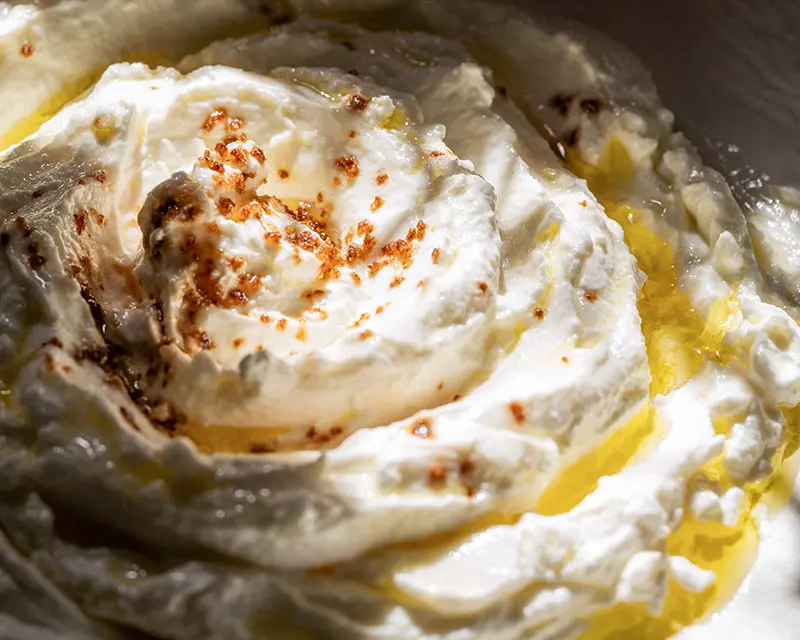
How to Salt Yogurt, Greek Yogurt and Labneh Beautifully
Frequently Asked Questions About Salt on Desserts
Can you put salt on desserts?
Yes. Salt works especially well on chocolate, caramel, ice cream, cream, custard, brownies, cookies, and butter-rich desserts. Add it at the end and use very little.
Why does salt make desserts taste better?
Salt sharpens sweetness, softens bitterness, cuts through richness, and makes aroma easier to notice. Used lightly, it makes dessert taste clearer rather than salty.
When should you add salt to desserts?
Add salt at the end, just before serving or eating. For warm cookies, add it just after baking while the surface can still hold it. For ganache, brownies, tarts, and caramel, add it once the surface is set enough to keep the salt visible.
What salt is best on desserts?
Flaky salt is best for texture. Mineral salt is best for clean balance. Citrus salt works with fruit, yoghurt, cream, and ice cream. Saffron salt works with custard, caramel, honey, vanilla, and orange. Black garlic salt belongs only on dark chocolate or deep caramel desserts.