What Is Umami Salt? Uses, Types & How It Improves Flavour
Umami salt combines salt with ingredients that naturally carry savoury depth, such as mushrooms, black garlic, seaweed, tomato, miso or fermented foods.
It still seasons food with salt, but it also adds aroma, depth and a longer savoury finish. This is useful when a dish tastes properly salted but still feels flat or fades too quickly after the first bite.
Different types create different kinds of flavour. Mushroom umami gives food a stock-like savoury base, while black garlic brings darker sweetness, balsamic depth and slower-building intensity.
What Is Umami Salt?
Umami salt is a seasoning made by combining salt with ingredients that naturally contain savoury flavour compounds. Common examples include mushrooms, black garlic, seaweed, tomato, miso and fermented foods.
Unlike plain salt, it does more than sharpen existing flavours. It adds a savoury foundation, makes flavour last longer and can make simple food feel more complete.
That matters because a dish can be properly salted and still taste incomplete. Regular salt sharpens flavour: it brings sweetness forward, makes edges clearer and helps food taste more seasoned. Umami works underneath the first taste. It gives the bite a savoury base and makes the flavour last longer.
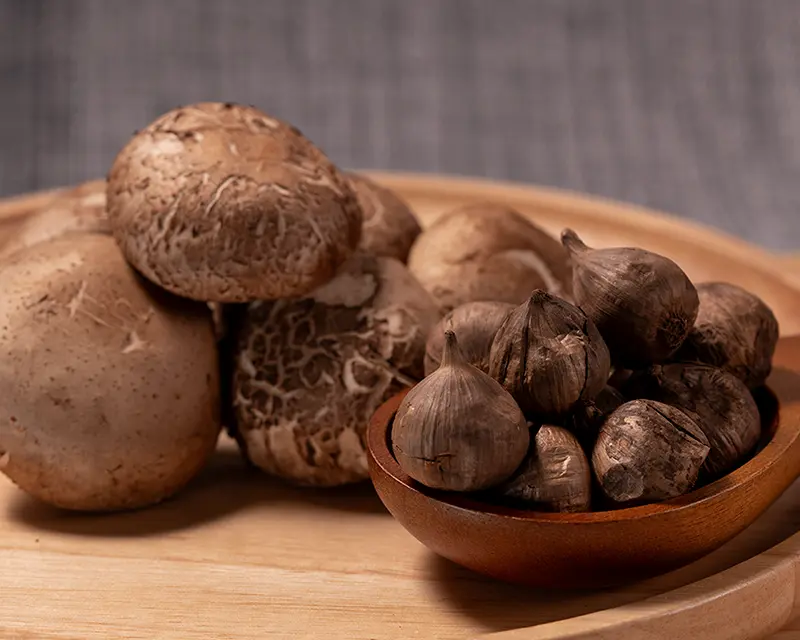
In food science, umami is recognised as a basic taste linked especially to free glutamate and related savoury compounds.
Is Umami the Same as Salty?
No. Saltiness is the sharp, mineral taste of salt. Umami is savoury depth: the taste you find in mushrooms, aged cheese, meat stock, tomatoes, soy sauce, miso and fermented foods.
Regular salt makes flavour clearer and more defined. Umami makes flavour deeper and longer-lasting. That is why a dish can be well salted and still feel flat. It has saltiness, but not enough savoury depth.
Used together, salt defines the start. Umami determines what happens after. That is the difference between food that tastes clear and food that actually holds.
How Umami Salt Improves Flavour
Umami salt improves flavour by adding savoury depth and extending the finish of a dish. Plain salt makes flavours clearer and more defined; umami helps them feel fuller and remain present for longer.
This matters when food is already properly salted but still fades too quickly. Adding more salt may make it saltier without giving it the missing depth.
You notice it in a mushroom cooked until its moisture evaporates and the surface begins to brown. In aged cheese that does not just taste salty, but stays present after you swallow. In broth that feels steady and complete instead of fading after the first sip. That is umami doing its work.
How to Use Umami Salt
Use umami salt wherever you would normally make a final seasoning adjustment, but choose the type according to the food.
Add it near the end of cooking or at the table, when you can judge whether the dish needs stock-like depth, darker savoury intensity or a longer finish. Begin with a small amount. Umami-rich ingredients contribute flavour as well as salt, so the goal is not simply to make the food saltier.
Mushroom umami salt works particularly well with eggs, rice, mushrooms, roasted vegetables, broths and simple vegetable dishes. Black garlic salt suits steak, lamb, duck, roast chicken, roast potatoes, mushrooms, browned fat and crust.
👨🏽🍳 Quick Rule: use mushroom umami when food tastes clear but fades too quickly. Use black garlic umami when food already has fat, browning or roasted intensity and can carry more depth.
Types of Umami Salt
Umami salts differ according to the ingredients used to create their savoury depth. These differences become much clearer when you compare them side by side.
Mushroom-based salts tend to taste earthy and stock-like. Black garlic salts are darker, sweeter and more balsamic. Seaweed, tomato, miso and other fermented ingredients create still different styles.
Black garlic begins as sharp garlic, then ages into dark sweetness, balsamic depth and a slower savoury finish. Fermented mushrooms work differently: they concentrate the stock-like depth already present in mushrooms.
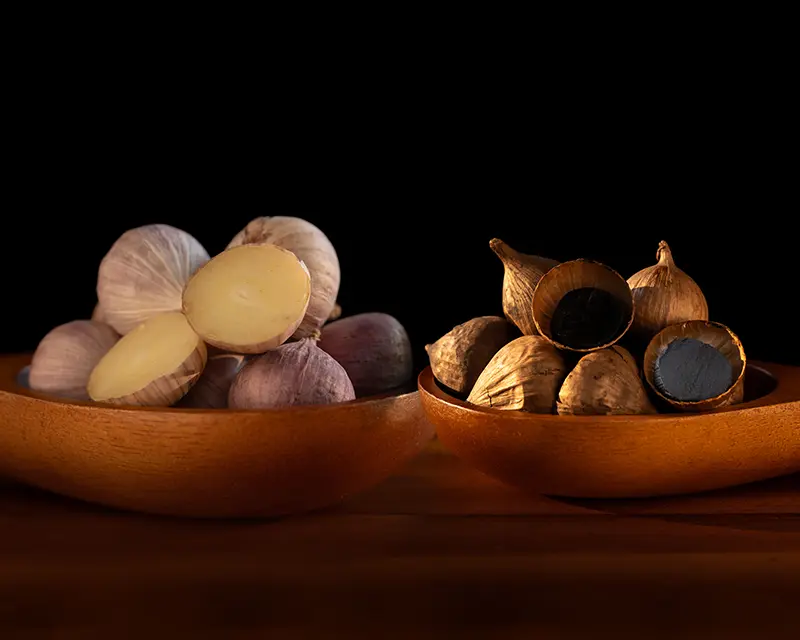
Choose Kojira Fermented Mushroom Salt when you want stock-like mushroom depth, fermented complexity and a longer savoury finish. It is made with shiitake, shimeji and king oyster mushrooms, fermented in mineral salt brine, dried, and worked into the crystals.
Choose Kojira Black Garlic Salt when you want dark sweetness, balsamic umami and slow-building savoury intensity. It carries 28% slow-aged black garlic, built into mineral salt so the flavour opens into warm fat, crust, yolk, butter, juices and roasted edges.
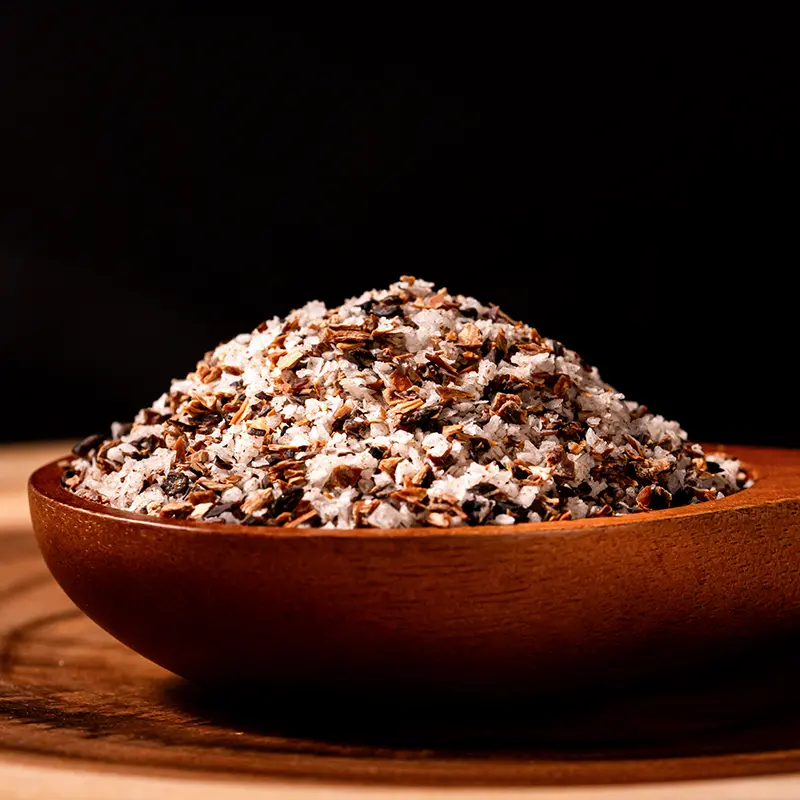
- Brine-fermented mushroom umami.
- Made with shiitake, shimeji and king oyster mushrooms.
- Best for eggs, rice, mushrooms, roasted vegetables, broths, pan juices and simple vegetable dishes.
- Use when food tastes clear but fades too quickly.
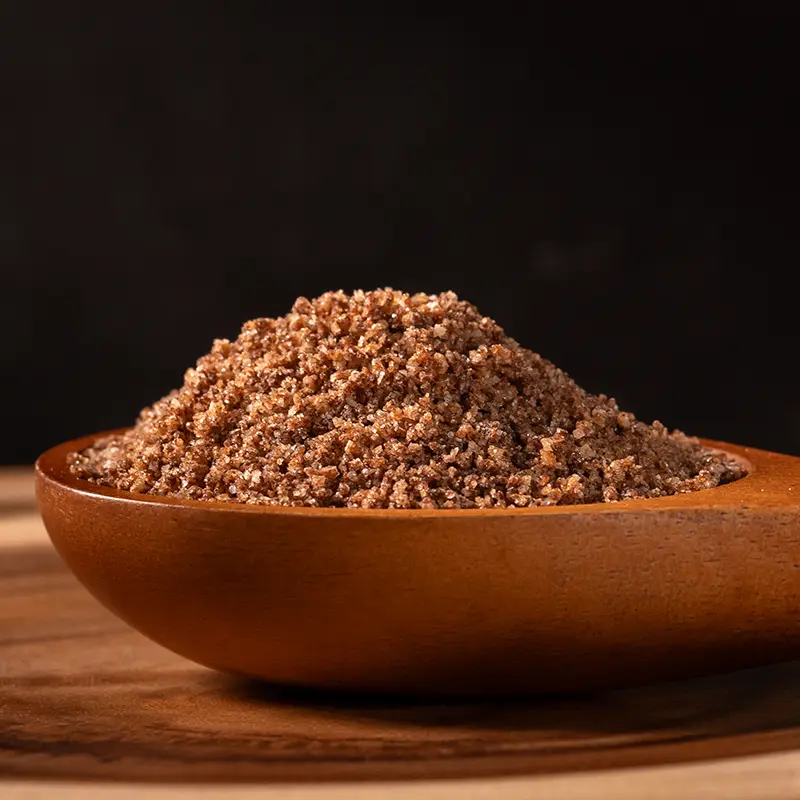
- 28% slow-aged black garlic.
- Dark sweetness, balsamic umami and a long savoury finish.
- Best for steak, lamb, duck, roast chicken, roast potatoes, mushrooms, browned fat and crust.
- Use when food is already good but can take more depth.
Which Type of Umami Salt Should You Choose?
Not every umami salt should do the same job.
Kojira Fermented Mushroom Salt gives food a stock-like savoury base: earthy, aromatic, fermented and quietly deep. It belongs where food tastes clear but fades too quickly.
Kojira Black Garlic Salt gives food balsamic umami: dark sweetness, aged garlic warmth and a longer savoury finish. It belongs where food already has fat, crust, juices or roasted edges and can take more intensity.
Choose fermented mushroom salt for quieter, stock-like depth. Choose black garlic salt for food with fat, crust, juices or roasted edges that can carry more intensity.
When to Add Umami Salt
Add umami salt after cooking, while the food is still warm. Heat softens the crystals, opens the aroma and helps the savoury ingredients move into fat, yolk, butter, crust, juices or broth.
Start with a small pinch, let it sit for a few seconds, then taste again. Use it on the surface for direct impact, or stir it into broths, sauces, pan juices, butter, cream or warm grains when you want the umami to move through the dish.
When umami salt is used as a final seasoning, surface moisture, crystal size and timing matter too. See our Finishing Salt Guide.
Where Umami Salt Works Best
Umami salt works best on warm savoury food with fat, starch, crust, juice, yolk, butter, broth or roasted edges. That gives the savoury depth somewhere to land.
Use a lighter hand on very delicate dishes where subtle flavours matter. Be careful with foods that are already heavily fermented, unless you deliberately want more intensity. Avoid very wet cold surfaces, where the salt dissolves immediately and loses its finishing effect. In those cases, the flavour can become too much, or disappear too quickly.
Want Both Kinds of Umami?
Kojira Black Garlic Salt brings darker, sweeter, balsamic depth. Kojira Fermented Mushroom Salt brings cleaner, stock-like savouriness. The Kojira Umami Salt Duo gives you both, so you can choose according to the dish or use both when the food can carry serious savoury depth.
Choose both if you want the two most useful forms of savoury depth: mushroom-stock umami for clean savoury structure, and black garlic umami for darker, richer food.
Frequently Asked Questions About What Umami Salt Is
What is umami salt?
Umami salt is salt blended with umami-rich ingredients such as mushrooms, black garlic, seaweed, tomato, miso or fermented foods. It seasons like salt while adding deeper savoury flavour.
Is umami the same as salty?
No. Saltiness is the sharp taste of salt. Umami is savoury depth: the taste found in mushrooms, aged cheese, meat stock, tomatoes, soy sauce, miso and fermented foods.
Can umami salt replace regular salt?
No. Use regular salt to season the base of the dish. Use umami salt near the end when the food is salty enough but still tastes flat.
When should you add umami salt?
Add umami salt near the end, while the food is still warm. Warmth softens the crystals, opens the aroma and helps the savoury ingredients move into fat, crust, yolk, butter, juices or broth.
Which umami salt should I choose?
Choose Kojira Fermented Mushroom Salt for stock-like mushroom depth on eggs, rice, mushrooms, vegetables and broths. Choose Kojira Black Garlic Salt for darker balsamic umami on steak, lamb, duck, roast chicken, roast potatoes and browned food. If you want both flavour profiles, explore the Kojira Umami Salt Duo.
What foods work best with umami salt?
Umami salt works best on warm savoury foods: eggs, rice, risotto, mushrooms, roast vegetables, broths, pan juices, steak, lamb, duck, roast chicken and roast potatoes.