Umami Salt vs MSG: 3 Surprising Differences in Cooking
Umami salt vs MSG is not just a question of natural versus synthetic. Both can make food taste more savoury, but they don’t create the same result. MSG gives a fast, direct hit of savouriness that spreads evenly through the dish. You notice it immediately.
Umami salt does something else. It builds more gradually, interacts with the food as it cooks, and adds its own flavour, like mushroom or black garlic, into the dish itself.
This is the practical difference in umami salt vs MSG: MSG gives savouriness quickly, while umami salt changes how flavour develops through the dish. That difference isn’t just about ingredients. It’s about what actually happens once the seasoning is in the food.
Is Umami Salt the Same as MSG?
No. They both create a savoury taste, but they behave differently once they’re in the dish.
MSG delivers a direct, immediate effect. Umami salt builds more gradually and adds its own flavour.
They don’t do the same job.
What MSG Does
MSG is a purified form of glutamate, typically produced by fermenting plant-based sugars (such as sugarcane or corn) and isolating the resulting compound. When you add it to a dish, the effect is immediate. The savoury taste appears quickly and spreads evenly through the food.
It doesn’t rely much on timing or technique. Once it’s in, the result is there. Clear, direct, and consistent. That’s why it’s often used when you need a fast, reliable boost.
Umami Salt vs MSG: The 3 Real Differences in Cooking
MSG works immediately. Once it dissolves, the savoury taste is there. It spreads evenly and stays consistent across the dish. The effect is clear, direct, and doesn’t depend much on timing or structure.
Umami salt behaves differently in three ways.
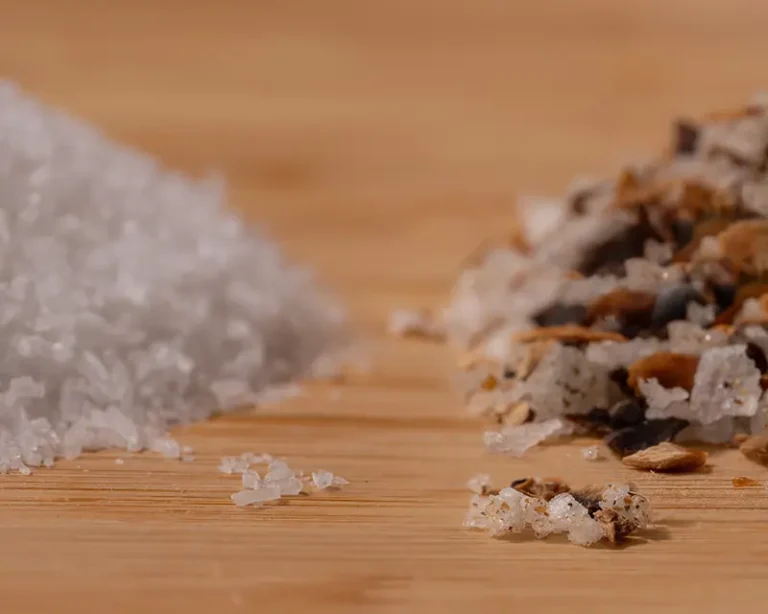
First, it works at a different speed. MSG gives a fast savoury hit. Umami salt builds more gradually because it is carried by whole ingredients, not a single isolated compound. In many cases, those ingredients are fermented and then dried, which concentrates their flavour. When that concentrated base is worked into the salt itself, the result is stronger and more persistent. It doesn’t show up all at once. As the dish cooks and finishes, the flavour builds more gradually and integrates into the food.
Second, it brings its own character. MSG increases savouriness. Umami salt changes the flavour direction of the dish itself. A mushroom-based umami salt adds a savoury, earthy note. Black garlic salt adds sweetness and depth. So instead of just making food taste more savoury, it changes what the dish actually tastes like.
Third, it behaves differently in cooking. MSG dissolves and spreads evenly. Umami salt can land on the surface, dissolve into sauce, melt into fat, or finish a dish at the end. That gives it more places to work: on steak, mushrooms, eggs, rice, broth, roasted vegetables, noodles, or anything where you want flavour to build instead of appear all at once.
That is something MSG doesn’t do. You notice it most in how the dish changes from the first bite to the last. MSG gives fast, direct savouriness. Umami salt builds slower, deeper, more ingredient-led flavour.
Umami Seasoning Blends vs Umami Salt
Most umami seasoning blends are built for impact. They combine glutamates, powders, and flavour enhancers to create a fast, strong effect that spreads evenly through the dish.
Umami salt works differently. Because it’s built from whole ingredients, the result depends on how it’s used, but it also brings its own character. So instead of just increasing savouriness, it changes the flavour of the dish itself.
Blends prioritise speed and consistency. Umami salt changes what the dish actually tastes like.
Which should you use?
So umami salt vs MSG is not a question of good versus bad. It is a question of speed, flavour character, and how much you want the seasoning to become part of the food.
Use MSG if the dish tastes flat and needs a quick boost.
Use umami salt if it tastes good at first but then fades, or if you want to add its own flavour (like mushroom or black garlic).
When Umami Salt Works Better Than MSG
Use umami salt when the dish already tastes good, but needs more depth, length, or character. It works especially well on mushrooms, eggs, rice, noodles, steak, roasted vegetables, potatoes, broth, buttered toast, and cream-based dishes.
This is where umami salt vs MSG becomes a cooking decision. MSG is useful when food tastes flat and needs savouriness quickly. Umami salt is better when you want the final flavour to feel darker, rounder, more aromatic, or more ingredient-led.
Use it lightly at the end for surface flavour, or let it dissolve into warm food when you want the mushroom, black garlic, or fermented notes to become part of the dish.
Frequently Asked Questions About Umami Salt vs MSG
Is umami salt the same as MSG?
No. MSG is a single compound. Umami salt is built from whole ingredients that contain glutamates and other flavour compounds.
Is MSG stronger than umami salt?
MSG creates a more immediate savoury effect. Umami salt develops more gradually and integrates into the dish.
Which is better?
Neither is “better.” They create different results.
MSG makes flavour stronger immediately.
Umami salt changes how flavour develops and what the dish actually tastes like.